
[BTCFi Series 3] The Wave Driving BTCFi: L2, and Babylon Native Staking
Introduction
In recent years, the Bitcoin ecosystem has changed rapidly. Meta‑protocols such as Ordinals and BRC‑20 transformed Bitcoin from mere “digital gold” into a richer “data layer.” By inscribing arbitrary data like images and text, we could issue assets and form communities on BTC L1, but capabilities still lag behind other DeFi ecosystems.
These meta‑protocols use Bitcoin effectively as a data store, yet they cannot handle complex state management and verification purely on‑chain. Balances and transfers for BRC‑20 ultimately live in off‑chain indexers that interpret transactions under their own rules. This assumes indexers share identical rules and versions; when the assumption breaks, consistency collapses. We achieved “data innovation,” but not smart‑contract‑level guarantees. Beyond merely anchoring data to Bitcoin, we need a new execution layer that delivers security, finality, and automated verification.
Technical Analysis and Comparison of Bitcoin Layer 2 Networks: Stacks, Rootstock, and CoreDAO
I. Why Bitcoin Layer 2? Role and Motivation
Bitcoin has proven outstanding security and decentralization as the first truly permissionless digital money. Still, Bitcoin L1 faces inherent limits for large‑scale dApps. The UTXO (Unspent Transaction Output) model is not suited for expressing complex, shared state; Script is deliberately Turing‑incomplete (no loops like while/for) to avoid unbounded execution, which makes Ethereum‑like complex smart contracts infeasible on L1.
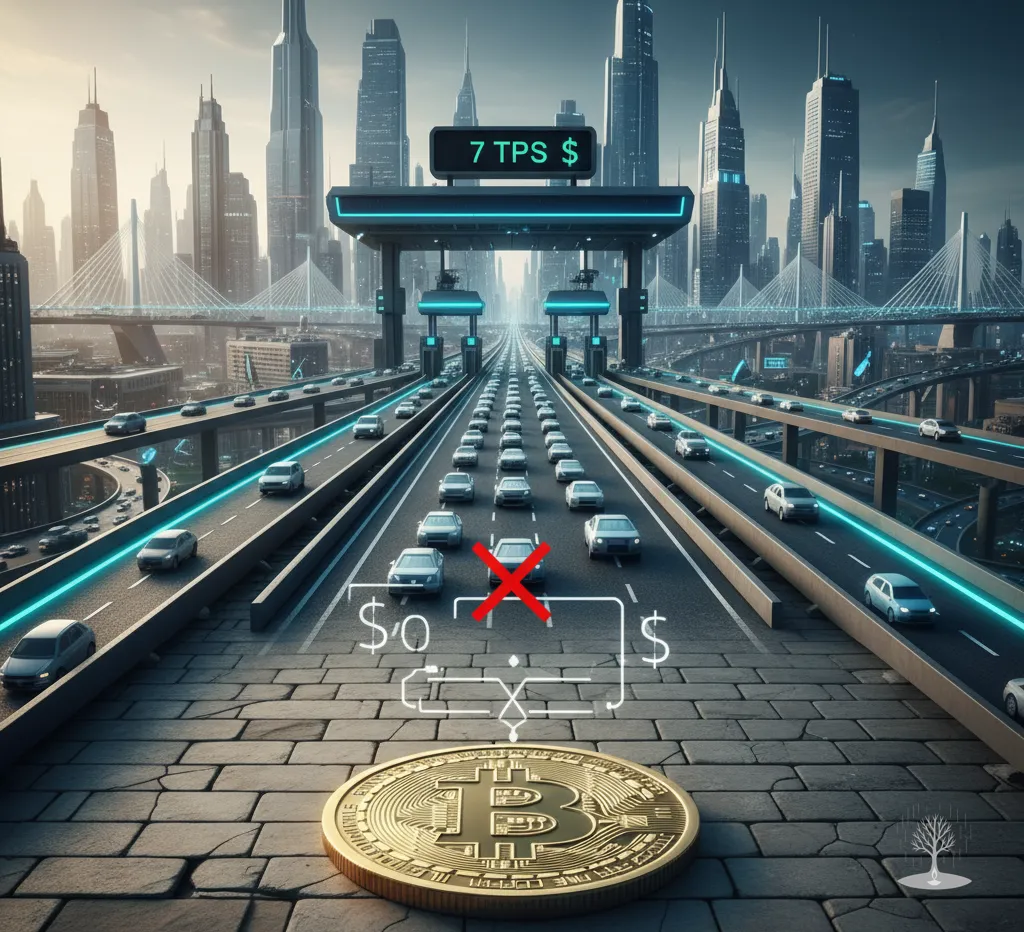
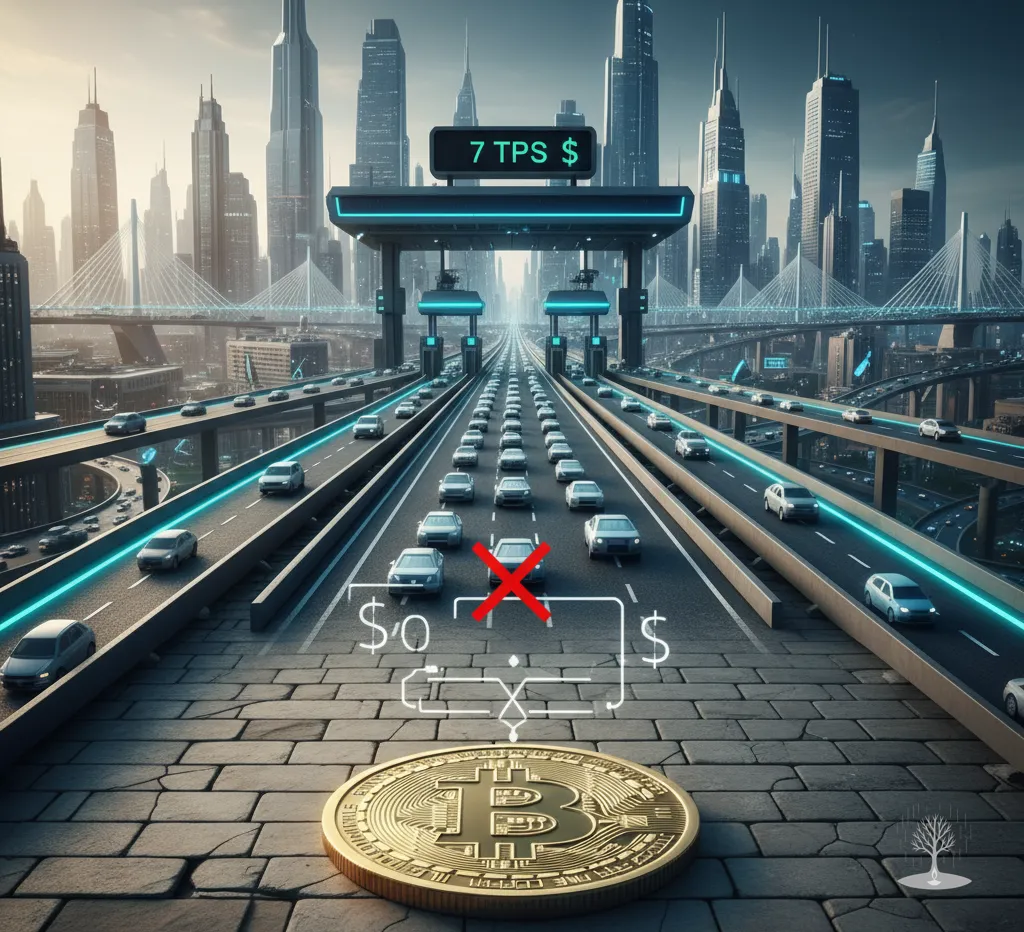
Throughput is also limited (roughly ~7 TPS), so fees spike under congestion. These constraints make micro‑payments and rich DeFi on L1 difficult.
Bitcoin Layer 2 (L2) solutions address these issues without changing Bitcoin’s core protocol. They process transactions off‑chain and settle results back on L1, inheriting Bitcoin’s strong security while providing higher throughput, lower fees, and smart‑contract capabilities. This article analyzes three representative BTC L2s — Stacks, Rootstock, and CoreDAO — and compares their technical approaches and how they leverage Bitcoin.
II. Stacks: Smart Contracts Secured by Bitcoin

Stacks implements smart contracts and dApps while inheriting finality from Bitcoin L1 via a unique consensus (PoX) and a safety‑first contract language.
Proof of Transfer (PoX)
In PoX, miners transfer BTC to a Stacks contract to participate in block production, while STX holders lock tokens to become Stackers and receive the miners’ BTC as rewards. Paying rewards in BTC bootstraps the network effectively by rewarding early participants with a robust asset instead of a weak nascent token.
Stacks blocks are anchored into Bitcoin blocks. Reverting Stacks therefore implies reorganizing Bitcoin, giving Stacks strong security and finality derived from Bitcoin’s hash power.
Clarity Smart Contracts
Clarity’s key traits are decidability and “no compilation.” Programs are published as human‑readable source on‑chain, eliminating compiler mismatch risk and enabling users to audit logic directly. The language prevents reentrancy and halts on overflow/underflow. Post‑conditions further verify expected state changes after a transaction.
sBTC: Decentralized Peg
sBTC brings BTC liquidity into Stacks DeFi without a centralized custodian.
- Peg‑in: Users send BTC to a Taproot address; after confirmations, signers mint sBTC on Stacks 1:1.
- Peg‑out: Users burn sBTC on Stacks; after sufficient confirmations, signers release BTC back to the user’s BTC address.
The signer set is open and economically incentivized, minimizing custodian risk seen in WBTC‑style models.
Stacks Ecosystem Snapshot
TVL is around ~$120M, led mainly by DEXs like ALEX. With sBTC, Stacks focuses on channeling native BTC liquidity into DeFi.
III. Rootstock: A Sidechain Extending Bitcoin
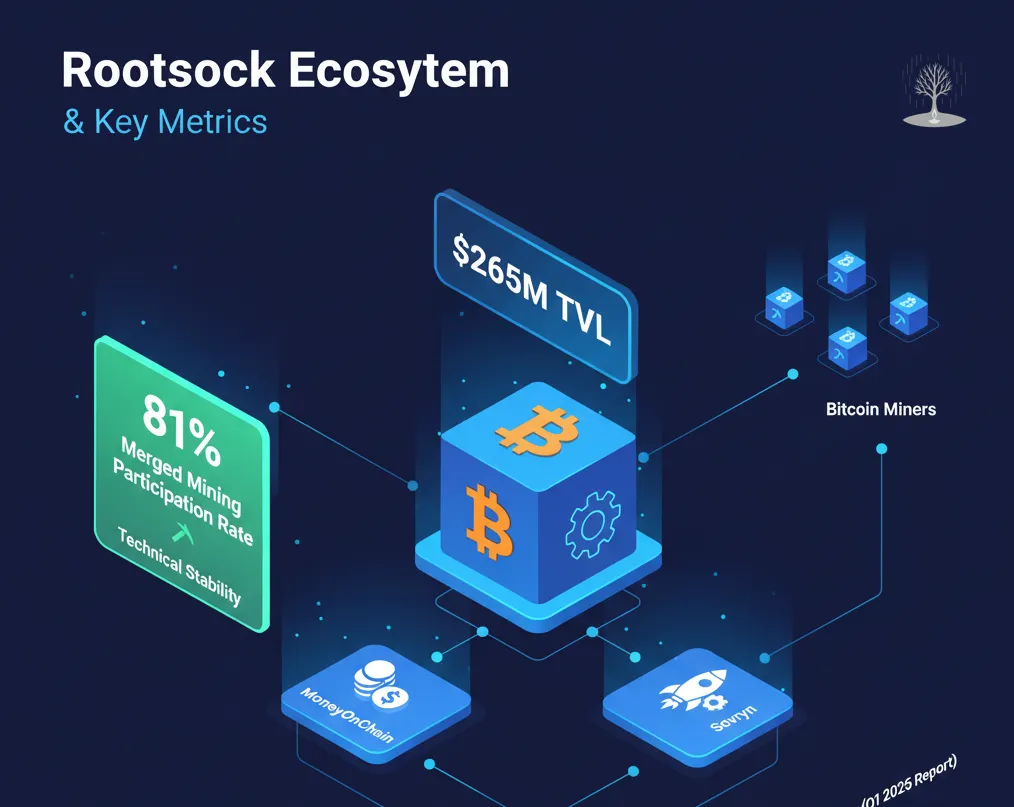
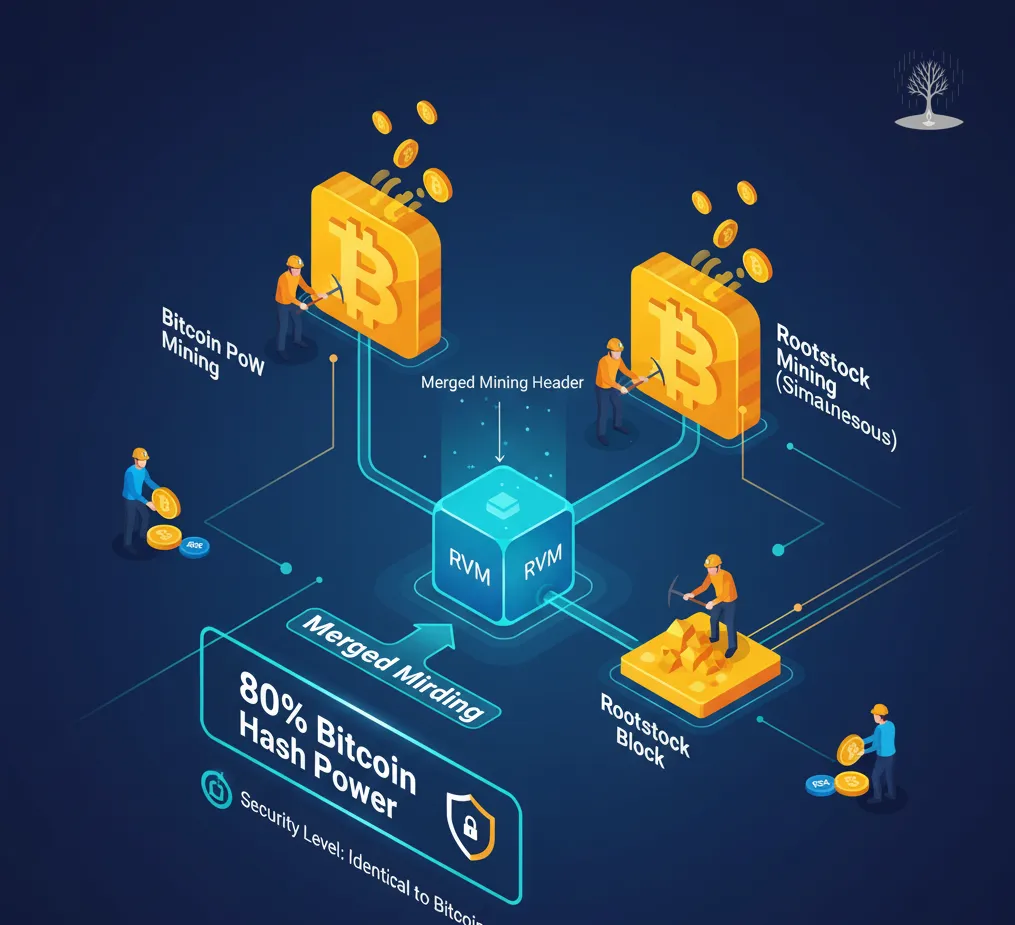
Rootstock (RSK) offers an EVM‑compatible environment while inheriting security from Bitcoin via merged mining, and bridges BTC via Powpeg.
Merged Mining
Bitcoin miners can mine Rootstock blocks with the same SHA‑256 work, earning rewards on both networks without extra energy cost. A large share of Bitcoin hash power participates, giving Rootstock robust security closely tied to Bitcoin’s PoW.
Powpeg Bridge
Powpeg is a permissioned multisig federation using HSMs and strict automation to custody bridged BTC. While this improves practical security, users still trust a known federation not to collude — a trade‑off distinct from Stacks’ decentralized signer set.
IV. CoreDAO: Satoshi Plus and Non‑Custodial BTC Staking
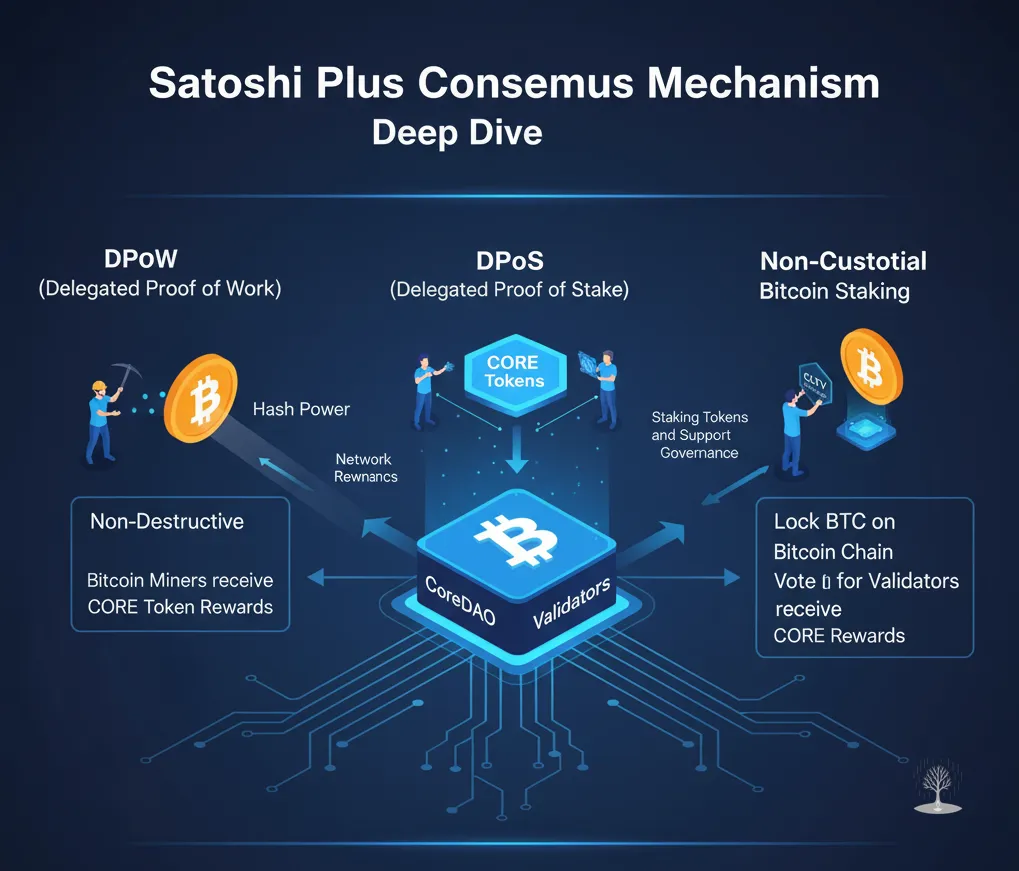
CoreDAO combines Delegated PoS with Bitcoin’s PoW via the Satoshi Plus model (DPoW + DPoS + BTC staking). It aims to balance security, decentralization, and scalability.
Non‑custodial Bitcoin Staking and Governance
BTC holders can time‑lock BTC on L1 using CLTV and delegate voting to Core validators without relinquishing ownership, earning CORE as rewards. This uses Bitcoin itself as a direct security and liquidity source for an L2.
EVM Compatibility and coreBTC
Core is EVM‑compatible, easing migration for Ethereum dApps. The coreBTC asset is a 1:1 BTC‑pegged token issued via a non‑custodial, incentive‑driven protocol using distributed roles (Lockers/Relayers) rather than a centralized custodian.
Ecosystem Snapshot
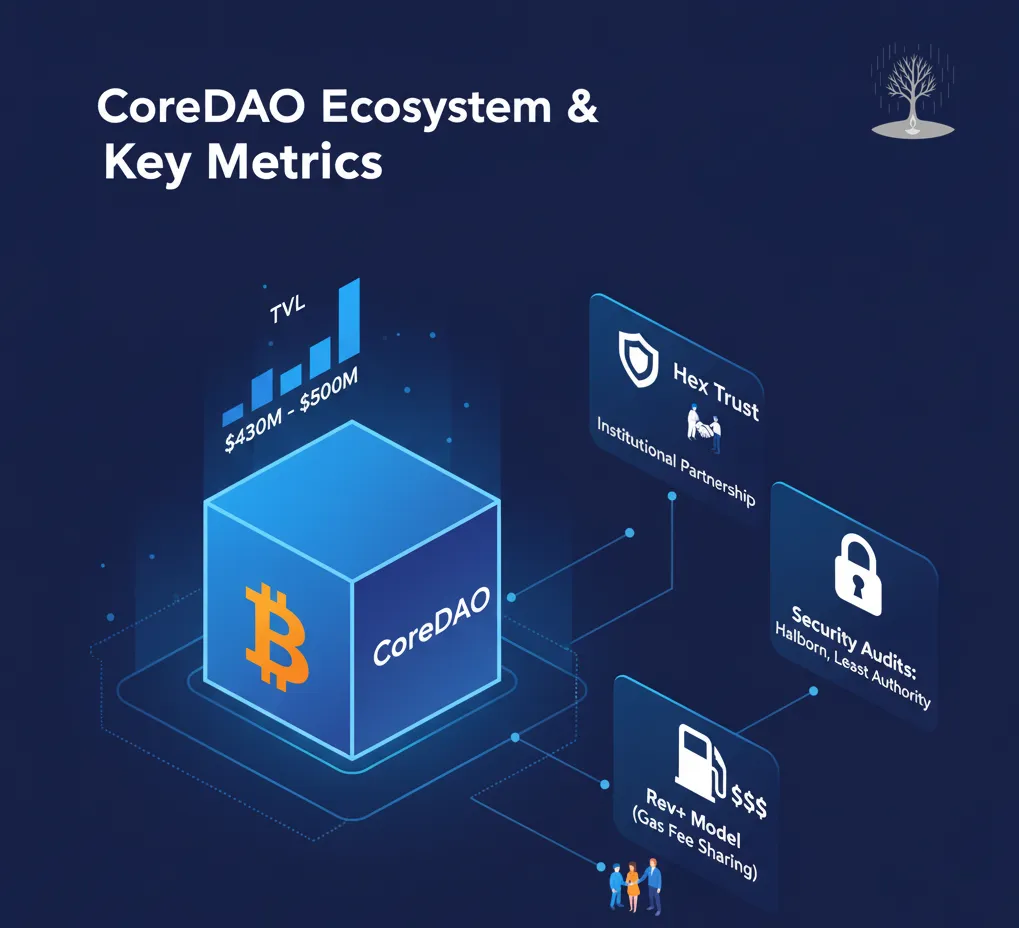
Core’s TVL is roughly $250–300M, higher than Stacks or Rootstock. Partnerships with institutions such as Hex Trust help onboard professional capital. The Rev+ model shares gas revenue with developers to encourage sustainable ecosystem growth.
V. Comparative Analysis and Conclusion
Stacks, Rootstock, and CoreDAO occupy distinct positions with different philosophies and technical trade‑offs.
| Item | Stacks | Rootstock | CoreDAO |
|---|---|---|---|
| Consensus | Proof of Transfer (PoX) | Merged Mining | Satoshi Plus (DPoW + DPoS + BTC Staking) |
| Contract Language | Clarity (decidable, source on‑chain) | Solidity (EVM) | Solidity (EVM) |
| BTC Bridge | sBTC (decentralized signers) | Powpeg (permissioned federation) | coreBTC (non‑custodial staking based) |
| TVL | ~$120M | ~$260M | ~$260M |
| Security Inheritance | Finality via anchoring to BTC | Hash power via merged mining | Hybrid via DPoW + non‑custodial staking |
Security Models and Trust Assumptions
- Stacks: Distributes trust to a decentralized signer set managing sBTC, anchors finality to BTC via PoX, and relies on economic incentives to deter malicious behavior.
- Rootstock: Assumes a known federation won’t collude. HSMs and automation strengthen operations, but users accept the federation trust model.
- CoreDAO: Emphasizes non‑custodial BTC staking. Users lock BTC on L1 and keep control while contributing to Core’s security, minimizing counterparty risk.
Outlook
All three models are likely to coexist and specialize: a safety‑first native language and decentralized bridge (Stacks), EVM with federation bridge (Rootstock), and EVM with a hybrid non‑custodial approach (Core). Market leadership will hinge on developer adoption, UX, and long‑term security proofs. Together, they expand Bitcoin’s functionality and enrich the BTCFi landscape.
Read next

[BTCFi Series 9] Babylon: TVL Up, Yields Thin
Babylon secures ~$5.6B in native BTC with a token worth ~$78M. The unit economics of Bitcoin security-as-a-service, and why realized yield stays thin.

[BTCFi 8] Clementine: BitVM in Production
Citrea's 2026 mainnet launched the first BitVM2 bridge. What the 1-of-N assumption requires, and where the model breaks under stress.
[BTCFi Series 6] Babylon vs EigenLayer Compared
A structural comparison of Babylon's Bitcoin-native staking and EigenLayer's ETH restaking — slashing, rewards, operator selection, and downstream effects.