
Introduction
When two hyperscalers ship the same payment primitive at the edge of their networks within weeks of each other, the interesting question is not which product wins. It is what the underlying protocol assumes, and who ends up sitting in the middle when the traffic starts flowing.
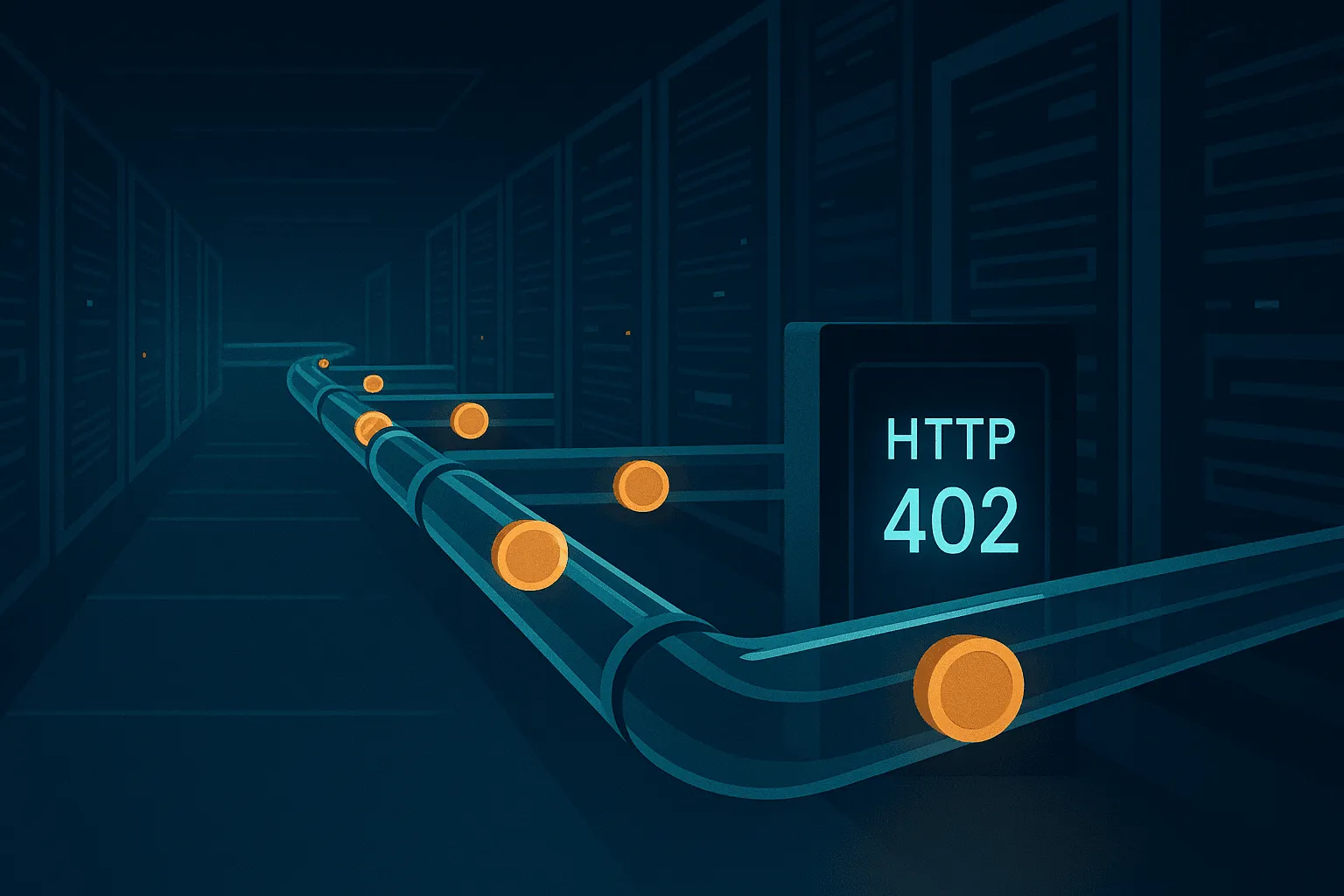
That is the position x402 occupies as of mid-2026. The protocol repurposes the long-dormant HTTP 402 status code — reserved in HTTP/1.1 in 1997 and never standardized for real use — into a machine-to-machine payment handshake settled primarily in USDC on Base and Solana. Coinbase authored it, contributed it to the Linux Foundation as the x402 Foundation in April 2026, and continues to operate the only production facilitator that every major deployment currently depends on. AWS CloudFront now enforces x402 at the edge as a generally available feature. Cloudflare’s Monetization Gateway is on a waitlist. Anthropic, Circle, Stripe and 20+ other members sit on the foundation.
Meanwhile the card networks have not been idle. Visa announced a strategic collaboration with OpenAI on 10 June 2026 to embed tokenized Visa credentials into agent-driven commerce. Google donated its Agent Payments Protocol (AP2) to the FIDO Alliance and, together with Mastercard, contributed a tamper-proof audit-log standard called Verifiable Intent. Two payment tracks are now clearly visible: one that settles in stablecoins at the HTTP layer, and one that authorizes agents on top of existing card rails.
We think the more useful framing is not “who wins” but where each stack’s trust assumptions sit, what breaks first as volume grows, and whether the two tracks converge, stratify, or displace each other. What follows is a mechanism-level walkthrough of x402, an honest account of its centralization and settlement problems, and a comparison against the card-network answer.
Background: what “agentic payments” actually means
Before the protocol details, it is worth naming the problem. An agentic payment is a transaction initiated by software acting on behalf of a user, without a human at the checkout page and often without a fixed merchant relationship established in advance. An LLM-powered research agent that pays per API call for a data feed. A crawler that pays a publisher for the right to ingest a page. A code assistant that provisions a cloud resource on demand.
Traditional payment stacks assume a human clicking, an account provisioned ahead of time, an API key issued out-of-band, or a subscription. Agents break all four assumptions. They arrive without accounts, without pre-registered payment methods, without patience for a checkout flow, and often with very low per-transaction values where card interchange (~1.5–3%) is prohibitive.
The traffic mix has already shifted. Cloudflare reported that AI training accounted for 52% of its crawler traffic as of June 2026, up from 22% in spring 2025. The publisher-side ad and subscription economy was not designed for readers that never see an ad and never sign up. That is the demand-side pressure behind x402.
Two design choices define the space:
- Where does authorization live? In a user’s wallet (x402), or in a card-network policy layer with spending limits, merchant category controls, and approval rules (Visa Intelligent Commerce, AP2)?
- Where does settlement happen? On a public blockchain per request, batched off-chain and settled later, or across existing card and bank rails?
x402 initially chose wallet-held authorization and per-request on-chain settlement in USDC. It is now proposing a deferred scheme that relaxes the second choice. The card-network stacks chose network-held authorization with existing rails. The trade-offs cascade from there.
The x402 flow, hop by hop

The core protocol is deliberately spare. As documented in Cloudflare’s launch post and Coinbase’s developer documentation, an x402 payment resolves in five steps:
- Request. A client — typically an agent with an embedded wallet — issues an ordinary HTTP request to a resource URL.
- 402 response. The server responds with HTTP 402 and a JSON payload describing acceptable payment schemes, accepted networks (e.g. Base, Polygon, Arbitrum, World, Solana), accepted assets (USDC, EURC via EIP-3009, or arbitrary ERC-20s via Permit2), the price, and the recipient address.
- Retry with payment authorization. The client re-issues the request with an
X-PAYMENTheader carrying a signed payment authorization — for EIP-3009, this is atransferWithAuthorizationsignature that lets a third party pull the specified amount from the client’s wallet. - Facilitator verification and settlement. The server forwards the authorization to a facilitator, which verifies the signature, checks the client’s on-chain balance, and submits the transfer to the target chain. In every documented production deployment, this facilitator is Coinbase’s CDP.
- Resource delivery. On confirmation, the server returns the resource with an
X-PAYMENT-RESPONSEheader carrying the settlement receipt.
Each hop has a distinct trust assumption, and it is worth naming them precisely.
Where the trust actually sits
The client wallet is the root of custody. Whoever holds the signing key can drain it up to the balance. For an autonomous agent, this key must live somewhere accessible to the agent runtime — a fundamentally weaker security posture than a user-held hardware key. Wallet-level spending limits (via smart-contract wallets or session keys) are the primary defense, but the design and enforcement of those limits is not part of x402 itself; it is delegated to the wallet stack.
The facilitator is trusted to verify signatures honestly, to submit the transaction to the correct chain within a reasonable window, and to report settlement truthfully to both sides. It is not trusted with custody — the EIP-3009 signature is scoped to a single transfer amount and recipient — but it is trusted with liveness and with the accuracy of its report to the merchant. If the facilitator lies about settlement status, the merchant can independently verify on-chain, but only after the fact.
The chain provides settlement finality. Base and Solana both offer sub-second block times and effective finality within seconds for USDC-denominated amounts small enough that reorg risk is negligible. This is materially different from Bitcoin-Lightning-era micropayment schemes.
The server is trusted to actually deliver the resource once payment settles. There is no on-chain enforcement of delivery, and — critically — no chargeback or refund path if the resource turns out to be junk. USDC transfers are irreversible by default.
What happens when the facilitator is unavailable
None of the documented deployments describe a fallback path. If Coinbase’s CDP facilitator returns errors, both the AWS CloudFront and Cloudflare Monetization Gateway integrations lose their ability to verify payment. The protocol specification allows any facilitator to exist, but the operational reality in mid-2026 is that only one does at production scale. We return to this below because it is the sharpest structural risk in the stack.
The facilitator problem

The x402 specification is open. Anyone can, in principle, stand up a facilitator. The Coinbase CDP facilitator publishes its interface, supports Base, Polygon, Arbitrum, World, and Solana, and prices at 1,000 transactions per month free with $0.001 per transaction thereafter. Sellers do not need to run blockchain infrastructure — the facilitator abstracts it.
In practice, across every deployment documented in the source material — AWS CloudFront, Cloudflare’s Monetization Gateway, and the Coinbase-hosted SDK integrations — the facilitator in production is Coinbase’s. No independent facilitator is documented as operational. The reasons are not mysterious:
- Balance sheet. A facilitator carries settlement risk in the window between signature verification and on-chain confirmation. Small operators struggle to price this risk.
- Chain coverage. Supporting five chains at low latency requires nodes, indexers, and monitoring across each.
- Roadmap features. Optional KYC attestations and geographic restrictions — items on Coinbase’s stated roadmap — are exactly the features that regulated buyers will require, and building them credibly requires legal infrastructure that most crypto teams do not have.
- Integration lock-in. Once AWS and Cloudflare validated against a single facilitator, the switching cost for a merchant to migrate is nontrivial, even if the interface is standard.
The consequence is that a protocol marketed as permissionless HTTP-level payments has, at the plumbing layer, exactly one commercial gatekeeper. That gatekeeper can adjust pricing, impose compliance conditions, restrict geographies, and — under legal pressure — deplatform specific merchants or wallets. This is not a hypothetical: Coinbase already operates under a US regulatory regime that could impose exactly these controls.
The Linux Foundation governance model is intended to prevent proprietary capture of the specification. It does not prevent operational concentration in the facilitator market. Those are different problems. The specification being open matters less than whether a second facilitator with meaningful traffic actually emerges. As of mid-2026, none is documented.
Deferred settlement: the enterprise-viable path
Cloudflare’s September 2025 launch post described a variant it calls the deferred payment scheme. It is worth walking through carefully because it changes the trust model materially and is arguably the more consequential proposal in the specification.
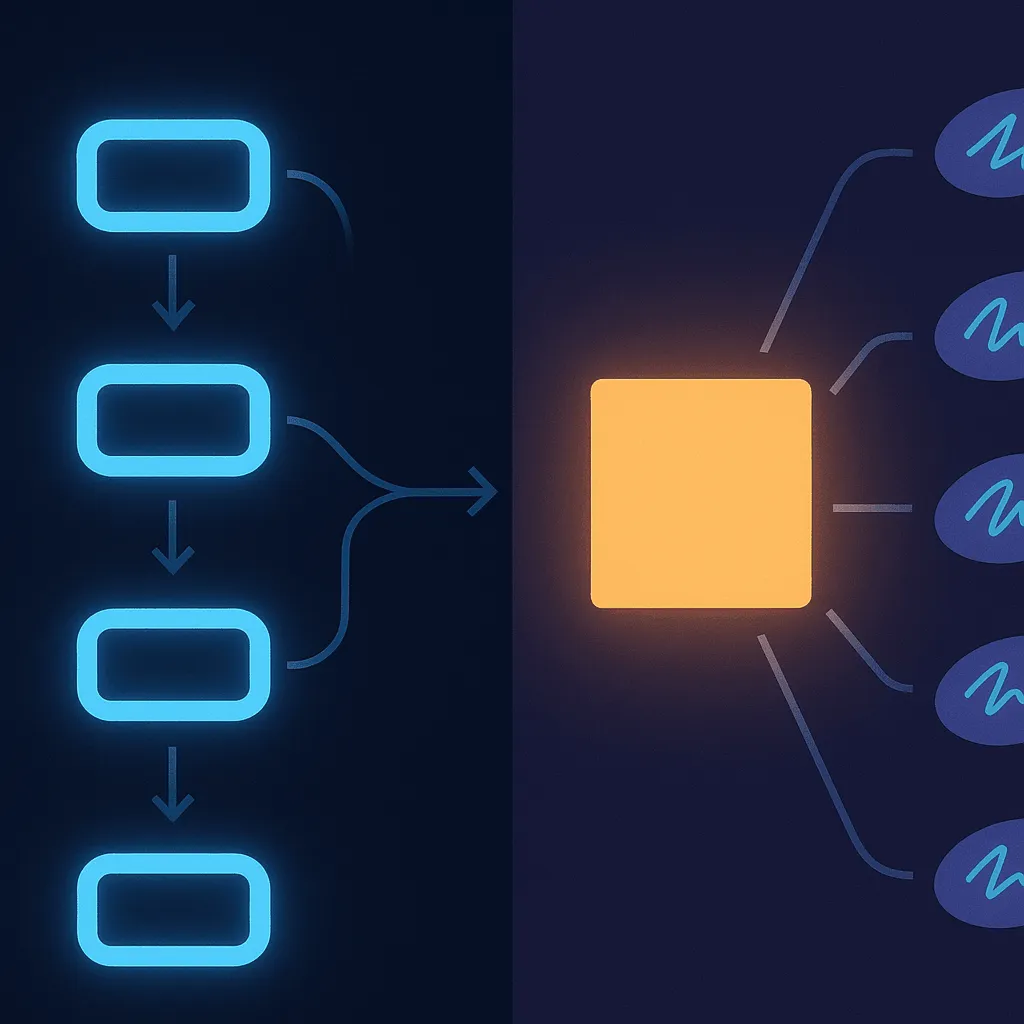
In the immediate scheme, every HTTP request that clears a paywall triggers an on-chain transfer. At Base or Solana costs this is defensible for medium-value transactions, but at Cloudflare’s reported volume of over one billion HTTP 402 responses per day against bot and crawler traffic, per-request settlement is prohibitively wasteful — and pointless if the same buyer will make a thousand requests to the same publisher in an hour.
The deferred scheme separates the cryptographic handshake from settlement. Instead of an EIP-3009 signature per request, the client presents an HTTP Message Signature using a JWK public key, establishing identity. The server allows the request. Settlement is aggregated — daily, weekly, or per subscription — and can happen off-chain entirely, including via credit card. Cloudflare’s pay-per-crawl private beta uses exactly this: HTTP signature per request, end-of-day credit card settlement.
Two things are true about this at once. It solves the fee-economics and throughput problems that would otherwise cap x402 at genuinely high-value calls. And it partly dissolves the protocol’s original crypto-native settlement thesis. If the settlement layer is credit cards batched end-of-day, x402 is no longer competing with card rails on economics — it is competing on the HTTP-native identity and authorization surface, with card rails doing the actual money movement.
The deferred scheme also introduces new trust assumptions. The server now extends credit to the buyer between the signed request and settlement. In the immediate scheme, the merchant knew settlement was final within seconds. In the deferred scheme, the merchant relies on the identity behind the HTTP signature being both solvent and non-repudiating. That is a different risk model, closer to a corporate net-30 relationship than to a stablecoin payment.
The specification is careful to note this is a proposal, not a ratified feature, and there is no security audit of the HTTP Message Signature construction referenced in the source material. It is likely, but not certain, that this is the scheme most enterprises actually adopt.
The competing stacks

x402 is not the only proposal, and the alternatives are not superficial. The card networks have converged on a different architecture that preserves their existing rails while adding an agent-authorization layer above them.
Visa Intelligent Commerce and the OpenAI collaboration
Visa’s 10 June 2026 announcement with OpenAI positions Visa as the tokenization, network, and risk layer, with OpenAI providing the agent interface. Transactions use tokenized Visa credentials with real-time authorization and fraud monitoring. Spending limits, merchant category controls, and required approvals are configured per user — the same primitives that Visa has offered on commercial cards for years, now exposed as constraints an agent must operate within.
The technical architecture is not disclosed in the press release. What is disclosed is the value proposition: trust, fraud liability, chargeback rights, and regulatory settled-ness. None of these are things x402 currently offers. Visa is not competing on cost or programmability. It is competing on the entire operational apparatus that surrounds a card payment — the parts of “payments” that are not the transfer itself.
AP2, FIDO, and Verifiable Intent
Google’s approach with AP2 is different again. By donating AP2 to the FIDO Alliance, Google is trying to establish it as a platform-agnostic authentication and authorization standard for agent-initiated payments — governed by an alliance whose existing mandate (WebAuthn, passkeys) already covers the identity layer that regulated finance recognizes. The AP2 v0.2 release introduced the concept of Human Not Present payments, where agents execute transactions autonomously against pre-authorized user instructions.
The companion standard, Verifiable Intent, is a tamper-proof audit log of user-authorized agent actions, co-developed with Mastercard and also donated to FIDO. This is the piece x402 currently lacks: a cryptographically enforceable record of what the user actually authorized the agent to do, which any downstream party — merchant, network, regulator, court — can inspect to resolve disputes.
Notably, AP2 is described as compatible with existing payment rails, not a replacement. It is a policy and audit layer that can sit above cards, bank transfers, or in principle stablecoin transfers. Whether AP2 and x402 stratify (AP2 as authorization, x402 as settlement) or compete (AP2 with its own settlement) is not clarified in the source material.
Mastercard Agent Pay exists in the topic angle but is not documented technically in our sources. We flag this as a gap rather than guess at its architecture.
The honest comparison
| Dimension | x402 (immediate) | x402 (deferred) | Visa Intelligent Commerce | AP2 + FIDO |
|---|---|---|---|---|
| Settlement rail | USDC on-chain | Off-chain, incl. cards | Visa card rails | Rail-agnostic |
| Per-transaction cost | ~fraction of a cent | Amortized | Card interchange | Depends on rail |
| Fraud liability | Undefined | Undefined | Card network model | Not specified |
| Refunds/chargebacks | None | None | Existing card rights | Depends on rail |
| Mandate authorization | Wallet-level | Wallet-level | Network policy layer | Verifiable Intent log |
| Regulatory posture | Emerging | Emerging | Settled | Settled (via rail) |
| Governance | Linux Foundation | Linux Foundation | Proprietary | FIDO Alliance |
The false-equivalence trap here is treating these as directly substitutable. They are not. x402 excels at machine-to-machine calls where the buyer is definitely a bot, the resource is definitely digital, and the value is definitely small. Card-network stacks excel where fraud, refunds, and regulatory clarity dominate the buyer’s risk calculus. The interesting empirical question over the next 12–24 months is whether the middle collapses toward one side or splits cleanly along use case.
Where the system breaks first

Assume x402 volume continues to grow. Coinbase reports 169 million payments, 590,000 buyers, and 100,000 sellers in the protocol’s first year — figures that are unaudited self-reports and should be treated as directional rather than defensible. The annualized dollar-volume estimate that has circulated (~$600M) does not appear in our sourced material and we decline to quote it as fact. Coinbase has not clarified whether a “payment” includes retries, deferred-scheme signed commitments, or only settled on-chain transfers, which makes the top-line figure difficult to compare against any card-network baseline.
Even taking the growth at face value, several failure modes are visible.
Facilitator centralization
The most immediate. Both hyperscaler deployments funnel to Coinbase’s facilitator. If it degrades, the paywalls fail open (traffic passes through unpaid) or fail closed (traffic is refused) — neither is desirable at edge scale. Beyond availability, pricing power is unconstrained. The current $0.001-per-transaction rate is attractive against card interchange but there is no contractual protection against upward revisions once dependency is entrenched.
Mandate fraud and the human-not-present problem
x402’s authorization model relies on the wallet enforcing spending limits. If an agent runtime is compromised — via prompt injection, supply-chain attack on the model, or a bug in the agent framework — it can execute any payment the wallet’s limits allow. The wallet cannot distinguish a legitimate agent action from a hijacked one, because both are signed by the same key.
AP2’s Verifiable Intent is the direct answer to this: a cryptographic log of what the user authorized, verifiable independently of the agent’s runtime state. x402 has no equivalent. Whether wallet-level session keys and smart-contract spending policies are sufficient without an audit log is an open question, and one that regulated enterprises are likely to answer conservatively.
VAT, invoicing, and tax jurisdiction
Neither AWS nor Cloudflare has addressed how an anonymous stablecoin payment from an agent generates a compliant EU VAT invoice. Under EU rules, the seller must identify the buyer’s jurisdiction, apply the correct VAT rate, and issue an invoice with specific fields. An x402 payment provides an on-chain address, not a buyer identity or jurisdiction. This is not a small problem for European enterprises, and it is not solved in the current specification.
Refund and dispute semantics
USDC transfers are irreversible. If an agent pays for a resource and the resource is malformed, missing, or misrepresented, x402 provides no protocol-level path to redress. Merchants can voluntarily refund, but there is no equivalent of the card-network chargeback that shifts liability and forces the merchant to defend the delivery. For contested transactions — anything where quality is subjective — x402 is structurally unsuited without an out-of-band dispute layer.
Fee economics at scale
The $0.001-per-transaction facilitator fee looks favorable against 1.5–3% card interchange. It stops looking favorable at very high volumes if it is a flat fee on high-value transactions, and stops looking favorable at very low volumes if the underlying chain fees (even on Base or Solana) start to dominate. The deferred scheme dissolves this tension by amortizing settlement, but at the cost of introducing credit relationships that reintroduce the card-network’s operational complexity.
The bootstrapping problem
Bots can ignore payment gates and use free endpoints or synthetic data. Enforcement requires that enough high-value content actually sits behind paid edges — a chicken-and-egg problem that historical micropayment schemes (Flattr, Bitcoin Lightning) failed to solve. The structural bet x402 makes is that the buyer being a non-human agent removes the UX friction that killed prior attempts. That is plausible but not proven; if enterprise risk controls impose the same authorization friction on agent wallets that killed human micropayments, the bet weakens.
Implications and open questions
The most defensible reading of the current state is that x402 has solved the least-important half of the agent payments problem — the transfer of value — and has barely addressed the harder half: authorization, audit, refund, and regulatory fit. The card-network stacks have the harder half largely solved and are grafting agent authorization onto it. Whether the two tracks converge, stratify, or one displaces the other depends on questions we cannot yet answer:
- Does an independent facilitator market emerge? If a second facilitator with meaningful traffic does not exist by mid-2027, the “open protocol” framing is functionally hollow. If two or three do, the centralization critique softens materially.
- Does the deferred scheme become the primary settlement mode? If it does, x402 evolves into an HTTP-native identity and authorization protocol for payments, with the settlement rail negotiable. That is a materially different — and arguably more durable — product than pure stablecoin micropayments.
- Does Verifiable Intent or an x402 equivalent get standardized? Without a cryptographic audit log of user authorization, enterprise adoption of autonomous agent payments will hit governance objections independent of any technical property of the transfer.
- How is a “payment” defined? Coinbase’s reported volume numbers cannot be meaningfully compared against card-network volumes until the counting methodology is disclosed. This is not a minor accounting question; it determines whether the growth story is real.
- Where does regulatory treatment land? FinCEN, EU MiCA, and FATF travel-rule applicability to x402 stablecoin payments is not addressed in any documentation we have. Enterprise buyers will not deploy against a protocol with unsettled AML posture at scale.
What the reader should watch for over the next twelve months is not the volume numbers — those are self-reported and definitionally soft. Watch for the second facilitator. Watch for the first regulated enterprise (bank, exchange, publisher) to publish an audit-passing deployment. Watch for a formal refund or dispute mechanism in the specification. And watch whether AP2 and x402 begin explicit interoperability work through FIDO and the Linux Foundation, or whether they harden into non-overlapping stacks.
If the facilitator remains singular and the audit-log gap remains unfilled, x402 will occupy a real but bounded niche: agent-to-agent micropayments for digital resources where the operator accepts stablecoin settlement risk and neither party requires refund rights. That is a genuine market. It is not the general-purpose agentic commerce rail the launch materials imply. Card networks would then not be disintermediated so much as complemented, with the rails stratifying cleanly by transaction type.
The alternative outcome — where deferred settlement matures, independent facilitators emerge, and a Verifiable-Intent-equivalent gets bolted onto the specification — leaves x402 as a legitimate HTTP-layer competitor to the card-network stacks for a much wider set of use cases. Neither outcome is currently more likely than the other from what the sources support. The next twelve months should resolve most of the ambiguity.
References
- InfoQ, Cloudflare and AWS Embed x402 Agent Payments at the Edge, July 2026.
- Visa, Visa Partners with OpenAI to Power the Next Generation of AI Commerce, 10 June 2026.
- Google, Donating Agent Payments Protocol to the FIDO Alliance.
- Cloudflare, Launching the x402 Foundation with Coinbase, 23 September 2025.
- Coinbase Developer Platform, x402 Overview.
Read next

The Won Goes Onchain: Korea's Race Ahead of the Rulebook
Korea's won-stablecoin consortiums formed before the law did: the Digital Asset Basic Act stalled on a Bank of Korea demand for bank-majority issuers.

The Missing Rulebook: Why CLARITY Stalled in the Senate
Passed in July 2025, CLARITY sat at Senate Calendar No. 423 past July 2026 over ethics, Section 604, and stablecoin yield.

Custody for Machines: Who Holds the Agent's Keys
MoonPay launched the Open Wallet Standard in March 2026, but agent wallets still split on where policy is enforced: on-chain or via vendor API.