


Introduction
When Kalshi began listing crypto perpetual contracts on a CFTC-registered Designated Contract Market in 2025, it did something the offshore perp venues had spent the better part of a decade avoiding: it forced US regulators to take a position on what, precisely, a perpetual contract is under American derivatives law. The question sounds pedantic. It is not. Whether a perp is a future or a swap determines who can list it, who can trade it, what disclosures and reporting attach to it, and whether the largest onchain perp venues — Hyperliquid, dYdX, GMX, Aevo, and their successors — have a plausible path to onshore US users or remain permanently geofenced.
The classification debate has been latent since BitMEX shipped the inverse perpetual in 2016. Offshore venues never had to resolve it; their contracts existed outside the Commodity Exchange Act’s reach in any practical sense. Onshore, prediction-market venue Kalshi’s decision to list perpetuals on equities and crypto indices alongside its event contracts has now collapsed the abstraction. The CFTC’s parallel offensive against state gaming regulators — including its 2025 suit against New Mexico over sports-related event contracts — signals that the agency views derivatives, prediction markets, and increasingly the structures in between as a single contiguous jurisdiction it intends to defend.
This piece is a mechanism deep-dive. We walk through how perpetuals settle, why the funding rate is the crux of the legal argument, how the Commodity Exchange Act distinguishes futures from swaps in ways that map awkwardly onto perp mechanics, and what each plausible classification would mean for the existing onchain venue stack. We close on the open questions: what the CFTC’s prediction-market posture implies for perps, whether DeFi-native designs can survive any onshore classification at all, and the second-order effects on market structure if they cannot.
The mechanism that broke the taxonomy
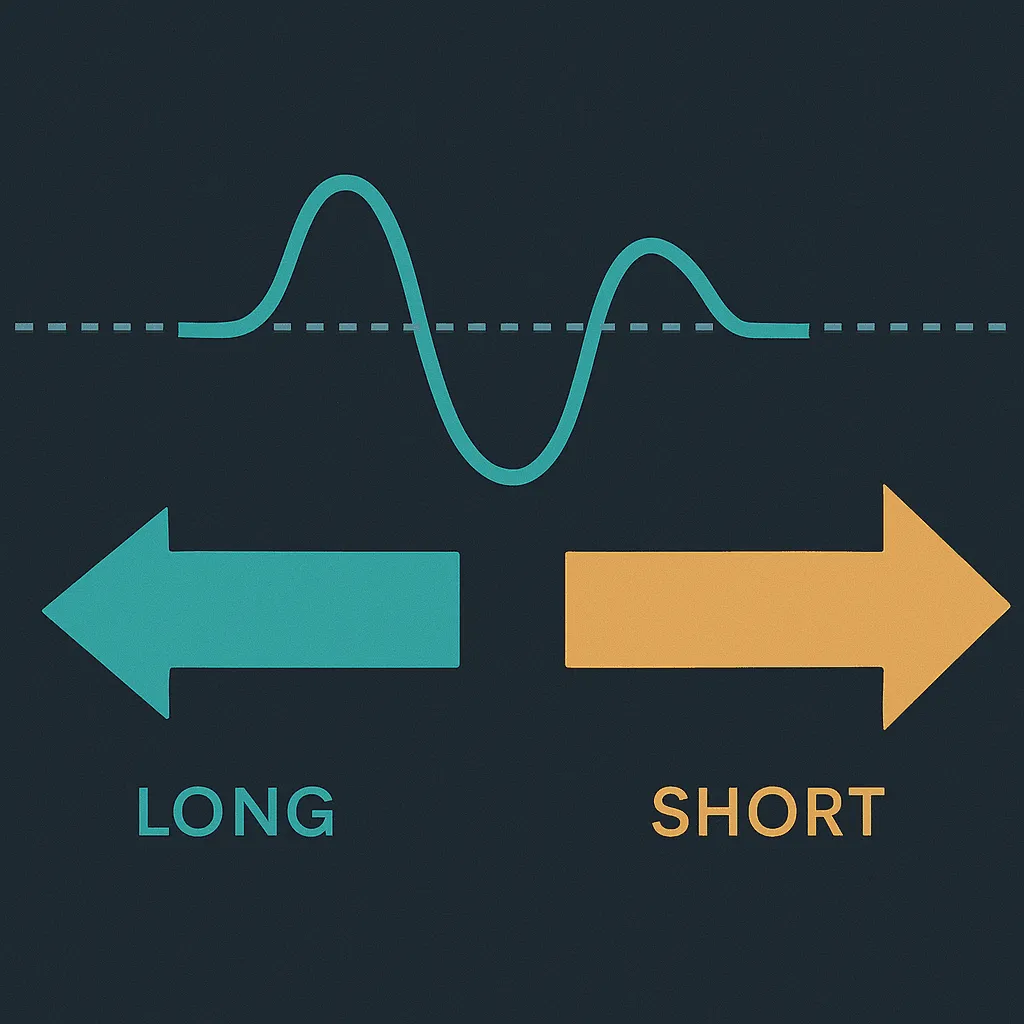
A perpetual contract is, mechanically, a synthetic spot exposure with no expiry. Two counterparties — a long and a short — exchange a payoff tied to the price of an underlying asset. Unlike a traditional futures contract, there is no settlement date at which the position must be closed, rolled, or physically delivered. The contract simply persists until one side closes it.
The economic problem this creates is straightforward: without an expiry that forces convergence between the contract price and the spot price of the underlying, the two can drift arbitrarily. Traditional futures solve this by construction — as expiry approaches, basis collapses because the contract becomes redeemable for (or cash-settled against) the spot. A perpetual has no such terminal event. Something else must anchor it.
That something is the funding rate: a periodic cash payment exchanged directly between longs and shorts, calibrated so that whichever side is in surplus pays the other. When the perpetual trades above the index price, longs pay shorts; when it trades below, shorts pay longs. The funding payment is not paid to the exchange. It is paid peer-to-peer, with the venue acting as bookkeeper. The size of the payment scales with the deviation from index, creating an economic gravity that pulls the contract back toward spot. Most major venues settle funding every one, four, or eight hours, with the rate computed from a weighted blend of order-book depth, premium index, and an interest-rate component.
Two structural features of this design matter for the legal argument.
First, the contract is non-terminating. There is no scheduled date on which the position must be settled or delivered. A long held open for three years simply accumulates funding payments and mark-to-market PnL across that horizon.
Second, the funding rate is state-dependent and bilateral. It is not a fixed coupon or a known schedule. It is computed continuously from market conditions and exchanged directly between the two sides of each trade. Functionally, this resembles the floating leg of an interest rate swap more than it resembles anything in the listed futures world.
These two features — perpetual duration and a continuously recomputed bilateral cash flow — are exactly the features that make the contract’s regulatory classification ambiguous. They are also, not coincidentally, exactly the features that made perpetuals dominant in crypto: traders get spot-like exposure with leverage and without the operational overhead of rolls.
What the CEA actually says

The Commodity Exchange Act, as substantially amended by Dodd-Frank in 2010, gives the CFTC jurisdiction over three relevant categories: futures, swaps, and event contracts (a sub-category that has become its own battleground). The categories are defined by statute, refined by CFTC rulemaking, and policed largely through the agency’s enforcement choices. None of the definitions was written with perpetual contracts in mind.
Futures
The CEA does not provide a clean statutory definition of “future” — the agency and courts have built one over decades of interpretation. A futures contract is generally understood as a standardized agreement to buy or sell a commodity at a specified price on a specified future date, traded on a Designated Contract Market (DCM), and cleared through a Derivatives Clearing Organization (DCO). The DCM/DCO architecture is central: futures, in the post-Dodd-Frank world, are exchange-traded and centrally cleared, with the clearing house novating each trade and standing as counterparty to both sides.
Two pieces of this map poorly onto perps. A perpetual has no specified future date. And while crypto perp venues do operate something resembling a clearing function — auto-deleveraging, insurance funds, cross-margining — there is no DCO in the regulatory sense. On Hyperliquid or dYdX, the “clearing house” is a smart contract and a margin engine; on Kalshi’s listings, it is a registered DCO, which is part of why Kalshi can plausibly list perps at all.
Swaps
Dodd-Frank’s definition of “swap” is sprawling and, by design, residual. It captures any agreement that provides for “any purchase, sale, payment, or delivery… that is dependent on the occurrence, non-occurrence, or the extent of the occurrence of an event or contingency associated with a potential financial, economic, or commercial consequence,” along with explicit enumeration of interest rate swaps, total return swaps, and similar instruments. The CFTC and SEC issued joint rules in 2012 further refining the category.
Swaps under the CEA can be cleared (through a DCO, traded on a Swap Execution Facility or DCM) or uncleared (bilateral, subject to margin rules, reporting, and dealer registration if executed by a Swap Dealer). The key distinction from futures is that the swap regime explicitly contemplates bilateral, non-exchange-traded contracts with bespoke terms — exactly the kind of contract perpetuals resemble.
The argument for classifying perps as swaps rests heavily on the funding mechanism. A perpetual long is, economically, receiving the price return on the underlying and paying (or receiving) a floating funding rate. That is structurally a total return swap with a floating financing leg. The fact that the contract is standardized and matched on an order book does not, on its face, exclude it from the swap definition; cleared swaps are explicitly contemplated by the statute.
Event contracts
The third category, event contracts under CEA Section 5c(c)(5)(C), governs contracts whose payoff depends on the occurrence of a specified event. This is the regime under which Kalshi operates its prediction markets. The CFTC has broad authority to prohibit event contracts it deems contrary to the public interest, and the agency has been litigating the boundaries of that authority aggressively — including in disputes with state gaming regulators and, separately, in the Kalshi sports-market litigation that culminated in significant losses for the CFTC’s prohibitionist posture.
Perpetuals are not event contracts in the conventional sense. But the prediction-market litigation is relevant because it has clarified the CFTC’s appetite for jurisdictional expansion and its institutional view that any contract economically functioning as a derivative belongs in its perimeter — a posture that cuts in favor of asserting authority over perps regardless of which sub-category they ultimately land in.
Why the classification matters
The futures-versus-swaps question is not academic. The two regimes impose materially different obligations on venues, intermediaries, and end users.
Venue architecture
Futures must be listed on a DCM. The DCM regime is highly prescriptive: 23 core principles covering everything from contract design to market surveillance to financial integrity. A new contract listing typically goes through self-certification or, for novel products, formal approval. The CFTC has historically required futures contracts to have a clear expiry and a defined settlement mechanism, both of which perpetuals lack in the conventional form.
Swaps can be listed on a DCM or on a Swap Execution Facility (SEF), or executed bilaterally between eligible counterparties. SEFs have lighter listing requirements than DCMs but are still substantial registered entities. A perpetual classified as a swap could in principle be listed on either, but the SEF route opens up more design flexibility for bilateral or quasi-bilateral execution models.
Counterparty eligibility
This is where the practical stakes are highest. Futures on a DCM can be traded by retail participants through registered Futures Commission Merchants (FCMs). Swaps, by contrast, are subject to the Eligible Contract Participant (ECP) requirement under CEA Section 1a(18) for most off-exchange execution: individuals must generally have $10M in assets (or $5M and be hedging) to participate in bilateral swaps. Cleared swaps listed on a DCM can in principle reach retail, but the operational reality is that the swap regime was built around institutional participation.
If perpetuals are classified as swaps and the cleared-DCM path is foreclosed by design constraints, retail access in the US is functionally over. If they are classified as futures, retail access remains plausible via the existing FCM channel — which is more or less the path Kalshi is attempting.
Reporting and capital
Swap Dealers — entities that make markets in swaps above a de minimis threshold (currently $8B in gross notional over twelve months for most asset classes) — must register with the CFTC, comply with capital and margin rules, post and collect initial margin on uncleared swaps, and report trades to a Swap Data Repository. For a venue like Hyperliquid, where market makers operate at substantial size, swap-dealer registration of major participants would impose costs and disclosures that the current architecture simply does not contemplate.
Futures intermediaries — FCMs — have their own capital and segregation rules, but the regime is mature, well-understood, and does not impose the bilateral reporting burdens of the swap regime.
Self-custody and onchain settlement
Neither regime cleanly accommodates self-custodial, onchain perpetual venues. The DCO concept presupposes a corporate clearing house with capital, default management procedures, and CFTC registration. The SEF regime presupposes a registered execution facility. A smart-contract-based perp venue with an onchain margin engine and no corporate counterparty does not fit either box. This is the deepest tension in the entire debate: the existing regulatory taxonomy was built around intermediated markets, and the contracts most at stake are increasingly disintermediated.
The Kalshi catalyst and the CFTC’s posture

Kalshi’s perpetual listings did not arrive in a vacuum. They came in the middle of a sustained CFTC campaign to assert jurisdiction over prediction markets, sports event contracts, and adjacent products against both state gaming regulators and competing federal claims.
The 2025 CFTC suit against New Mexico — seeking to enjoin state enforcement of gaming laws against CFTC-registered event-contract venues — was the most direct expression of the agency’s view that anything resembling a derivative on a federally regulated venue is its exclusive province. The complaint framed sports event contracts not as gambling but as price-discovery instruments, mirroring the framing the agency lost on in earlier prohibition attempts but redeploying it offensively against state regulators rather than defensively against venues.
The institutional message is consistent: the CFTC views its perimeter as expanding, not contracting. Former SEC Chair Gary Gensler’s public rejection of the CFTC’s exclusive-jurisdiction claim over prediction markets and sports betting — articulated in late 2025 — is notable mostly because it telegraphs that this jurisdictional question is unresolved at the highest levels of the regulatory establishment. Gensler’s view, broadly, was that markets that function economically as gaming are gaming, regardless of how they are wrapped. The CFTC’s view, broadly, is that markets that produce prices and hedge risk are derivatives, regardless of what they reference.
For perpetuals, this posture cuts in two directions at once. It suggests the CFTC will be aggressive about asserting authority — meaning the question is not whether perps fall under the CEA but how they are classified within it. And it suggests the agency may be willing to interpret existing categories flexibly to accommodate novel products, including perhaps by self-certifying perpetuals as futures via a DCM (the Kalshi route) rather than forcing them into the swap regime.
The Kalshi listings, in other words, are a stalking horse. If the CFTC permits them to stand and they generate meaningful volume without enforcement action, that is a tacit endorsement of the futures classification for perps on a DCM. Other DCMs — CME, Coinbase Derivatives, Bitnomial — will inevitably explore similar listings. The path to onshore perps for retail US users runs through this acquiescence.
Why Kalshi’s path is narrow
The Kalshi structure works because Kalshi operates a DCM with a registered DCO. The contracts are centrally cleared. There is a corporate counterparty (in clearing-house form) to every trade. The funding-rate mechanism is implemented within a tightly controlled venue infrastructure that looks operationally much more like a traditional exchange than like a DeFi protocol.
None of this maps to Hyperliquid or dYdX. The onchain venues do not have a registered DCO. They do not have an FCM intermediary chain. Their margin engines run as smart contracts. Even if the CFTC blesses the Kalshi-style perpetual as a permissible DCM future, that blessing does not extend to architectures that do not look like Kalshi’s. The classification victory, if it comes, is narrow.
What each classification means for onchain venues

Hyperliquid and dYdX have built their order books, margin systems, and liquidation engines without reference to US derivatives law because both venues geofence US users. That posture is sustainable only as long as offshore status is itself sustainable — and the CFTC’s enforcement history with BitMEX, Binance, and others suggests that offshore status, in the agency’s view, is a fact about where users sit, not where servers run.
If perps are futures
If perps are formally classified as futures, the onchain venues face an interesting structural problem. The futures regime is built around DCMs and DCOs. The smart-contract architecture of Hyperliquid’s HyperCore or dYdX’s v4 chain does not naturally map to either, but it is at least conceivable that a regulated wrapper could be constructed: a US-facing entity that operates as a DCM, routes execution through the underlying onchain venue, and inherits the protocol’s liquidity. This is the “regulated front-end on a permissionless back-end” pattern that several teams have explored.
The economic problem is that the regulated wrapper would need its own clearing arrangement, which means either operating a DCO or routing through one, which means a corporate counterparty standing between the trader and the smart contract. At that point the architecture starts to look like a registered futures exchange with onchain settlement, which is plausible but is not what the protocols are today.
If perps are swaps
If perps are classified as swaps, the path is significantly harder. The ECP threshold knocks out most retail. The Swap Dealer registration threshold reaches into market-maker economics. Cleared swap listing on a DCM is possible but offers little practical benefit over futures classification for a venue trying to reach retail. The likely outcome is that swap classification entrenches the offshore-only equilibrium for onchain venues, with US institutional access available only through registered intermediaries — a much smaller market than retail-inclusive futures.
If perps are something new
There is a third path the CFTC has used before: defining a new sub-category by rulemaking. The agency could, in principle, issue rules characterizing perpetuals as a distinct product class with tailored requirements — perhaps relaxing the expiry requirement that historically attached to futures, perhaps creating a “perpetual swap” category with cleared-swap-like execution but lighter dealer obligations. This is the most flexible outcome and the most likely to accommodate the actual mechanics of crypto perps. It is also the slowest, because it requires notice-and-comment rulemaking, and the most politically sensitive, because it would constitute formal regulatory blessing of a product class that originated entirely in unregulated offshore markets.
The bias of the current commission appears to be toward solving the problem through DCM self-certification and enforcement discretion rather than formal rulemaking. That is consistent with how the agency has handled prediction markets. It is also consistent with the political reality that bespoke rulemakings invite Congressional scrutiny the agency does not want.
Second-order effects on market structure
Whatever classification emerges, the second-order effects on perp market structure are significant.
Onshore-offshore arbitrage compresses
For five years, the perpetual market has run as a two-tier system: offshore venues capturing the overwhelming majority of volume and serving global retail; onshore venues serving institutions through CME’s bitcoin and ether futures. If onshore retail perp access becomes real — through Kalshi, Coinbase Derivatives, or similar — that two-tier structure compresses. Volume migrates toward whichever venue offers the best execution within the user’s accessible legal regime.
The compression is unlikely to be complete. Offshore venues will retain advantages in product breadth (long-tail altcoin perps that no DCM will list), leverage (US listings will be capped well below offshore norms), and onchain composability (collateral that lives in DeFi cannot easily migrate to a centrally-cleared venue). But the marginal US retail user — currently transacting offshore in violation of geofencing or through onchain venues directly — has, for the first time, an onshore alternative for the most liquid perps.
Market-maker fragmentation
The major perpetual market makers run unified inventory across venues. If onshore listings require US-licensed market makers (FCM-affiliated or Swap-Dealer-registered, depending on classification), the inventory unification fragments. Onshore market makers will quote tighter spreads on listed contracts than offshore market makers can, because they avoid the legal-risk discount embedded in offshore quotes. This dynamic, played out over time, pulls liquidity onshore for the listed contracts and leaves offshore venues increasingly specialized in the long tail.
DeFi venues face a strategic choice
For Hyperliquid, dYdX, and the next generation of onchain perp venues, the classification debate forces a strategic choice that has been deferred for years. Option one: remain offshore-only and accept that the US market is foreclosed. Option two: build a regulated front-end that intermediates US access, accepting the architectural and economic costs of doing so. Option three: lobby and litigate for a regulatory category that accommodates self-custodial onchain settlement directly — a long, uncertain path with no guarantee of success.
The choice has different implications for token economics, governance structures, and protocol roadmaps. A protocol that decides to pursue a regulated front-end has different priorities — KYC infrastructure, intermediary partnerships, jurisdictional structuring — than one that decides to remain permissionless. The classification outcome will, indirectly, shape which path each venue takes.
Open questions

The classification question is unlikely to be resolved cleanly. The most probable trajectory is incremental: Kalshi’s listings stand, additional DCMs follow with their own perpetual offerings, the CFTC’s posture clarifies through enforcement choices rather than through formal rulemaking, and the boundary between “permissible DCM future” and “everything else” is drawn pragmatically over several years. Within that trajectory, several questions remain genuinely open.
The first is whether the expiry requirement that has historically attached to futures survives perpetual listings at all. If the CFTC permits perpetuals as DCM-listed futures, that is a material reinterpretation of what “future” means under decades of agency practice. It would not be the first such reinterpretation, but it would have implications well beyond crypto — for energy products, agricultural rolling structures, and any market where a perpetual representation might be more efficient than a strip of expiring contracts.
The second is what happens to the market makers and traders who currently operate on offshore venues serving US users in violation of geofencing. If onshore perpetuals become available, the regulatory case for tolerating offshore access weakens. The CFTC’s historical posture has been that enforcement against individual users is impractical and unattractive; enforcement against venues, intermediaries, and large traders is the lever. The availability of an onshore alternative removes the practical defense — “users had no choice” — that has implicitly limited enforcement appetite.
The third, and the question most central to onchain venues, is whether any plausible classification accommodates self-custodial settlement. The futures regime presupposes a clearing house. The swap regime presupposes registered dealers or eligible counterparties. Neither presupposes a smart contract holding collateral with liquidation logic enforced by validators. The optimistic case for DeFi-native perps under US law requires the CFTC to either reinterpret the DCO concept to accommodate decentralized clearing or define a new category by rulemaking. The pessimistic case is that the regulated path requires intermediation, and intermediation defeats the architectural premise of the protocols.
The fourth question is jurisdictional. The Gensler critique — that the CFTC’s expansive view of its perimeter overreaches — is shared by a meaningful portion of the legal and regulatory establishment. If the SEC, state attorneys general, or Congress push back, the eventual regime may look quite different from the one the current CFTC is constructing through enforcement choices. The Kalshi-style equilibrium is durable only if it survives political and judicial review.
What is worth watching, then, is not any single ruling or enforcement action. It is the accumulation: which DCMs list perpetuals after Kalshi, what design constraints they accept, whether the CFTC publishes any guidance on the funding-rate mechanism specifically, and how onchain venues position themselves through the next eighteen months. The classification will be revealed not by a definition but by a pattern of decisions. The pattern is just beginning to form.
Read next

The Won Goes Onchain: Korea's Race Ahead of the Rulebook
Korea's won-stablecoin consortiums formed before the law did: the Digital Asset Basic Act stalled on a Bank of Korea demand for bank-majority issuers.

The Missing Rulebook: Why CLARITY Stalled in the Senate
Passed in July 2025, CLARITY sat at Senate Calendar No. 423 past July 2026 over ethics, Section 604, and stablecoin yield.

Custody for Machines: Who Holds the Agent's Keys
MoonPay launched the Open Wallet Standard in March 2026, but agent wallets still split on where policy is enforced: on-chain or via vendor API.