
Introduction
On a 24-hour window ending around 7 August 2026, relayscan.io recorded Titan Builder as the producer of roughly 49.55% of MEV-boost blocks on Ethereum, with Quasar at about 24.00% and Flashbots’ TEE-based BuilderNet at 13.94%. Beaverbuild, which described itself as the largest Ethereum block builder since 2022, showed up in that same snapshot with seven residual blocks, 0.11%, because it had folded its order flow into BuilderNet and retired its standalone builder.
Concentration alone is not the interesting fact. What matters is that Titan earned 36.17 ETH of profit on 3,177 blocks in the period, while Quasar earned 5.16 ETH on 1,539 blocks. Titan’s per-block profitability is roughly three times Quasar’s. Share can be won with subsidies; per-block margin cannot. Something structural, most plausibly the composition of transactions each builder sees, is doing the work.
Two reform efforts are supposed to loosen this structure. BuilderNet proposes to mutualize the builder role inside trusted execution environments, replacing reputational trust with hardware attestation. EIP-7732, the ePBS specification queued for Ethereum’s Glamsterdam upgrade in Q4 2026, would move the proposer-builder exchange in-protocol and retire the trusted relay. Each is a serious piece of engineering. Neither directly addresses the moat that shows up in the profit-per-block gap.
How the supply chain works today
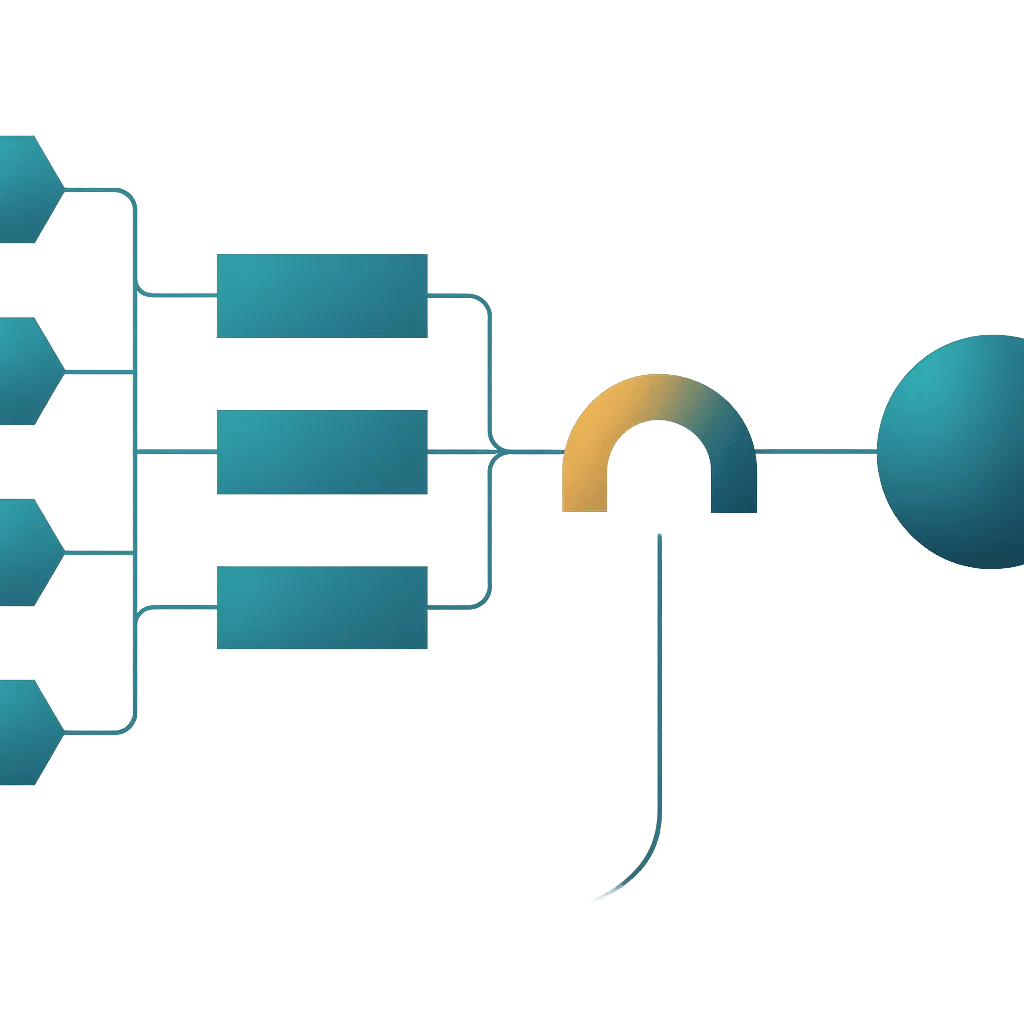
An Ethereum block, as delivered by MEV-boost, is the product of a four-stage pipeline. Searchers scan the mempool and off-chain order flow for opportunities, arbitrage, liquidations, sandwich constructions, and encode them as bundles. Builders aggregate bundles and public mempool transactions into a candidate block, running simulations to maximize the priority fees and MEV they can extract while remaining valid. Relays hold those candidate blocks, expose only a header and a bid to proposers, and release the payload once the proposer signs. Proposers, validators selected to build slot n, choose the highest bid among the relays they trust and sign the header.
The economic logic is straightforward. Constructing a block that captures the full MEV of a slot is a specialized activity requiring simulation infrastructure, integrations with searchers, and, increasingly, private transaction agreements with wallets and applications. Most validators cannot compete on that ground, so they outsource block construction and split the MEV via the bid.
The relay is the piece that makes the exchange safe. Without it, a proposer would need to see a candidate block to evaluate its bid, at which point nothing stops the proposer from stealing the MEV by signing its own equivalent block. Relays sit between the two and enforce a commit-reveal: the proposer signs a header representing a bid; only then does the relay release the payload. In effect, relays are trusted middleware. That trust is why they exist, and it is what ePBS is designed to remove.
Two features of this pipeline matter for concentration. First, most of the value in a block comes from a small number of high-value transactions, typically MEV-bearing trades routed through private channels rather than the public mempool. Second, the marginal cost of building an additional block, given the same searcher and order flow inputs, is close to zero. Volume by itself is cheap. Access to profitable transactions is not.
Anatomy of concentration

The relayscan snapshot lets us decompose the market roughly. Titan combines high share (~49.55%) with high margin (~0.0114 ETH per block). Quasar has real share (~24.00%) but earns ~0.0034 ETH per block. BuilderNet earns ~0.0141 ETH per block on ~13.94% share, the highest per-block figure in the top four, though on a smaller sample. The tail, Eureka at 8.76%, then a set of builders each under 2%, is heterogeneous but includes several running at outright losses: bombora.build built 91 blocks in the window and posted a net subsidy of roughly 0.05 ETH, most of which came out of its own pocket.
Loss-leading tail builders are informative. They tell us that participation is not the moat. Any team with a simulator, a relay integration, and some ETH can bid into the auction and win blocks, often by paying more than the block earns. What they cannot buy is the input mix that would make the bids profitable.
Exclusive order flow
The most durable input is private order flow. Wallets that offer MEV protection, RFQ-style aggregators, and OFA (order flow auction) marketplaces route user transactions to a subset of builders under agreements, sometimes payment-for-order-flow, sometimes exclusivity, sometimes revenue share. The transactions that arrive through these channels are systematically more profitable than public mempool transactions, because they are exactly the trades whose value would leak to searchers if they went to the mempool.
The consequence is that per-block profit becomes a proxy for the quality of order flow relationships, not for the sophistication of block construction. Two builders with identical simulators and identical latency will earn very different amounts if one has an exclusive route from a large wallet SDK and the other is scraping the mempool. Nothing in the public research pack tells us exactly which agreements Titan holds or how they are priced, and any specific claim in that direction would be speculation. What the numbers do tell us is that the mechanism has to be something that survives across thousands of blocks and produces a systematic per-block premium, a description that fits order flow much better than transient latency wins.
Timing games and latency
Latency is the second lever. Within a slot, builders can update their bids as new transactions and searcher bundles arrive; proposers can delay signing to wait for a higher bid. The result is a coordination game played on the order of hundreds of milliseconds. Builders who submit later, closer to the proposer’s decision boundary, have more information about competing bids and about last-minute searcher activity. Proposers who wait longer receive higher bids but risk missing the attestation window.
Relays are the infrastructure that makes this game legible. Their published bid histories and their willingness to hold late-arriving bids define how aggressive proposers can be. The relay share numbers in the snapshot, ultrasound.money at 28.57%, titanrelay.xyz at 23.42%, bloxroute max-profit at 21.09%, bloxroute regulated at 17.85%, Flashbots relay at 2.12%, reflect proposer preferences that are largely orthogonal to builder shares. A builder can serve any relay, and Titan’s brand share does not track its own relay’s share.
Latency is contestable in principle. A new entrant with sufficient capital can co-locate, buy transit, and match the incumbents’ physical latency. It is not contestable if the value of low latency depends on being on the receiving end of exclusive order flow that only arrives if the builder is already trusted by counterparties.
Capital
Capital is the third lever, and the loss-making tail is the visible evidence. A builder can subsidize bids, paying the proposer more than the block earns, to win share, either to accumulate reputation, to fulfill a partnership commitment, or to signal viability to potential order flow partners. Bombora’s 0.05 ETH subsidy on 91 blocks is a small-scale version of a strategy that could, at larger scale, buy market position for a well-funded new entrant. Whether Quasar’s rise to ~24% reflects any such strategy is not something the public data resolves; its 5.16 ETH profit on 1,539 blocks is positive but thin, and the ratio suggests it is winning share on inputs that are less premium than Titan’s.
Of the three levers, capital is the easiest to compete away, it costs money to sustain, and order flow is the hardest, because it depends on relationships and default routing settings that are sticky by construction.
BuilderNet and the trust relocation problem

BuilderNet, the platform Flashbots operates and which Beaverbuild has now folded its users into, is pitched as a decentralized replacement for centralized builders. The mechanism is a trusted execution environment: bundle merging and block construction happen inside a hardware enclave that attests to the code it is running and hides the contents of the computation from the operator. The proposition Flashbots states directly is “verify, not trust”, TEE attestations replace reputational or contractual guarantees about what a builder is doing with transaction content.
The engineering value is real. If a large fraction of Ethereum block production runs inside audited enclaves, an operator cannot secretly reorder transactions, front-run a user, or leak private order flow to affiliated searchers. Concerns about a single operator observing the flow of an entire network’s private transactions become concerns about whether an enclave is honest, which is a more tractable problem.
The critique is that trust is not eliminated. It moves. An attestation is valid only insofar as: the TEE hardware vendor, Intel with SGX, AMD with SEV, or an equivalent, has not been compromised or coerced; the attestation infrastructure that verifies chip identity has not been captured; and the enclave code itself is correct, audited, and free of side channels. Each of these has a track record of partial failure in the security literature. None is Ethereum-native, in the sense that the security properties depend on institutions and supply chains outside the protocol.
There is a second, more concrete critique. TEEs protect the operator boundary. They do nothing about the order flow boundary. If the wallets, applications, and searcher desks that used to route to Beaverbuild now route to BuilderNet, the concentration of profitable transaction flow inside a single platform is preserved and given a new label. BuilderNet’s stated ambition to be a shared HFT-grade sequencing stack for L1 and L2s implies exactly this: a single platform onboarding many order flow sources. Whether that outcome is better than a centralized builder depends on what one thinks the harm of centralization actually is. If it is operator misbehavior, TEEs help. If it is the concentration of transaction flow at a single choke point, TEEs are orthogonal.
The residual Beaverbuild share of 0.11% in the snapshot is a marker of transition rather than of dispersion. Order flow relationships appear to be migrating, not fragmenting.
What EIP-7732 actually enshrines

EIP-7732 (ePBS) is a specification in Review status, created 28 June 2024, that would restructure the proposer-builder exchange inside the Ethereum protocol. The high-level move: the beacon block would no longer carry the full execution payload. Instead, it would carry a signed bid commitment, a SignedExecutionPayloadBid, from a builder registered on the beacon chain. Execution payload validation is deferred until after the builder reveals the payload, in a subsequent phase of the same slot.
Three components matter.
Staked builders. Builders become an in-protocol entity, registered on the beacon chain with a minimum stake of 1 ETH. They are separate from the validator registry and are not subject to the validator entry and exit queues. The stake is what makes trustless payment possible: when the beacon block containing a bid is processed, the committed value is deducted from the builder’s beacon balance and paid to the proposer’s chosen address.
The Payload Timeliness Committee. A committee of 512 validators drawn from the beacon committee attests to whether the builder revealed the payload on time. The PTC does not validate execution content, that is done in the next slot. Its role is narrow: was the payload published before the deadline the protocol expects.
Trust-free fair exchange. The stated guarantee is that an honest proposer is paid regardless of builder behavior, and an honest builder’s payload becomes canonical regardless of proposer behavior. In current PBS, this guarantee is provided by relays; in ePBS, it is provided by protocol rules and the builder’s stake.
What ePBS solves is the relay trust problem. The proposer-builder commit-reveal moves into consensus, and the trusted middleware that currently mediates it becomes optional. That is a real reduction in the trust surface of the pipeline.
What ePBS does not do is regulate builder identity, restrict private order flow, or change the economics of exclusive routing agreements. Nothing in the specification says who a builder is, what transactions it can accept, or how it acquires them. A world in which ePBS is live and Titan still produces half of blocks, funded by the same exclusive relationships, is entirely consistent with the specification. Enshrinement legitimizes a two-tier system; it does not compress it.
The specification is also honest about unresolved problems. It lists a free option problem, a malicious PTC scenario, and builder safety as open security considerations. The free option problem is intuitive: once a proposer has committed on-chain to a builder’s bid, the builder knows the slot outcome and could withhold the payload if withholding is profitable in expectation, for example, if the market moved during the slot. Stake slashing and PTC attestations are meant to make withholding costly, but the game-theoretic equilibrium under adversarial conditions is not resolved in the excerpted portions of the EIP.
One further detail deserves emphasis. The EIP accommodates both trustless in-protocol payments and “trusted payments in the form of promises to be fulfilled elsewhere.” The language is a concession that off-chain payment arrangements, the same category of relationship that produces exclusive order flow today, remain possible under ePBS. Some form of relay-like intermediary can persist as an order flow aggregator or payment escrow, even if its role in the commit-reveal is gone.
Glamsterdam context
Ethereum’s Glamsterdam upgrade is targeted for Q4 2026 and follows Fusaka. The ethereum.org roadmap page, last updated 20 July 2026, describes it as “enshrining the separation of duties between different network participants,” language consistent with ePBS but which does not name EIP-7732 explicitly. Ethereum upgrades have historically slipped, and the exact EIP inclusion list is not confirmed in the public roadmap page at the level of individual EIP numbers. Treat Q4 2026 as an aspiration rather than a hard date, and treat ePBS as a leading candidate for the upgrade rather than a committed inclusion.
A decentralization scorecard

Set the three drivers of concentration against the two proposed interventions.
| Driver | Under BuilderNet TEEs | Under ePBS (EIP-7732) |
|---|---|---|
| Exclusive order flow | Unchanged; may consolidate at the enclave operator | Unchanged; off-band arrangements explicitly accommodated |
| Latency / timing | Unchanged; possibly sharpened if commitment deadlines become more predictable | Unchanged in mechanism; PTC attests only to timeliness |
| Capital / subsidy | Unchanged | Unchanged; 1 ETH entry threshold does not raise costs |
Neither intervention targets the drivers directly. Each targets an adjacent problem: TEEs address operator misbehavior; ePBS addresses relay trust and the atomicity of the proposer-builder exchange. Both are worth doing. Neither should be expected to redistribute the block-building market.
A counterargument deserves airing. Concentration might reflect efficient specialization rather than harmful monopoly. If Titan produces higher-value blocks because it is better at simulation and better at aggregating searcher bundles, validators receive higher bids and users get their transactions included at competitive prices. The welfare case against builder concentration is not identical to the case against, for instance, sequencer concentration on a rollup, because Ethereum’s consensus layer does not depend on the builder being decentralized, it depends on the validator set being decentralized. If ePBS successfully removes the relay from the trust surface, one could argue the remaining concentration is at a less consequential layer.
The response to that argument is not conclusive, but it is worth stating. A single builder with a majority of block production has censorship leverage that is at least visible, even if it has not been exercised. It has bargaining power against wallets and applications that depend on inclusion. It concentrates the target for regulatory and legal pressure, bloxroute already runs “regulated” and “max-profit” relays as distinct products, which is a structural response to that pressure. The scale of these effects at 50% share is different from at 20% share, even if none of them is a formal safety failure.
What would actually shift the market
Any intervention that dislodges builder concentration has to touch order flow directly. Two categories of change would qualify.
The first is protocol-level constraints on who can be paid what for what, for example, encrypted mempools where transaction content is hidden from builders until inclusion, so that private order flow relationships lose their information advantage. Threshold encryption and time-lock encryption schemes have been discussed for years; none is close to production on Ethereum L1. If a serious version of an encrypted mempool were shipped, the per-block profit disparity that shows up in the relayscan data would compress rapidly, because the input that produces it would no longer be private.
The second is application-level. If wallets and dApps that currently sell exclusive routes moved to open order flow auctions with credible fair-access rules, the same effect would occur without a protocol change. This is the direction some order flow auctions have been trying to push, though the incentive to defect, one wallet’s exclusive deal is worth more than its share of an open pool, is durable.
Neither is on the near-term roadmap in any concrete form that the public sources describe.
Several questions worth watching over the next year: whether Quasar’s ~24% share stabilizes, decays, or is revealed to depend on a specific exclusive arrangement; how BuilderNet’s TEE implementation is audited and by whom; what happens to the relay ecosystem, ultrasound.money, bloxroute, titanrelay, if ePBS ships and the trusted-middleware role formally goes away; and whether the “HFT-grade TEE sequencing stack” language from BuilderNet’s roadmap turns into a shared sequencer product for rollups, which would extend the same concentration pattern from L1 block building into L2 block production.
The current supply chain is a pipeline whose bottleneck is transaction access, not block construction. Enshrinement and TEEs are legitimate improvements at other points in the pipeline. Neither moves the bottleneck.
Read next

The Won Goes Onchain: Korea's Race Ahead of the Rulebook
Korea's won-stablecoin consortiums formed before the law did: the Digital Asset Basic Act stalled on a Bank of Korea demand for bank-majority issuers.

The Missing Rulebook: Why CLARITY Stalled in the Senate
Passed in July 2025, CLARITY sat at Senate Calendar No. 423 past July 2026 over ethics, Section 604, and stablecoin yield.

Custody for Machines: Who Holds the Agent's Keys
MoonPay launched the Open Wallet Standard in March 2026, but agent wallets still split on where policy is enforced: on-chain or via vendor API.