


Introduction
On August 6, 2025, after roughly a week of deliberation following a four-week trial in the Southern District of New York, a jury returned a split verdict on Roman Storm. It convicted him of conspiracy to operate an unlicensed money transmitting business. It hung on conspiracy to commit money laundering and conspiracy to violate IEEPA sanctions. The hung counts produced a partial mistrial, not an acquittal, and the government has since requested a retrial reported for October 2026.
The split matters because each side of it points at a different design question. The conviction says something narrow but concrete: at least some conduct around operating and promoting Tornado Cash met a jury’s threshold for unlicensed money transmission. The mistrial says the harder questions, whether that conduct also crossed into laundering and sanctions violations, remain legally open. Protocol designers building the next generation of onchain privacy have to plan against both, without knowing how the second half will resolve.
Two systems anchor that design conversation. Privacy Pools, live on Ethereum since March 2025 per the project’s own communications, tries to answer the Tornado question directly by attaching a curated association-set layer to a zero-knowledge pool, with a public exit for depositors whose funds are not approved. Railgun, deployed across Ethereum, BSC, Polygon, and Arbitrum, takes a structurally different path: no mixing, no association-set curator, privacy generated as a side effect of DeFi activity conducted from inside a shielded environment. Both are alive. Neither has been blessed by a regulator. The question is whether either equilibrium holds once the Storm retrial lands and the second half of the developer-liability question gets answered.
What the Storm Verdict Actually Decided

The indictment charged Storm with three conspiracies: unlicensed money transmission, money laundering, and IEEPA sanctions violations. The parties stipulated some facts that narrowed the trial. Storm did not personally launder funds. Tornado Cash was used for legitimate transactions as well as illicit ones. Storm became aware, at some point during his tenure, that criminal actors were using the protocol. The government’s theory was that continuing to operate and promote Tornado Cash after that awareness, and declining to implement adequate safeguards, was itself criminal conduct.
The defense ran the neutral-tool argument. Tornado Cash, on this view, sits alongside VPNs, encrypted messengers, or a hammer: builders of general-purpose infrastructure cannot be criminally liable merely because they know someone, somewhere, will misuse it. The jury credited that argument in part. It hung on the two counts where the harm is defined by what users did, laundering the proceeds of specified unlawful activity, transferring value to sanctioned parties. It convicted on the count where the harm is defined by what Storm did, running a business that transmitted value for others without the licensing FinCEN requires.
That is a narrower verdict than the pre-trial coverage suggested and a wider one than the defense hoped for. The Mayer Brown analysis of the outcome reads the money-transmission conviction as an instruction to developers and operators of mixers and exchanges: assess whether you are operating a money transmitting business under FinCEN’s definition, and if so, obtain the appropriate federal and state licenses. That is not a settled legal rule, it is one law firm’s read of a jury verdict in one district, but it is the working assumption most compliance-oriented protocol teams appear to be operating under.
Two other legal facts sit alongside the verdict. In August 2022, OFAC sanctioned Tornado Cash and alleged the protocol had facilitated more than $7B in laundered value, including roughly $600M attributed to North Korea’s Lazarus Group from the Axie Infinity hack. Those are government allegations from a sanctions filing, not adjudicated findings. In December 2024, the Fifth Circuit ruled that OFAC exceeded its authority in sanctioning certain autonomous Tornado Cash protocols. The precise scope of “certain autonomous protocols” in that ruling is narrower than the shorthand suggests and requires reading against the full opinion, but the ruling addressed civil sanctions authority, not criminal liability. It did not disturb the DOJ’s ability to prosecute Storm, and it did not save him from the money-transmission count.
What the retrial puts back at stake
The October 2026 retrial, as far as available reporting indicates, will cover the hung counts. That means the laundering and sanctions theories return to a jury, and a different set of instructions, evidentiary rulings, and jurors may produce a different outcome. A conviction on either count would push the line for developer liability well past where the first verdict left it. The money-transmission conviction implicates protocol operators; a laundering or sanctions conviction based on knowing facilitation would implicate a wider set of developer conduct, particularly around what protocols do after they learn of specific illicit use.
Two things follow. First, the current post-Storm design consensus, that mixer-style protocols should either register as money service businesses or restructure around some form of compliance filtering, rests on a verdict that has not fully resolved. Second, any privacy protocol claiming to have designed around the Storm risk has designed around only half of what Storm might eventually establish. That is worth holding in mind before treating association-set architectures as a legal answer rather than a legal hypothesis.
Why the Mixer Architecture Failed the Compliance Test

Tornado Cash’s architecture had a single feature that structured the entire prosecution: deposits and withdrawals were commingled in shared pools. A withdrawer proved, via zero-knowledge circuit, that they had previously deposited into the pool, without revealing which deposit was theirs. This is the source of the privacy guarantee and, simultaneously, the source of the compliance problem. Once funds enter the pool, the protocol itself cannot distinguish clean deposits from proceeds of a Lazarus Group hack. Any withdrawal is a withdrawal against the pool as a whole.
From a regulator’s perspective, that design is functionally a value-transmission service that provides no meaningful ability to screen counterparties. From the developer’s perspective, it is exactly the property that gives the protocol its social value: a privacy set that cannot be selectively pierced is a privacy set that cannot be selectively pierced by anyone, including a state actor. The two framings do not admit a compromise inside the pool-and-withdraw model. The protocol either commingles or it does not; if it commingles, the operator either screens deposits at the door or accepts that it cannot screen at all.
Voluntary front-end screening, blocking sanctioned addresses at a web interface, was tried and did not resolve the underlying issue. The smart contracts remained callable directly, and the pooled architecture meant that even filtered deposits could not un-commingle from previously deposited illicit funds. The Fifth Circuit’s 2024 ruling addressed the specific question of whether immutable smart contracts count as “property” that OFAC can sanction, and answered no for certain autonomous components. But that was a limit on OFAC’s civil authority, not a shield against a criminal money-transmission charge premised on what the developers did while the protocol was operating.
The design lesson the post-Tornado projects appear to have drawn is that compliance must be a first-class architectural feature, not a front-end policy. Privacy Pools operationalizes this by moving the screening upstream, before a deposit is considered “approved” for withdrawal into the anonymous set, while trying to preserve a cryptographic privacy guarantee for approved funds. Railgun operationalizes it by avoiding the commingling model altogether. Both are attempts to answer the objection that made Tornado indefensible in front of a Manhattan jury.
Privacy Pools and the Association-Set Model
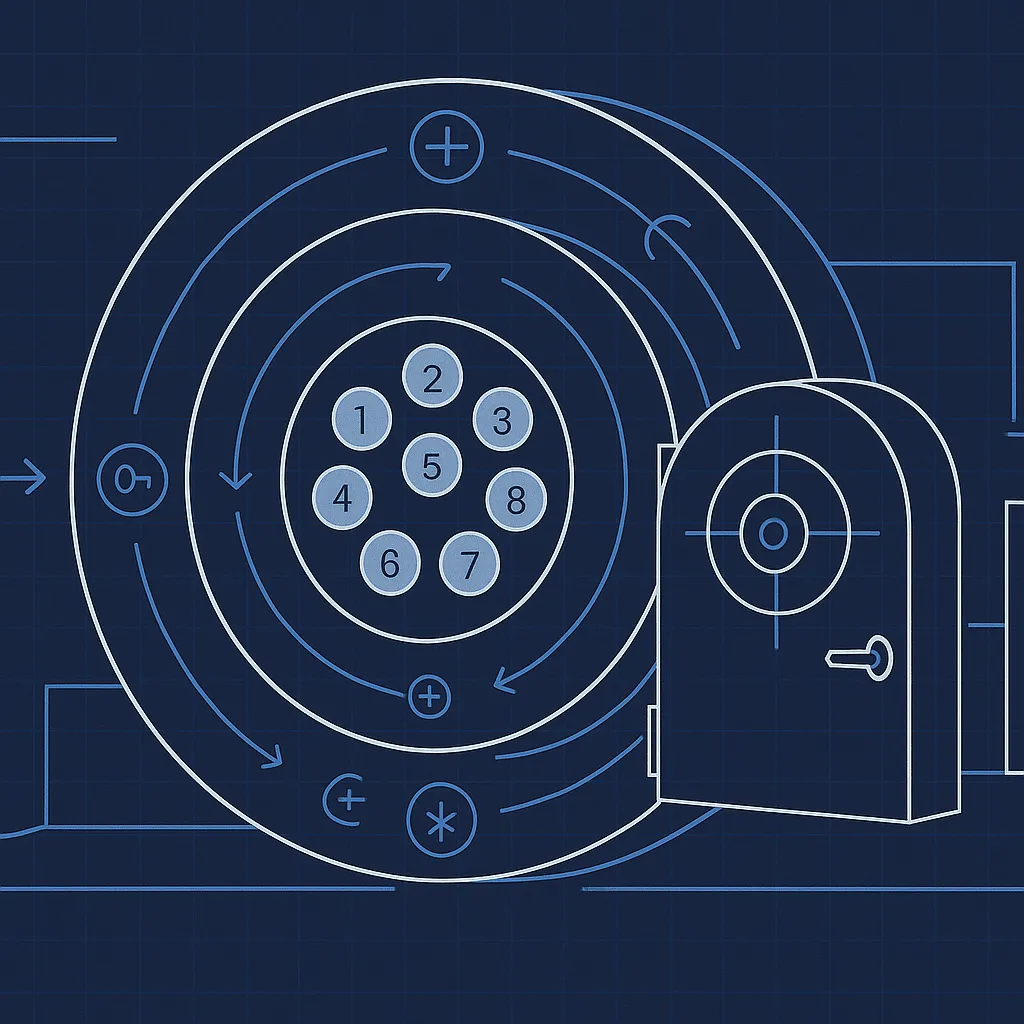
Privacy Pools is structured in three layers. A smart-contract layer centered on an upgradeable Entrypoint contract handles deposits, withdrawals, and coordination. A zero-knowledge layer manages commitment schemes and withdrawal circuits, so that a withdrawer proves membership in a set without revealing which commitment is theirs. An Association Set Provider (ASP) layer maintains a curated set of approved deposit labels, the compliance surface, and updates state through authorized accounts. The protocol is non-custodial in the standard sense: user funds are held by cryptographic commitments in the contracts, not by any operator’s keys.
The user experience is straightforward. A depositor commits funds into the pool. The ASP evaluates the deposit against its criteria and either includes it in the current approved association set or does not. If included, the depositor (or their designated recipient) can later withdraw using a zero-knowledge proof of membership in the approved set, the withdrawal is unlinkable to the specific deposit, but only among deposits the ASP has approved. Partial withdrawals are supported, preserving privacy on the remaining balance. Multiple asset types, native ETH and ERC-20 tokens, are supported.
The mechanism that makes this something other than KYC-by-another-name is ragequit. If the ASP declines to approve a deposit, the original depositor can exit publicly, revealing the specific deposit and recovering the funds. The privacy of that transaction is forfeited, but custody is preserved. This is the censorship-resistance backstop: the ASP cannot trap a depositor’s funds by refusing approval. It can only force the depositor to choose between remaining unapproved (and unable to withdraw privately) or exiting in public.
Where the design has to survive contact with regulators
Ragequit is doing more work in the marketing than it can do in practice. A depositor with a legitimate but sensitive transaction, the kind of transaction the whole system is meant to serve, cannot use the public exit without defeating the reason for depositing. The threat of ragequit is therefore not really a threat: it is a fallback that preserves financial custody at the cost of what the depositor came for. In practice, ragequit functions less as an equalizer between depositor and ASP and more as a bankruptcy option. The ASP’s approval decision is the operative one.
That raises a question the Privacy Pools documentation does not resolve: what is an ASP, legally? An ASP operator screens deposits against some criteria, presumably chain-analytics signals, sanctions lists, and heuristics for known illicit sources, and produces a list of approved labels. That looks like a compliance service being sold to, or embedded in, a value-transmission protocol. Whether FinCEN would characterize an ASP operator as itself running a money services business, or as a compliance vendor to one, or as neither, has not been publicly tested. If the answer is “money services business,” the ASP layer inherits the licensing burden the pool architecture was meant to distribute away from.
Two further caveats sit inside the architecture. The Entrypoint is upgradeable, which the documentation notes but does not analyze. Upgrade authority is a regulatory chokepoint: if a court or agency can compel the upgrade administrators to alter ASP logic, blocklist specific addresses, or modify withdrawal circuits, the protocol’s censorship resistance ultimately depends on the legal posture of whoever holds those keys. The public governance details around the Entrypoint’s upgrade path, key holders, multisig composition, timelock parameters, are not in the excerpt we worked from and would need direct verification from the deployed contracts.
The second caveat is that the ASP’s approval criteria are, as a matter of protocol design, exogenous. Nothing in the cryptography prevents an ASP from tightening criteria under pressure, adding retrospective removals, or being pressured to converge with other ASPs into a de facto shared blocklist. The censorship-resistance story rests on the assumption that either multiple ASPs will compete, or that the ragequit exit meaningfully constrains a single ASP’s behavior. Both assumptions are empirical, not architectural.
The Privacy Pools model has attracted attention within the Ethereum Foundation’s Kohaku privacy-wallet effort, which the topic brief describes as the EF’s initiative to make privacy a default at the wallet layer. The precise relationship between Kohaku and Privacy Pools, whether it is integration, endorsement, or something looser, is not documented in the sources we could verify, and the article treats it as directional rather than definitive.
Railgun’s Noise-over-Mixing Architecture

Railgun takes a different structural position. Its documentation describes the system as ownerless smart contract code deployed on Ethereum, BSC, Polygon, and Arbitrum. Users receive a “0zk address” that is confidential on standard block explorers. The critical architectural claim is that Railgun does not mix funds between users. Tokens and wallets become indistinguishable through zero-knowledge cryptography without being commingled in a shared pool the way Tornado Cash pooled deposits.
The consequence is that the anonymity set is generated primarily by activity, not by liquidity. Users can swap, lend, borrow, and make dApp calls from inside the shielded environment. Each of those interactions adds noise. A private swap between two Railgun users looks, on chain, like a Railgun transaction; a private payment looks like a Railgun transaction; a private DeFi position adjustment looks like a Railgun transaction. The privacy set for any single action grows with the total volume of unrelated actions happening in the same shielded environment, without requiring users to leave their funds parked in a mixing pool.
The topic brief cites cumulative shielded volume of roughly $4.5–5B for Railgun as of the research period. We have not independently confirmed that figure against an onchain data source in the materials available for this piece; the number should be read as directionally consistent with public reporting but requires verification against a dashboard such as Dune before being treated as precise. What is defensible from the primary documentation is the architectural claim: the system is deployed live across four chains, has been operating throughout the enforcement era against mixers, and positions its non-mixing design as a compliance-relevant differentiator.
Why growth is not evidence of legitimacy
The interesting question is not whether Railgun grew, it did, but what to attribute the growth to. Three explanations are consistent with the same data. The first is that Railgun’s non-mixing architecture and its documentation’s emphasis on legitimate use cases (professional confidentiality, HIPAA, GDPR, private payroll, protection from wallet-labeling services) genuinely occupy a different legal position than Tornado Cash. The second is that mixer demand did not disappear when Tornado Cash was sanctioned; it displaced to whatever privacy infrastructure remained live. The third is that Railgun’s DeFi-native shielded environment attracted users whose primary interest was not privacy from law enforcement but privacy from front-runners, MEV, and wallet-tracking services, a distinct market that Tornado Cash was poorly suited to serve.
The three explanations are not mutually exclusive, and none of them is equivalent to regulatory acceptance. No U.S. regulator has publicly blessed Railgun’s architecture as satisfying AML or BSA obligations. Railgun’s own framing, non-custodial, ownerless, no required governance token, privacy as a compliance tool for regulated professionals, is a legal posture, not a legal ruling. The Storm case is a reminder that “no owner” and “no custody” do not resolve the developer-liability question. The unlicensed money transmission charge did not require Storm to have custody of user funds. It required that Tornado Cash transmit value for others and that Storm’s conduct meet a conspiracy standard. A protocol that transmits value privately without custody remains within the ambit of that theory.
Railgun’s stronger structural position, if it has one, is that its non-mixing design gives it a plausible argument that it is not a mixer in the technical sense the government’s Tornado theory relied on. Whether that argument survives contact with a determined prosecutor is untested.
Three Failure Modes for Compliant Privacy

The framing of “compliant privacy” as an established design pattern presumes a stability that the current legal environment does not supply. Three failure modes deserve to be named specifically.
The first is regulatory recharacterization of the compliance layer. If an ASP operator is deemed a money services business under FinCEN’s definition, or a compliance intermediary subject to state-by-state licensing, the ASP layer inherits exactly the licensing burden that the pool architecture displaced. This does not necessarily kill the design, it may push toward a licensed-ASP ecosystem with clearer legal status, but it invalidates the current premise that the compliance layer is a lightweight bolt-on. It also collapses the “no KYC” claim insofar as licensed compliance intermediaries typically need to know who they are approving.
The second is censorship creep. A single dominant ASP under sustained regulatory pressure has strong incentives to over-exclude. Legitimate but sensitive deposits, activist donations, whistleblower payments, transactions from jurisdictions the ASP treats as high-risk, can be denied approval at very low cost to the ASP and very high cost to the depositor, whose only recourse is a public ragequit that defeats the reason for using the protocol. The Privacy Pools censorship-resistance story depends on either genuine ASP competition or a meaningful cost to over-exclusion. Neither is guaranteed by the architecture. Both are policy outcomes that will be shaped by the retrial, by FinCEN guidance, and by the response of ASP operators to civil and criminal risk.
The third is direct precedent from the Storm retrial. A conviction on either the laundering or the sanctions conspiracy count in October 2026 would extend the developer-liability frontier past unlicensed money transmission into knowing facilitation. A protocol like Privacy Pools that has an identifiable compliance layer is arguably better positioned against that theory than Tornado Cash was, because the ASP’s role documents an ongoing attempt to prevent illicit use. But “arguably better positioned” is not the same as “safe.” Every architectural feature that documents intent to screen is also evidence, in an adverse proceeding, of what the developers knew and when. The retrial will shape which posture, Railgun’s ownerless non-mixing design, Privacy Pools’ explicit compliance layer, or some third approach, is best-suited to the legal environment the second verdict produces.
The honest read of the current design space is that neither Privacy Pools nor Railgun has been tested by an enforcement action of the kind that shaped Tornado Cash. Both are operating in the interval between the August 2025 verdict and the October 2026 retrial, with the practical outcome of that interval genuinely undetermined. The Ethereum Foundation’s interest in the Privacy Pools model through Kohaku suggests the broader ecosystem is treating association-set curation as the more likely convergence point at the wallet layer, but that bet is being placed against a legal question that has not been fully answered.
What can be said with some confidence is what to watch for. Any FinCEN guidance addressing zero-knowledge privacy protocols, whether formal or informal, would materially change the calculation for ASP operators. Any subpoena or civil action directed at Railgun would test whether its non-mixing architecture actually occupies the different legal position its documentation implies. Any change in the composition of the Privacy Pools Entrypoint’s upgrade authority, or in the ASP operator’s approval criteria, would reveal how the protocol responds to pressure short of formal enforcement. The October 2026 retrial will either confirm the current design consensus by leaving the laundering and sanctions theories unresolved, extend it by acquitting Storm on those counts, or unsettle it by convicting. Until then, the current generation of privacy protocols is running a live experiment about which architectural bets survive a legal environment that has not yet finished defining itself.
Read next

Eleven Charters, 83 Days: Crypto Becomes the Bank
Eleven firms sought OCC trust charters in 83 days. What the charter permits, why GENIUS forces it, and what the consolidation costs.

How Tokens Launch Now: Echo, Legion, MetaDAO
A -54% average launch year discredited the points meta. Exchange-owned rails and futarchy launchpads change who gets allocated, not float and FDV.

The Great Crashes, Part 3 — 10/10, The $19B Day
A forensic post-mortem of October 10, 2025: how a tariff shock, a Binance index quirk, and looped USDe collateral produced crypto's largest liquidation.