
Introduction
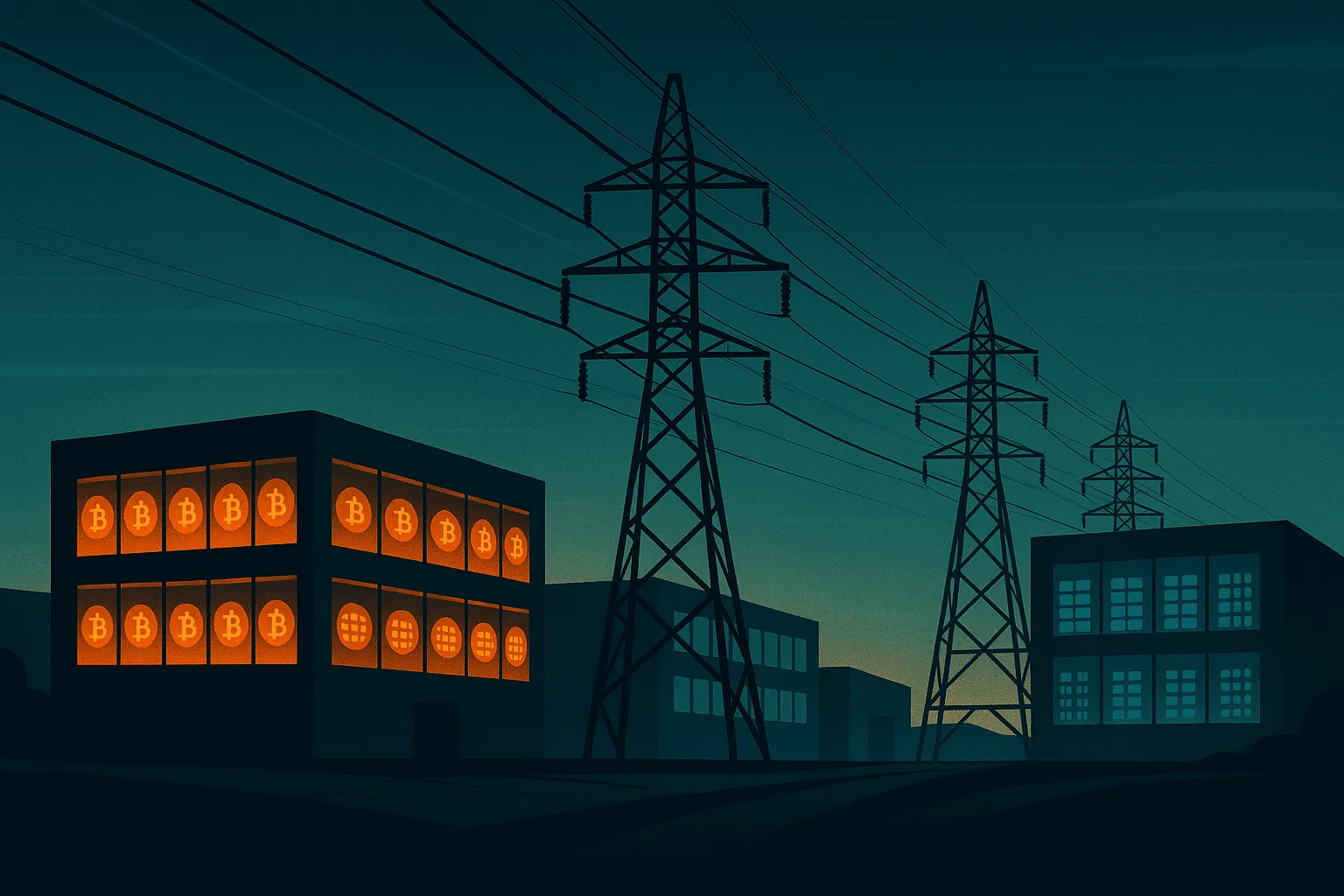
The public Bitcoin mining industry is in the middle of a business-model change so large it is easier to describe as an exit than a pivot. Companies that spent the last cycle building hashrate at any cost are now paying to retire it. Core Scientific is delivering hundreds of megawatts to CoreWeave, TeraWulf has locked in ~$12.8B in HPC contracts, and Hut 8 signed a 15-year, $7.0B lease with Fluidstack at its River Bend, Louisiana campus, backstopped by Google. Across the listed sector, cumulative AI and HPC contract announcements now exceed $70B.
At the same time, network hashrate has retreated from a peak of roughly 1,160 EH/s in early October 2025 to a 7-day SMA of 969 EH/s on April 13, 2026 — the first sustained multi-adjustment decline since July 2022. Hashprice bottomed near $28–$30 per PH/s/day in early March 2026 and has only partially recovered to $33.25 by mid-April. Transaction fees produced 0.58% of block rewards in the week ending April 13.
The question this article works through is not whether the miner AI pivot is happening — the contract stack settles that — but what it changes about Bitcoin’s security assumptions. Bitcoin’s security is a function of miner revenue, and miner revenue is a function of subsidy plus fees. The 2028 halving will cut the subsidy again. If the marginal power buyer at large industrial sites is now a hyperscaler rather than a miner, the energy input floor for hashrate is being repriced structurally rather than cyclically. That has second-order consequences for anything built on Bitcoin as a settlement layer — BTCFi lending, layer-2 bridges, wrapped-BTC systems — where security assumptions were implicitly underwritten by a much larger and more profitable miner base than currently exists.
The balance-sheet signal that broke the model

The pivot did not begin with a strategic epiphany. It began with a spreadsheet. Per CoinShares’ Q1 2026 mining report, the weighted average cash cost to produce one bitcoin among publicly listed miners rose to approximately $79,995 in Q4 2025. Bitcoin traded in the $68,000–$70,000 range through that period, meaning the public mining industry was, in aggregate, cash-flow negative by roughly $19,000 per coin produced.
That number requires care. CoinShares’ figure covers publicly listed miners only, and the methodology’s exact treatment of depreciation, SG&A, and interest is not fully spelled out in the excerpts available to us. Private miners — who hold an unquantified but substantial share of global hashrate — likely operate on materially different cost structures, particularly in jurisdictions with lower power costs. But for the listed cohort, the direction is unambiguous. At 25–38 J/TH fleet efficiency, revenue per MWh was $42 on April 13; at 19–25 J/TH, $61; only sub-19 J/TH fleets cleared $79/MWh. Miners paying more than $50–$60/MWh for power at meaningful volume have been underwater on marginal blocks for months.
Two responses to that pressure are visible in the disclosures. The first is treasury liquidation. Public miners collectively sold more than 15,000 BTC from peak treasury levels, with specific sales including Core Scientific’s ~1,900 BTC (~$175M), Riot’s 1,818 BTC (~$162M), and Bitdeer reducing to zero. Marathon disclosed 53,822 BTC in its March 10-K, expanded treasury sales authorization, and saw the LTV on its bitcoin-backed credit facility climb to 87% as BTC fell toward $68,000 — a level at which further downside would have triggered margin risk.
The second response is debt at scale. IREN has issued $3.7B in convertible notes, TeraWulf carries $5.7B in total debt, and Cipher Digital placed $1.7B in senior secured notes. These are not the balance sheets of speculative mining operators; they are infrastructure balance sheets. The capital is not being raised to buy ASICs. It is being raised to build datacenters that no longer mine.
The pivot in contract stack
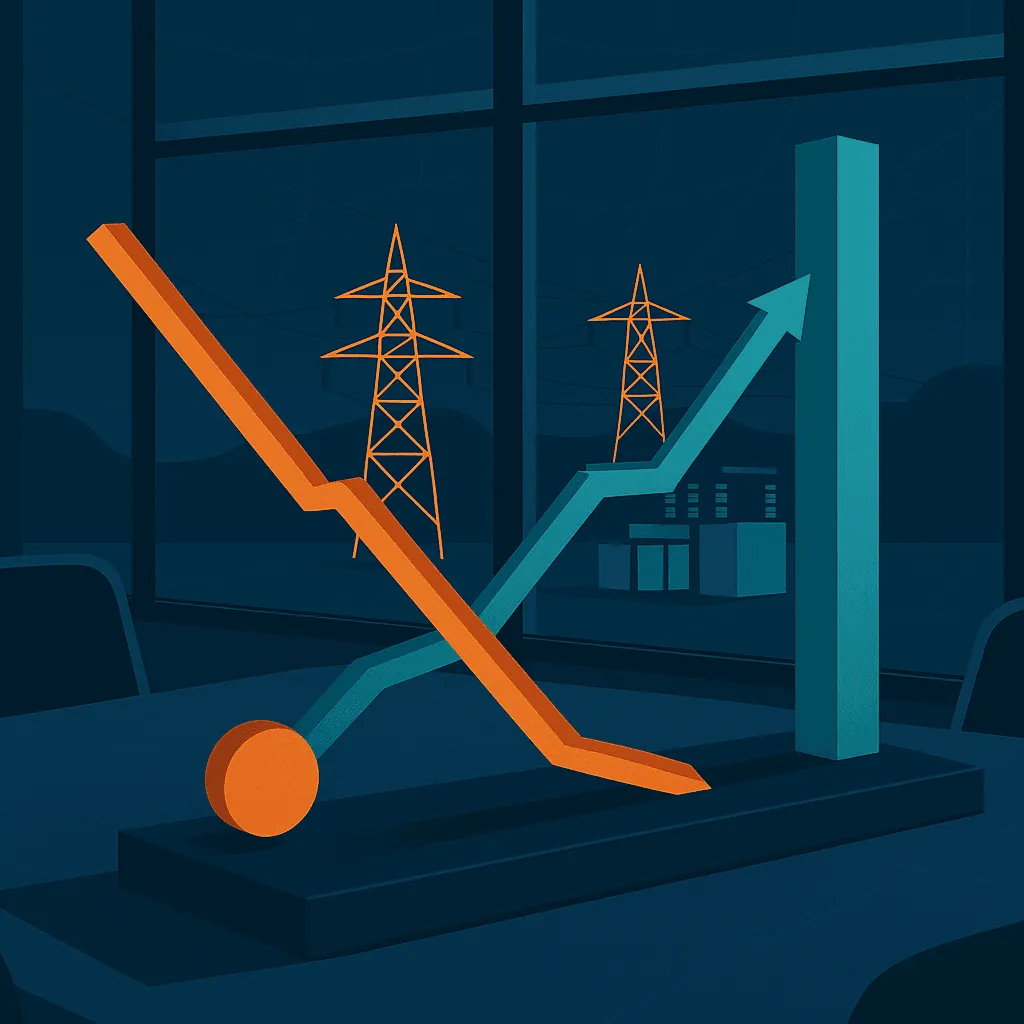
The public disclosures now form a coherent deal book. Rather than reciting them chronologically, it is worth grouping them by the shape of the transaction, because the shape tells us what the industry is actually selling.
Anchor tenant leases
Hut 8’s River Bend transaction, announced December 17, 2025, is the cleanest example of the model. A 15-year triple-net lease for 245 MW of IT capacity to Fluidstack, with Google providing a financial backstop covering lease payments and pass-through obligations for the full base term. Contract value is $7.0B over the base term, expanding to as much as $17.7B with renewals; Fluidstack holds a ROFO on up to an additional 1,000 MW at future campus phases. Expected average annual NOI is around $454M once fully operational. Project financing is expected at up to 85% LTC, led by J.P. Morgan with Goldman Sachs as co-underwriter. First data hall commissioning is targeted for Q2 2027.
The salient features: single named counterparty, investment-grade credit support, long-duration lease, high-LTC project finance. This is a real-estate transaction with power delivery as the underlying asset. It is not a mining business.
Multi-site HPC colocation
Core Scientific’s CoreWeave partnerships span approximately 590 MW of critical IT load across six sites, with contracted revenue reported in the ~$10–12B range. Applied Digital signed 15-year leases with CoreWeave for 400 MW in North Dakota at ~$11B contracted revenue. Cipher Digital, which has exited most Bitcoin mining operations, carries a $9.3B HPC backlog anchored by a 300 MW AWS deal and a separate Google-backstopped Fluidstack agreement.
Hybrid pivots
TeraWulf has secured $12.8B in HPC contracts across Fluidstack and Core42 deals, targeting sites with more than 1 GW of available power. IREN projects HPC at 71% of revenue by year-end and holds a 4.5 GW power pipeline alongside a Microsoft AI cloud partnership. Core Scientific’s AI colocation revenue reached 39% of total revenue by the time of CoinDesk’s late-March analysis; TeraWulf was at 27%.
Two aggregate figures matter here. The first is the $70B+ cumulative contract stack — a headline number that should be treated carefully, since it represents multi-year total contract value across deals at various stages of execution, not near-term binding revenue. The second is CoinShares’ estimate that listed miners could derive up to 70% of revenue from AI by end-2026, up from roughly 30% at the time of writing. That mix shift, if it lands anywhere near projections, is not a diversification. It is a change of industry.
The reason miners won these contracts
The counterintuitive point is that the miners were positioned to win these deals precisely because of what mining taught them. Years of permitting large power loads, negotiating interconnection with utilities, siting substations, dissipating heat at industrial scale, and running 24/7 high-uptime operations produced a skill set that traditional datacenter developers were slower to replicate. When hyperscalers went shopping for gigawatts on short timelines, the miners had shovel-ready sites and existing utility relationships. The pivot is not the miners entering a new business so much as their power-and-real-estate operating model being reclassified by the market.
Hashrate in retreat
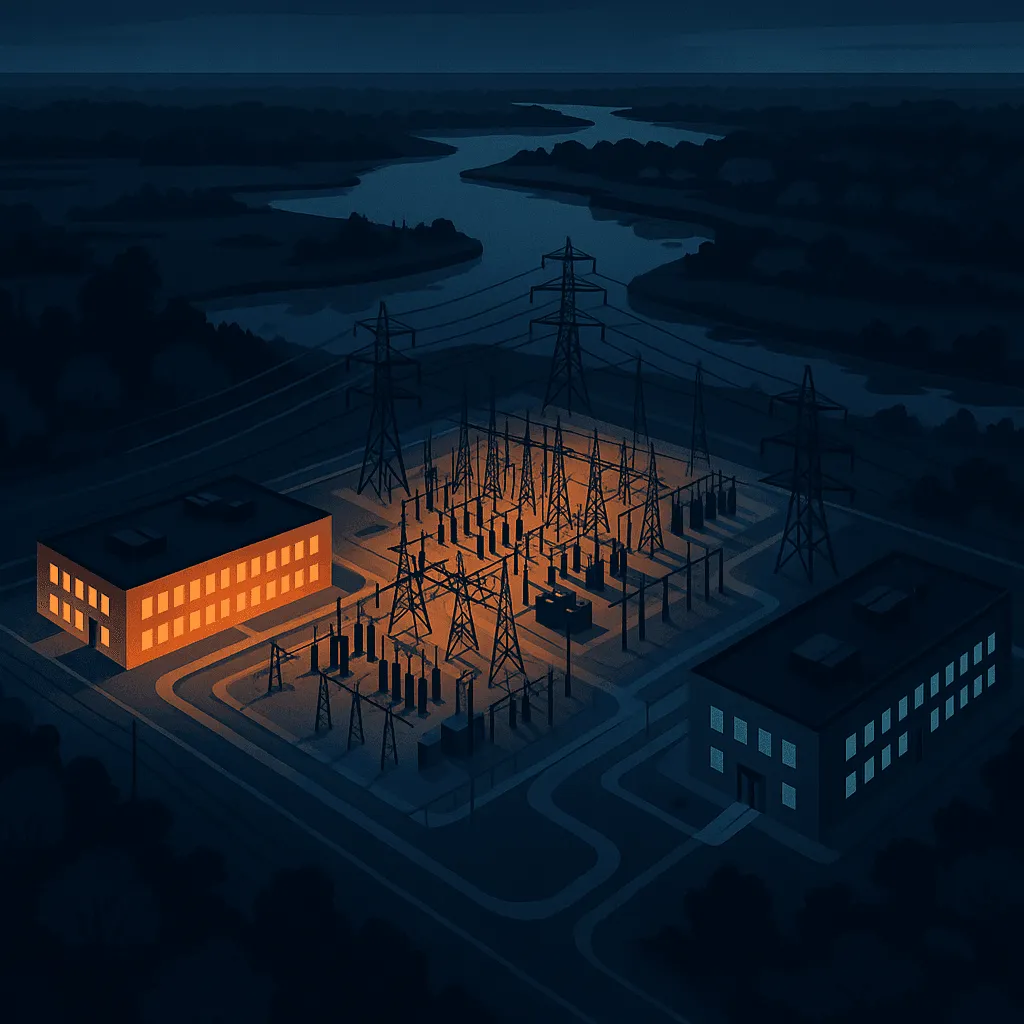
The network metrics reflect the industry’s capital reallocation with a lag but without ambiguity. Hashrate peaked at approximately 1,160 EH/s in early October 2025. By late March 2026 it had fallen to around 920 EH/s, and as of April 13, 2026, the 7-day SMA sat at 969 EH/s with the 30-day SMA at 977 EH/s. In between, the network posted three consecutive negative difficulty adjustments — the first such streak since July 2022. The April 3 adjustment was +3.87% to 138.97T, and the next was estimated at -3.66%.
Hashprice tracked the same trajectory. It bottomed at $28–$30 per PH/s/day in early March 2026 and recovered modestly to $33.25 by April 13. The Luxor hashrate forward curve prices average hashprice at roughly $32.10/PH/s/day through September 2026 — meaning the derivatives market is not expecting a meaningful recovery on any near-term horizon. That is a market view that current conditions are the new baseline, not an anomaly to be mean-reverted.
Two mechanisms are worth naming clearly.
Difficulty as self-healing. When hashrate declines, the next difficulty adjustment reduces the work required per block proportionally, so remaining miners earn more BTC per unit of compute. This is Bitcoin’s built-in stabilizer, and it is why the network does not spiral when hashrate contracts. A 20% hashrate reduction paired with a 20% difficulty reduction leaves surviving miners economically whole in BTC terms. But this is an economic equilibrium for survivors, not a restoration of absolute security. The cost of assembling a majority of hashrate falls in step with the hashrate itself.
Hashprice as the aggregate margin signal. Hashprice compresses BTC price, subsidy, fees, and difficulty into a single revenue-per-PH/day number. When hashprice sits below the all-in electricity cost per PH for a fleet, that fleet is bleeding cash on every block. The revenue-per-MWh table above translates directly: a fleet at 25–38 J/TH earning $42/MWh cannot survive against power at $50/MWh, and the operator’s rational move is either to shut off the rigs or to redeploy the power to a tenant who pays more per MWh. AI tenants do.
The security-budget identity
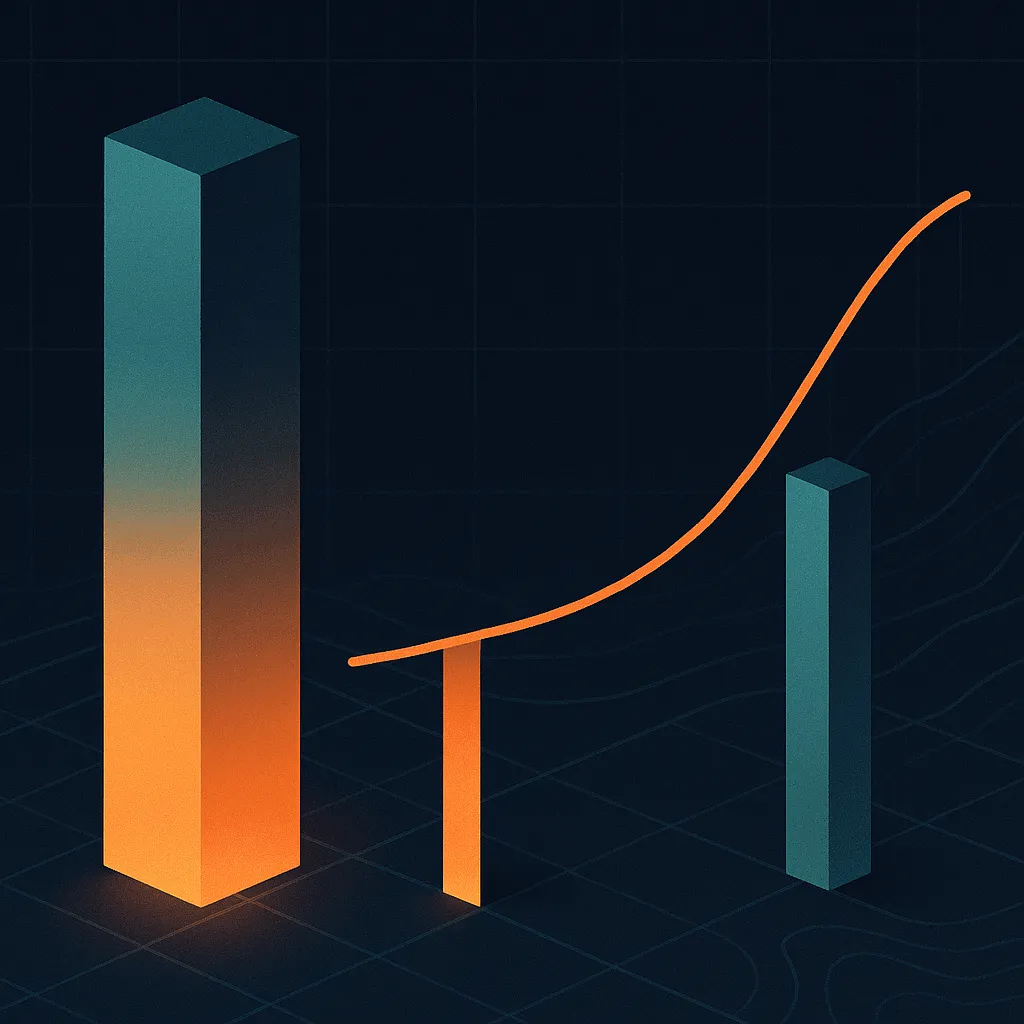
Bitcoin’s per-block security budget is the sum of two components: the block subsidy, currently 3.125 BTC, and transaction fees. The subsidy halves roughly every four years. The next halving, expected in 2028, drops it to 1.5625 BTC. For total miner revenue in BTC terms to hold constant across a halving, fees have to double their absolute contribution. For revenue to grow, they have to more than double.
Where do fees stand now? In the week ending April 13, 2026, transaction fees produced 0.58% of block rewards — approximately 16 BTC in total fees for the week, worth around $1.2M. On a per-block basis, that is roughly 0.0163 BTC in fees against a 3.125 BTC subsidy. Fees are a rounding error in current miner revenue.
The forward math is uncomfortable. If the 2028 halving arrives with fees at anywhere near current share of rewards, the aggregate BTC-denominated revenue paid to miners in that first post-halving epoch is essentially halved. Whether that translates into a proportional hashrate contraction depends on BTC price and on how much of the current miner base is already effectively out of the market via AI conversion. If a meaningful share of listed miner capacity has migrated to HPC leases and is no longer available to be redeployed at low marginal cost, the price elasticity of hashrate on the upside also weakens. In prior cycles, higher BTC prices summoned new hashrate back within months. In this cycle, the sites and interconnections that would have been repurposed for that response are under 15-year triple-net leases.
The mechanism that has historically been assumed to backfill the subsidy — a robust fee market driven by base-layer transaction demand — has not materialized on the required scale. Fees are episodic. They spike during ordinals waves, bull-market congestion, and periods of high on-chain settlement, and they collapse in between. A steady-state fee market at the level required to replace even half of the post-2028 subsidy is not visible in current data. That does not mean it cannot emerge; it means it has not.
Where the counterargument holds
There is a real case that the current picture overstates the risk. CoinShares’ hashrate forecast projects 1.8 ZH/s by end-2026 and 2 ZH/s by end-Q1 2027 — but this projection is explicitly conditional on BTC recovering to roughly $100,000. At that price, mining economics for efficient fleets normalize, and the hashrate contraction reads as a cyclical response to a price drawdown rather than a structural exit. Prior halving cycles all featured temporary hashrate dips followed by new highs. Non-pivoting operators — MARA, Riot, CleanSpark — are maintaining or expanding mining, and new geographic entrants (Paraguay, Ethiopia) are entering the global top ten as U.S.-listed capacity redeploys. The base is diversifying, not necessarily shrinking.
The pivot itself also carries execution risk that cuts in the opposite direction. Hut 8’s first River Bend revenue is not scheduled until Q2 2027 at earliest. Contracts announced as binding may include LOIs and conditional agreements not yet at definitive documentation. Infrastructure-scale debt loads — $3.7B, $5.7B, $1.7B on individual balance sheets — leave miners exposed if hyperscaler demand cools, financing terms tighten, or construction delays push revenue recognition further out. A liquidity crisis at a pivoting miner could force fire-sale disposals that briefly restore hashrate before further destabilizing the sector.
Cyclical or structural?

The important question is whether the AI pivot represents a cyclical margin response — miners renting out capacity while mining is unprofitable, ready to redeploy if hashprice recovers — or a structural repricing of the energy inputs that mining depends on. The evidence in the research pack leans toward structural, with meaningful qualifications.
The capex differential is the strongest structural signal. AI infrastructure runs $8M–$15M per MW to build; Bitcoin mining infrastructure runs $700K–$1M per MW. A site converted to AI has ten to twenty times the capital sunk into its physical build-out compared to the same site as a mining facility. The opportunity cost of tearing that out to redeploy ASICs is not symmetric. Once liquid cooling, high-density power distribution, and multi-tier redundancy have been installed to hyperscaler specification, reverting to mining wastes most of that capital and forgoes the tenant revenue that justified it.
The lease structures reinforce the asymmetry. A 15-year triple-net lease with investment-grade credit backstop is not a facility a miner can casually reclaim in year three because BTC hit $150,000. Contractual duration compounds the physical irreversibility of the buildout.
The energy market implication follows. In power markets where hyperscalers are actively bidding for gigawatt-scale interconnections — ERCOT, MISO, PJM, the Louisiana Entergy footprint — the marginal buyer of large industrial power at mining-viable sites is now the AI tenant, not the miner. That does not raise the wholesale price of electricity everywhere; it raises the reservation price at the specific sites where hashrate had been concentrated. The research pack does not give us a market-by-market breakdown of how much AI demand has repriced these specific interconnection queues, and that is a gap worth flagging. But the direction is consistent across the disclosures we can see.
There are two hedges to this thesis. The first is that private and international miners — Paraguay, Ethiopia, jurisdictions with stranded hydro or gas — face a different power cost curve and different competitive dynamics. Their capacity does not compete for the same interconnection queues as U.S. hyperscaler AI. Global hashrate may migrate rather than disappear. The second is that a large enough BTC price move can still overwhelm the economics: if hashprice rose to levels seen in the 2021 cycle, even converted sites might justify hybrid GPU/ASIC deployments. Neither hedge invalidates the structural argument; both moderate its severity.
What it changes for BTCFi
BTCFi — the ecosystem of layer-2s, wrapped-BTC bridges, on-chain lending, restaking-style constructions, and DeFi settlement rails that treat Bitcoin as either the reserve asset or the ultimate settlement layer — is built on a set of assumptions about the base layer’s security. Those assumptions include a level of hashrate at which reorganizing recent blocks is economically prohibitive for any attacker below sovereign scale, and a fee market that can sustain that hashrate as the subsidy declines. Neither assumption is being violated today. Both are being pressured.
For protocols that finalize based on block confirmations — bridges that release funds after N blocks, lending protocols that treat deep confirmations as settlement — the cost of a reorganization is directly a function of aggregate miner revenue. If revenue contracts, the cost of assembling a majority of hashrate contracts with it. Difficulty adjustment neutralizes this on the operator side (survivors earn more per PH), but not on the attacker side, because the attacker’s cost to acquire hashrate is denominated in the same reduced revenue terms. We are not near a threshold that the sources we have can identify with precision — that is one of the research gaps — but the direction of travel is toward tighter margins of security, not looser ones.
The subtler consequence is on incentive alignment. Miners have historically been long-term-aligned participants in the network’s success. A miner with a large BTC treasury, ASICs with multi-year depreciation schedules, and operating expenses paid in fiat has every reason to want the base layer to succeed. A miner that has sold most of its BTC treasury to fund a 15-year AI lease with a hyperscaler counterparty is a different kind of participant. Its economic future does not depend on Bitcoin. Its remaining hashrate is a residual, not a strategic asset.
That is not necessarily a security problem; hashrate does not require ideological alignment to secure the network, only economic rationality. But it changes who the swing capacity is. The marginal miner going forward is more likely to be an operator whose primary business is elsewhere, whose ASIC deployment is a hedge against AI capacity utilization, and whose willingness to remain in mining depends on tight, near-term margins rather than a long-cycle thesis on BTC price.
Implications and open questions
The current data supports a narrower claim than the strongest version of the security-budget alarm, and a broader claim than the sanguine version.
The narrow claim: over a 6–12 month horizon, difficulty adjustment and the possibility of BTC price recovery leave the network’s security posture largely intact. Hashrate at 969 EH/s is historically extremely high, transaction throughput is unimpaired, and the fee thinness that produces $1.2M weekly revenue for miners does not by itself endanger settlement finality on any near-term timeline.
The broader claim: the 2028 halving arrives on a miner base that is smaller, more concentrated in operators with divided attention, more indebted at the infrastructure level, less able to redeploy sites back into mining, and less exposed to BTC price upside via treasury. If the fee market has not begun to structurally thicken by that point — through BTCFi transaction demand, layer-2 settlement flows, ordinals-like base-layer activity, or some category we cannot yet name — then the post-halving security budget question stops being academic and starts being a live operational risk for anything built on top.
Several questions are worth watching over the next 12–24 months.
- The pace at which announced HPC contracts convert into recognized revenue. Hut 8’s Q2 2027 first data hall is a data point; slippage across the sector would tighten balance-sheet stress and could force partial hashrate dispositions at unattractive prices.
- Whether fee revenue as a share of block rewards trends higher during the next period of base-layer congestion. The 0.58% number for the week of April 13 is a single week, not a trend, but a fee market that spikes and returns to near-zero rather than establishing a higher floor is different from one that steps up.
- How aggressively private and international miners fill capacity vacated by U.S. listed operators. Geographic diversification is a legitimate offset to the U.S. AI-driven contraction; the degree matters.
- Whether the 2028 halving triggers a second wave of pivots. If subsidy compression cuts revenue further, and if AI demand at that point still exceeds mining-competitive power prices at large sites, the remaining public mining capacity would face the same decision Core Scientific, TeraWulf, and Hut 8 have already made.
- The BTC price at which conversion becomes even partially reversible. Given the capex asymmetry and lease durations, this may be a higher number than intuition suggests.
None of this describes an imminent failure. It describes a structural drift. Bitcoin’s security has always rested on the assumption that the entities producing hashrate would find it more profitable to defend the chain than to walk away from it. For most of the network’s history, that was true because mining was the only economically rational use of the specific mix of cheap power, large interconnections, and industrial operational skill that miners had accumulated. In 2025 and 2026, that stopped being true. Whether the fee market grows into the gap left by miners choosing AI, or whether the network settles into a lower-security equilibrium supported by a smaller and less committed base, is the question the industry will spend the next halving cycle answering.
서론
공개 상장된 비트코인 채굴 산업은 현재 단순한 피벗이라는 표현으로는 부족할 만큼, 사업 모델 자체를 탈피하는 수준의 대전환 한가운데 서 있다. 지난 사이클 내내 어떤 비용을 치르더라도 해시레이트를 늘리는 데 집중하던 기업들이 이제는 그 설비를 폐기하는 데 비용을 지불하고 있다. Core Scientific은 수백 메가와트 규모의 설비를 CoreWeave에 넘기고 있고, TeraWulf는 ~$128억 규모의 HPC 계약을 확보했으며, Hut 8은 루이지애나 River Bend 캠퍼스에서 Fluidstack과 구글이 보증을 제공하는 15년, 70억 달러 규모의 임대 계약을 체결했다. 상장사 섹터 전체에서 공개된 AI·HPC 계약 규모의 누적 합계는 이미 $700억을 넘어섰다.
같은 시기 네트워크 해시레이트는 2025년 10월 초 약 1,160 EH/s의 고점에서 2026년 4월 13일 기준 7일 단순이동평균(SMA) 969 EH/s까지 후퇴했는데, 이는 2022년 7월 이후 처음으로 여러 차례 연속 하향 난이도 조정이 이루어진 것이다. 해시프라이스는 2026년 3월 초 PH/s/일당 $28~$30 수준에서 저점을 찍은 뒤, 4월 중순 기준 $33.25로 일부 회복에 그쳤다. 4월 13일로 끝나는 한 주 동안 트랜잭션 수수료는 블록 보상의 0.58%를 차지했다.
이 글이 다루고자 하는 핵심 질문은 채굴사들의 AI 전환이 실제로 일어나고 있느냐의 여부가 아니다 — 계약 현황이 이미 그 답을 보여주고 있다. 우리가 따져봐야 할 것은 이 전환이 비트코인의 보안 전제에 무엇을 바꾸느냐이다. 비트코인의 보안은 채굴자 수익의 함수이고, 채굴자 수익은 보조금과 수수료의 합산이다. 2028년 반감기는 보조금을 또 한 번 절반으로 줄인다. 대규모 산업 부지에서 전력의 한계 구매자가 이제 채굴사가 아니라 하이퍼스케일러라면, 해시레이트에 투입되는 에너지 비용의 하한선은 주기적 변동이 아닌 구조적 재편 과정에서 재정가되고 있는 것이다. 이는 비트코인을 결제 레이어로 삼는 모든 구조물 — BTCFi 대출, 레이어 2 브릿지, 래핑된 BTC 시스템 — 에 2차적 파급 효과를 낳는다. 이들의 보안 가정은 현재보다 훨씬 크고 수익성 높은 채굴자 기반이 암묵적으로 뒷받침해줄 것이라는 전제 위에 서 있었기 때문이다.
모델을 뒤흔든 재무제표 신호
이 전환은 전략적 통찰에서 시작된 것이 아니었다. 스프레드시트에서 시작됐다. CoinShares의 2026년 1분기 채굴 보고서에 따르면, 상장 채굴사들의 비트코인 1개당 가중평균 현금 생산 비용은 2025년 4분기 기준 약 $79,995에 달했다. 같은 기간 비트코인은 $68,000~$70,000 선에서 거래되었으며, 이는 공개 상장 채굴 산업 전체가 집계 기준으로 코인당 약 $19,000의 현금 흐름 적자를 기록했음을 의미한다.
이 수치를 해석할 때는 신중함이 필요하다. CoinShares의 수치는 상장 채굴사만을 대상으로 하며, 감가상각, 판관비, 이자 비용의 처리 방식이 우리가 접근할 수 있는 발췌본에 명확히 서술되어 있지 않다. 글로벌 해시레이트의 상당 부분을 점유하는 비상장 채굴사들은 특히 전력 비용이 낮은 지역에서 근본적으로 다른 비용 구조로 운영되고 있을 가능성이 높다. 그러나 상장 기업 집단에 한정하면 방향성은 분명하다. 플리트 효율이 25~38 J/TH인 경우 4월 13일 기준 MWh당 수익은 $42, 19~25 J/TH는 $61, 19 J/TH 미만인 경우에만 MWh당 $79를 넘겼다. 상당 규모로 MWh당 $50~$60 이상의 전력 비용을 지불하는 채굴사들은 수개월째 한계 블록에서 역마진 상태에 놓여 있다.
이 압박에 대한 두 가지 대응이 공시를 통해 확인된다. 첫 번째는 보유 자산 청산이다. 상장 채굴사들은 최대 보유 수준 대비 총 15,000 BTC 이상을 매도했으며, 구체적으로 Core Scientific은 ~1,900 BTC(~$1억 7,500만), Riot은 1,818 BTC(~$1억 6,200만)를 매각했고, Bitdeer는 보유량을 완전히 소진했다. Marathon은 3월 10-K에서 53,822 BTC 보유를 공시했고, 추가 매도 한도 확대를 공개했으며, BTC가 $68,000을 향해 하락하는 과정에서 비트코인 담보 신용 한도의 LTV가 87%까지 상승해 추가 하락 시 마진 리스크 발생 가능성이 가시화됐다.
두 번째 대응은 대규모 부채 조달이다. IREN은 $37억 규모의 전환사채를 발행했고, TeraWulf는 $57억의 총부채를 보유하며, Cipher Digital은 $17억의 선순위 담보부 사채를 발행했다. 이는 투기적 채굴 사업자의 재무제표가 아니라 인프라 기업의 그것이다. 이 자본은 ASIC 구매를 위해 조달된 것이 아니라, 더 이상 채굴을 하지 않는 데이터센터를 짓기 위해 조달되고 있다.
계약 포트폴리오로 본 전환의 실체
공개 공시들은 이제 하나의 일관된 딜 북을 형성하고 있다. 이를 시간순으로 나열하기보다는 거래의 구조 유형별로 묶어 살펴보는 것이 의미 있다. 구조 자체가 산업이 실제로 무엇을 팔고 있는지를 말해주기 때문이다.
앵커 테넌트 임대
2025년 12월 17일 발표된 Hut 8의 River Bend 거래는 이 모델의 가장 명확한 사례다. Fluidstack에 245 MW IT 용량을 15년 삼중순수임대(triple-net lease) 방식으로 제공하며, 구글이 기본 계약 기간 전체의 임대료 및 이전 비용을 보증하는 금융 지원을 제공한다. 계약 가치는 기본 기간 기준 $70억이며, 갱신 시 최대 $177억까지 확대될 수 있다. Fluidstack은 향후 캠퍼스 확장 단계에서 최대 1,000 MW에 대한 우선협상권(ROFO)을 보유한다. 완전 가동 시 연평균 순영업이익(NOI)은 약 $4억 5,400만으로 예상된다. 프로젝트 파이낸싱은 J.P. Morgan 주관, Goldman Sachs 공동 주관으로 공사비의 최대 85%까지 진행될 예정이며, 첫 번째 데이터 홀 가동은 2027년 2분기를 목표로 한다.
핵심 특징을 정리하면 다음과 같다: 단일 명시 거래상대방, 투자등급 신용 보강, 장기 임대, 고 LTC 프로젝트 파이낸스. 이는 전력 공급을 기초 자산으로 하는 부동산 거래다. 채굴 사업이 아니다.
멀티사이트 HPC 코로케이션
Core Scientific의 CoreWeave 파트너십은 6개 사이트에 걸쳐 약 590 MW의 IT 핵심 부하(critical IT load)를 포함하며, 계약 수익은 ~$100~120억 규모로 보고된다. Applied Digital은 노스다코타 400 MW에 대해 CoreWeave와 15년 임대 계약을 체결했으며, 계약 수익은 ~$110억에 달한다. 비트코인 채굴 사업에서 대부분 철수한 Cipher Digital은 300 MW AWS 계약과 별도의 구글 보증 Fluidstack 계약을 기반으로 $93억 규모의 HPC 수주 잔고를 보유하고 있다.
하이브리드 전환
TeraWulf는 Fluidstack 및 Core42 계약을 통해 1 GW 이상의 가용 전력을 갖춘 사이트에서 $128억 규모의 HPC 계약을 확보했다. IREN은 연말까지 HPC 수익 비중이 71%에 달할 것으로 전망하며, 4.5 GW 규모의 전력 파이프라인과 Microsoft AI 클라우드 파트너십을 보유하고 있다. CoinDesk의 3월 말 분석 기준, Core Scientific의 AI 코로케이션 수익 비중은 전체 매출의 39%에, TeraWulf는 27%에 달했다.
여기서 두 가지 집계 수치가 중요하다. 첫째는 $700억+ 누적 계약 규모인데, 이 수치는 다양한 실행 단계에 있는 계약들의 다년간 총계약 가치를 나타내는 것으로, 근시일 내의 확정 수익이 아니라는 점을 감안해 신중하게 해석해야 한다. 둘째는 CoinShares의 추정치로, 상장 채굴사들이 2026년 말까지 수익의 최대 70%를 AI에서 창출할 수 있다는 것인데, 글 작성 시점의 약 30%에서 크게 오른 수치다. 이 수익 구조의 변화가 전망치 근처에서라도 현실화된다면, 그것은 다각화가 아니다. 산업의 교체다.
채굴사들이 이 계약들을 따낼 수 있었던 이유
역설적인 사실은, 채굴사들이 바로 채굴 사업에서 배운 것들 덕분에 이 계약들을 수주할 수 있는 위치에 있었다는 점이다. 대규모 전력 부하에 대한 허가 취득, 전력 회사와의 계통 연계 협상, 변전 설비 부지 확보, 산업 규모의 열 방출, 24/7 고가동률 운영 — 수년에 걸쳐 쌓인 이 역량들은 전통적인 데이터센터 개발사들이 따라잡기 어려운 경쟁력이 됐다. 하이퍼스케일러들이 짧은 기간 안에 기가와트급 용량을 찾아 나섰을 때, 채굴사들에게는 바로 착공 가능한 부지와 기존 전력사 관계망이 갖춰져 있었다. 이 전환은 채굴사들이 새로운 사업에 진입하는 것이라기보다는, 그들의 전력·부동산 운영 모델이 시장에 의해 재분류되는 것에 가깝다.
후퇴하는 해시레이트
네트워크 지표는 산업의 자본 재배분을 시차를 두고, 그러나 명확하게 반영하고 있다. 해시레이트는 2025년 10월 초 약 1,160 EH/s에서 정점을 찍었다. 2026년 3월 말 기준 약 920 EH/s로 하락했으며, 2026년 4월 13일 기준 7일 SMA는 969 EH/s, 30일 SMA는 977 EH/s였다. 그 사이 네트워크는 세 차례 연속 난이도 하향 조정을 기록했는데, 이는 2022년 7월 이후 처음이다. 4월 3일 조정은 +3.87%로 138.97T, 다음 조정은 -3.66%로 추정되었다.
해시프라이스도 같은 궤적을 그렸다. 2026년 3월 초 PH/s/일당 $28~$30에서 저점을 형성한 뒤 4월 13일 기준 $33.25까지 소폭 회복했다. Luxor 해시레이트 선도 커브는 2026년 9월까지 평균 해시프라이스를 약 $32.10/PH/s/일 수준으로 가격에 반영하고 있다 — 파생상품 시장이 단기적으로 의미 있는 회복을 기대하지 않고 있다는 뜻이다. 이는 현재 상황이 평균 회귀를 기다리는 이상 현상이 아니라 새로운 기준선이라는 시장의 시각을 반영한다.
두 가지 메커니즘을 명확히 짚고 넘어갈 필요가 있다.
자체 치유 장치로서의 난이도 조정. 해시레이트가 감소하면 다음 난이도 조정이 블록당 필요한 작업량을 비례적으로 줄여주므로, 살아남은 채굴사들은 단위 연산당 더 많은 BTC를 벌게 된다. 이것이 비트코인의 내장 안정 장치이며, 해시레이트가 줄어들어도 네트워크가 연쇄 붕괴하지 않는 이유다. 해시레이트 20% 감소와 난이도 20% 하향이 맞물리면 살아남은 채굴사들은 BTC 단위로 경제적 균형을 유지한다. 그러나 이는 생존자들을 위한 경제적 균형이지, 절대적인 보안의 복원이 아니다. 해시레이트 과반수를 확보하는 데 드는 공격 비용 역시 해시레이트 자체와 함께 낮아진다.
총마진 신호로서의 해시프라이스. 해시프라이스는 BTC 가격, 보조금, 수수료, 난이도를 PH/일당 수익이라는 단일 지표로 압축한다. 해시프라이스가 플리트의 PH당 올인 전기비용 이하에 머물면, 그 플리트는 매 블록마다 현금을 잃고 있는 것이다. 앞서 제시한 MWh당 수익 표가 이를 직접적으로 보여준다: 25~38 J/TH 효율에서 MWh당 $42를 버는 플리트는 MWh당 $50의 전력 요금을 감당할 수 없으며, 운영자로서는 장비를 끄거나 더 높은 MWh 단가를 지불하는 테넌트에게 전력을 전환하는 것이 합리적인 선택이 된다. AI 테넌트가 바로 그런 존재다.
보안 예산 항등식
비트코인의 블록당 보안 예산은 두 요소의 합이다: 현재 3.125 BTC인 블록 보조금과 트랜잭션 수수료. 보조금은 약 4년마다 반감된다. 2028년에 예정된 다음 반감기에서는 1.5625 BTC로 줄어든다. 반감기를 거치고도 BTC 기준 채굴자 총수익을 유지하려면 수수료의 절대적 기여분이 두 배가 되어야 한다. 수익을 성장시키려면 두 배 이상이어야 한다.
수수료는 현재 어느 수준인가? 4월 13일로 끝나는 한 주 동안 트랜잭션 수수료는 블록 보상의 0.58%를 차지했는데, 해당 주 총수수료는 약 16 BTC로 가치로 환산하면 약 $120만이다. 블록당으로 보면, 3.125 BTC 보조금에 대해 수수료는 약 0.0163 BTC에 불과하다. 현재 채굴자 수익에서 수수료는 반올림 오차 수준이다.
미래 수치는 불편하다. 2028년 반감기가 도래할 때 수수료가 현재와 비슷한 비중에 머문다면, 그 첫 번째 반감기 이후 에폭에서 채굴자들에게 지급되는 BTC 기준 총수익은 사실상 절반이 된다. 이것이 비례적인 해시레이트 감소로 이어질지는 BTC 가격과, AI 전환을 통해 이미 사실상 시장을 떠난 현 채굴자 기반의 비율에 달려 있다. 상장 채굴사 설비 중 상당 부분이 HPC 임대로 전환되어 낮은 한계 비용으로 재배치할 수 없는 상황이라면, 상승 국면에서 해시레이트의 가격 탄력성도 약화된다. 이전 사이클에서는 BTC 가격 상승이 수개월 내에 새로운 해시레이트를 불러들였다. 이번 사이클에서는 그 역할을 담당했을 부지와 계통 연계망이 15년 삼중순수임대 계약 아래 묶여 있다.
역사적으로 보조금을 대체할 메커니즘으로 가정되어 온 — 베이스 레이어 트랜잭션 수요가 주도하는 견조한 수수료 시장 — 은 필요한 규모로 실현되지 않았다. 수수료는 간헐적이다. 오디널스 붐, 강세장 혼잡, 온체인 결제 급증 시기에 급등하고 그 사이에는 급락한다. 2028년 이후 보조금의 절반이라도 대체할 수준의 안정적인 수수료 시장은 현재 데이터에서 보이지 않는다. 그것이 나타날 수 없다는 뜻이 아니라, 아직 나타나지 않았다는 것이다.
반론이 유효한 지점
현재의 그림이 리스크를 과장하고 있다는 주장에도 실질적 근거가 있다. CoinShares의 해시레이트 전망치는 2026년 말 1.8 ZH/s, 2027년 1분기 말 2 ZH/s를 제시하는데, 이 전망은 명시적으로 BTC가 약 $100,000까지 회복한다는 조건에 기초한다. 그 가격 수준에서는 효율적인 플리트의 채굴 경제성이 정상화되고, 현재의 해시레이트 수축은 구조적 이탈이 아닌 가격 하락에 따른 주기적 반응으로 읽힌다. 이전의 반감기 사이클들은 모두 일시적인 해시레이트 하락 이후 신고점을 기록했다. 전환하지 않은 사업자들 — MARA, Riot, CleanSpark — 은 채굴을 유지하거나 확장하고 있으며, 신규 지역 진입자들(파라과이, 에티오피아)이 미국 상장사 설비가 재배치되면서 글로벌 상위 10위권에 진입하고 있다. 기반 자체가 다양화되고 있는 것이지, 반드시 축소되고 있다고 볼 수 없다.
전환 자체도 반대 방향의 실행 리스크를 내포한다. Hut 8의 River Bend 첫 수익은 이르면 2027년 2분기에나 예정되어 있다. 확정 계약으로 발표된 것들 중에 아직 정식 서명에 이르지 못한 의향서(LOI)나 조건부 계약이 포함되어 있을 수 있다. 개별 재무제표 수준에서 $37억, $57억, $17억에 달하는 인프라 규모 부채는, 하이퍼스케일러 수요가 냉각되거나 금융 조건이 경색되거나 공사 지연으로 수익 인식이 밀릴 경우 채굴사들에게 직격탄이 될 수 있다. 전환 중인 채굴사의 유동성 위기는 투매를 강제해 해시레이트를 일시적으로 복원시키다가 섹터를 더욱 불안정하게 만들 수도 있다.
주기적인가, 구조적인가?
중요한 질문은 AI 전환이 주기적인 마진 대응 — 채굴이 수익성을 잃은 동안 용량을 임대해두다가 해시프라이스가 회복되면 재배치할 수 있는 형태 — 인지, 아니면 채굴이 의존하는 에너지 투입 비용의 구조적 재편인지다. 연구 자료에서 확인되는 근거들은 상당한 단서 조항과 함께, 구조적 재편 쪽에 무게를 둔다.
설비투자 비용 격차가 가장 강력한 구조적 신호다. AI 인프라는 MW당 $800만~$1,500만의 건설 비용이 들고, 비트코인 채굴 인프라는 MW당 $70만~$100만이다. AI로 전환된 부지는 동일 부지를 채굴 시설로 운영할 때보다 물리적 건설에 10~20배의 자본이 투입된 상태다. ASIC 재배치를 위해 그것을 철거하는 기회비용은 대칭적이지 않다. 액체 냉각, 고밀도 전력 배분, 다중 이중화 설비가 하이퍼스케일러 사양에 맞게 설치된 이후에는, 채굴 시설로 되돌리는 것이 그 자본 대부분을 낭비하고 이를 정당화한 테넌트 수익도 포기하는 결과를 낳는다.
임대 구조가 이 비대칭성을 강화한다. 투자등급 신용 보증이 붙은 15년 삼중순수임대는, BTC가 $15만을 찍었다는 이유만으로 3년 차에 채굴사가 쉽게 되찾을 수 있는 시설이 아니다. 계약의 기간은 물리적 불가역성을 배가시킨다.
에너지 시장에 대한 함의가 뒤따른다. ERCOT, MISO, PJM, 루이지애나 Entergy 전력망처럼 하이퍼스케일러들이 기가와트급 계통 연계를 적극적으로 확보하고 있는 시장에서, 채굴에 적합한 대형 산업 부지의 한계 전력 구매자는 이제 채굴사가 아닌 AI 테넌트다. 이것이 어디서나 전기 도매 가격을 올리는 것이 아니라, 해시레이트가 집중되어 있던 특정 부지의 계통 연계에 대한 유보 가격을 올리는 것이다. 연구 자료가 이들 특정 계통 연계 대기열에서 AI 수요가 가격을 얼마나 재편했는지 시장별로 세부 분석을 제공하지 않는 점은 지적해 둘 필요가 있다. 하지만 우리가 확인할 수 있는 공시들 전반에서 방향성은 일관적이다.
이 논지에는 두 가지 완충 논거가 있다. 첫째, 비상장·해외 채굴사들 — 파라과이, 에티오피아, 방치된 수력·가스 자원을 보유한 지역 — 은 다른 전력 비용 곡선과 다른 경쟁 역학 속에 있다. 이들의 설비는 미국 하이퍼스케일러 AI와 동일한 계통 연계 대기열에서 경쟁하지 않는다. 글로벌 해시레이트는 사라지는 것이 아니라 이동하는 것일 수 있다. 둘째, 충분히 큰 BTC 가격 상승은 여전히 경제성을 압도할 수 있다: 2021년 사이클 수준의 해시프라이스가 회복된다면, 전환된 부지에서조차 GPU/ASIC 하이브리드 배치가 정당화될 수 있다. 어느 완충 논거도 구조적 논지를 무효화하지는 않으며, 다만 그 강도를 조절할 뿐이다.
BTCFi에 주는 함의
BTCFi — 레이어 2, 래핑된 BTC 브릿지, 온체인 대출, 리스테이킹 방식의 구조물, 그리고 비트코인을 준비 자산 또는 최종 결제 레이어로 활용하는 DeFi 결제 레일로 이루어진 생태계 — 는 베이스 레이어의 보안에 관한 일련의 전제 위에 구축되어 있다. 그 전제에는 최근 블록을 재편하는 비용이 국가 단위 이하의 공격자에게는 경제적으로 금지적일 만큼 충분한 해시레이트 수준, 그리고 보조금이 감소함에 따라 그 해시레이트를 지속시킬 수 있는 수수료 시장이 포함된다. 이 전제들이 오늘 당장 깨지고 있는 것은 아니다. 그러나 압박을 받고 있다.
블록 확인을 기반으로 결제를 확정하는 프로토콜 — N개의 블록 이후 자금을 지급하는 브릿지, 깊은 확인을 결제로 간주하는 대출 프로토콜 — 에서 재편 비용은 채굴자 총수익의 직접적인 함수다. 수익이 축소되면 해시레이트 과반수를 확보하는 비용도 함께 축소된다. 난이도 조정은 운영자 측면에서는 이를 상쇄한다(생존자들은 PH당 더 많이 번다). 그러나 공격자 측면에서는 그렇지 않다. 공격자의 해시레이트 확보 비용 역시 동일하게 축소된 수익 기준으로 책정되기 때문이다. 우리가 가진 자료를 통해 정밀하게 임계치를 특정할 수 없다는 점이 — 이것이 연구 공백 중 하나다 — 그러나 방향은 보안의 여유폭이 넓어지는 것이 아니라 좁아지는 쪽이다.
더 미묘한 결과는 인센티브 정렬에 관한 것이다. 채굴자들은 역사적으로 네트워크 성공에 장기적으로 이해관계를 함께하는 참여자였다. 대규모 BTC 보유고, 수년에 걸친 감가상각 일정을 가진 ASIC, 법정화폐로 지불되는 운영 비용을 갖춘 채굴사는 베이스 레이어가 성공하기를 바랄 모든 이유가 있다. 하이퍼스케일러 거래상대방과의 15년 AI 임대에 자금을 대기 위해 보유 BTC 대부분을 매각한 채굴사는 다른 종류의 참여자다. 그 기업의 경제적 미래는 비트코인에 의존하지 않는다. 남은 해시레이트는 전략적 자산이 아닌 잔여물이다.
이것이 반드시 보안 문제는 아니다. 해시레이트는 네트워크를 보호하기 위해 이념적 정렬이 아닌 경제적 합리성만 요구한다. 그러나 이것은 변동 여력을 가진 설비가 누구에게 귀속되는지를 바꾼다. 앞으로의 한계 채굴자는 주된 사업이 다른 곳에 있고, ASIC 배치가 AI 용량 활용도에 대한 헤지이며, 장기 BTC 가격 사이클이 아닌 빡빡한 단기 마진에 따라 채굴 지속 여부를 결정하는 운영자일 가능성이 높다.
함의와 열린 질문들
현재 데이터는 보안 예산 경보의 가장 강한 버전보다는 좁고, 낙관적인 버전보다는 넓은 주장을 지지한다.
좁은 주장: 향후 6~12개월 시계에서 난이도 조정과 BTC 가격 회복 가능성은 네트워크의 보안 태세를 대체로 온전하게 유지한다. 969 EH/s의 해시레이트는 역사적으로 극히 높은 수준이며, 트랜잭션 처리량은 저해되지 않았고, 채굴자 주간 수익을 $120만으로 만드는 수수료 부족이 단기적으로 결제 확정성을 위협하지 않는다.
넓은 주장: 2028년 반감기는 더 작아지고, 주의가 분산된 운영자에게 더 집중되며, 인프라 수준에서 더 많은 부채를 지고, 부지를 채굴로 재배치할 여력이 줄었고, 보유고를 통한 BTC 가격 상승 노출이 감소한 채굴자 기반 위에 도래한다. 그 시점까지 수수료 시장이 — BTCFi 트랜잭션 수요, 레이어 2 결제 흐름, 오디널스 방식의 베이스 레이어 활동, 또는 우리가 아직 이름 붙이지 못한 어떤 범주를 통해서든 — 구조적으로 두터워지기 시작하지 않는다면, 반감기 이후 보안 예산 문제는 학술적 논의가 아닌, 그 위에 구축된 모든 것에 대한 살아있는 운영 리스크가 된다.
향후 12~24개월간 주시할 만한 몇 가지 질문들이 있다.
- 발표된 HPC 계약들이 실제 인식 수익으로 전환되는 속도. Hut 8의 2027년 2분기 첫 데이터 홀 목표가 하나의 기준점이며, 섹터 전반에 걸친 일정 지연은 재무제표 압박을 가중시켜 불리한 가격에 해시레이트 일부를 처분하도록 강제할 수 있다.
- 다음 번 베이스 레이어 혼잡 기간에 블록 보상 대비 수수료 수익 비중이 상승 추세를 보이는지 여부. 4월 13일 주간의 0.58%는 하나의 데이터 포인트일 뿐이지만, 급등했다가 거의 0으로 돌아오는 수수료 시장은 더 높은 바닥을 단계적으로 형성해가는 시장과 다르다.
- 비상장·해외 채굴사들이 미국 상장사들이 떠난 용량을 얼마나 적극적으로 채우는지. 지리적 다양화는 미국 AI 주도 수축에 대한 유효한 상쇄 요인이며, 그 정도가 중요하다.
- 2028년 반감기가 두 번째 전환의 물결을 촉발하는지 여부. 보조금 압축이 수익을 더 줄이고, 그 시점에도 AI 수요가 대형 부지에서 채굴 경쟁력 있는 전력 가격을 여전히 초과한다면, 남은 공개 채굴 설비는 Core Scientific, TeraWulf, Hut 8이 이미 내린 결정과 동일한 기로에 서게 될 것이다.
- 전환이 부분적으로라도 되돌릴 수 있을 BTC 가격 수준. 설비투자 비용의 비대칭성과 임대 기간을 감안하면, 이 수치는 직관이 시사하는 것보다 높을 수 있다.
이 어떤 것도 임박한 실패를 묘사하지 않는다. 구조적 표류를 묘사하는 것이다. 비트코인의 보안은 항상, 해시레이트를 생산하는 주체들이 체인에서 이탈하는 것보다 체인을 방어하는 것이 더 수익성 높다는 전제 위에 서 있었다. 네트워크 역사의 대부분에서 이는 사실이었다. 채굴만이, 채굴사들이 축적해 온 저렴한 전력, 대규모 계통 연계, 산업적 운영 역량이라는 특정 조합을 경제적으로 가장 합리적으로 활용하는 방법이었기 때문이다. 2025년과 2026년에, 그것이 더 이상 사실이 아니게 되었다. AI를 선택한 채굴사들이 남긴 공백을 수수료 시장이 채워나갈지, 아니면 네트워크가 더 작고 덜 헌신적인 기반의 지지를 받는 낮은 보안 균형점에 안착할지 — 이것이 산업이 다음 반감기 사이클을 통해 답해나갈 질문이다.
はじめに
上場ビットコインマイニング業界は今、「ピボット」という言葉では追いつかない、「業態からの撤退」と表現した方が正確なほど大規模なビジネスモデルの転換の只中にある。前サイクルでコストを度外視してハッシュレートを積み上げてきた企業が、今度はそれを処分するために費用を払っている。Core Scientificは数百メガワット分の設備をCorWeaveに引き渡し、TeraWulfは~$12.8BのHPC契約を確定させ、Hut 8はルイジアナ州River BendキャンパスでFluidstackとGoogleが後ろ盾となる15年・$7.0Bのリース契約を締結した。上場セクター全体で、AIおよびHPC関連の契約発表の累計額はすでに$70Bを超える。
一方、ネットワークのハッシュレートは2025年10月初頭の約1,160 EH/sのピークから後退し、2026年4月13日時点の7日移動平均は969 EH/sとなった——これは2022年7月以来初めての、複数回の難易度調整にまたがる持続的な下落である。ハッシュプライスは2026年3月初頭に1PH/s/day当たり$28〜$30近辺で底を打ち、4月中旬の時点でも$33.25にしか回復していない。4月13日終わりの週のトランザクション手数料は、ブロック報酬全体の0.58%にとどまった。
本稿が問うのは、マイナーのAIピボットが起きているかどうかではない——契約の積み上がりがそれを証明している。問いたいのは、この変化がビットコインのセキュリティ前提に何をもたらすかである。ビットコインのセキュリティはマイナー収益の関数であり、マイナー収益はサブシディと手数料の合計の関数だ。2028年の半減期が再びサブシディを削る。大規模な産業用サイトにおける限界的な電力の買い手がハイパースケーラーになりつつあるとすれば、ハッシュレートを支える電力コストの下限はサイクル的ではなく構造的に再評価されつつある。これは、決済レイヤーとしてのビットコインの上に構築されるあらゆるもの——BTCFiのレンディング、レイヤー 2のブリッジ、ラップドBTCの仕組み——に二次的な影響を及ぼす。こうした構造物のセキュリティ前提は、現在よりもはるかに規模が大きく収益性の高いマイナー基盤を暗黙の前提としていたからだ。
モデルを破壊したバランスシートのシグナル
このピボットは戦略的な悟りから始まったのではない。スプレッドシートから始まった。CoinSharesのQ1 2026マイニングレポートによれば、上場マイナーの加重平均ビットコイン生産コストは2025年第4四半期に約$79,995まで上昇した。同期間中、ビットコインは$68,000〜$70,000のレンジで推移しており、つまり上場マイニング業界全体として、生産1枚あたり約$19,000のキャッシュフロー赤字を計上していた計算になる。
この数字は慎重に扱う必要がある。CoinSharesの数値が対象とするのは上場マイナーのみであり、減価償却費・SGA・支払利息の正確な算入方法は、我々が入手できたデータだけでは完全には確認できない。非公開マイナーは——世界のハッシュレートのうち定量化されていないが相当な割合を占める——特に電力コストの低い地域では、まったく異なるコスト構造で運営されている可能性が高い。しかし上場コホートに限れば、方向性は明確だ。フリート効率が25〜38 J/TH帯では1MWh当たりの収入が$42、19〜25 J/TH帯では$61、19 J/TH未満のフリートだけが$79/MWhを超える。電力コストが$50〜$60/MWhを超えている大口マイナーは、数ヶ月にわたって限界ブロックで逆ざやが続いている。
この圧力に対して、開示情報から二つの対応が見えてくる。一つは資産の流動化だ。上場マイナー全体でピーク時の保有水準から15,000 BTCを超える売却が行われた。具体的にはCore Scientificが~1,900 BTC(~$175M)、Riotが1,818 BTC(~$162M)を売却し、Bitdeerは保有をゼロにまで削減した。Marathonは3月の10-Kで53,822 BTCを開示し、トレジャリー売却枠を拡大。BTCが$68,000付近に下落するにつれ、ビットコイン担保クレジットファシリティのLTVは87%まで上昇し、さらなる価格下落はマージンコールリスクを誘発しかねない水準に達していた。
もう一つの対応は、大規模な負債調達だ。IRENは$3.7Bの転換社債を発行し、TeraWulfは総負債$5.7Bを抱え、Cipher Digitalは$1.7Bのシニア担保付き社債を発行した。これらはもはや投機的なマイニング事業者のバランスシートではない。インフラ事業者のバランスシートだ。この資金はASICの購入には充てられていない。マイニングをしないデータセンターの建設に充てられている。
契約積み上げに見るピボットの実態
現在、公開情報はひとつのまとまった取引台帳を形成している。それを時系列で追うよりも、取引の構造で分類した方が有益だ。構造を見ることで、この業界が実際に何を売っているのかが明確になるからである。
アンカーテナント型リース
Hut 8のRiver Bend案件は——2025年12月17日に発表——このモデルの最も明快な事例だ。FluidstackへのIT容量245MWの15年間トリプルネットリース。Googleが基本期間全体のリース支払いおよびパススルー債務を保証する財務的バックストップを提供している。契約価値は基本期間で$7.0B、更新オプションを含めると最大$17.7Bに達し、Fluidstackはキャンパスの将来フェーズにおいて最大1,000MWの追加容量について先買権(ROFO)を保有する。フル稼働後の年間平均NOIは約$454Mと見込まれる。LTC最大85%のプロジェクトファイナンスはJ.P. MorganがリードしGoldman Sachsがコーアンダーライターとして参加予定。最初のデータホールの稼働開始は2027年Q2を目標としている。
この案件の本質的な特徴は、単一の指定カウンターパーティ、投資適格の与信サポート、長期リース、高LTCのプロジェクトファイナンスという点にある。これは電力供給を原資産とした不動産取引だ。マイニングビジネスではない。
マルチサイト型HPCコロケーション
Core ScientificとCorWeaveのパートナーシップは6サイトにわたり、クリティカルITロードにして約590MWを擁し、契約収益は~$100〜120億の範囲で報告されている。Applied Digitalはノースダコタの400MW分についてCorWeaveと15年リースを締結し、契約収益は~$11Bに上る。ビットコインマイニング事業をほぼ撤退したCipher Digitalは、300MWのAWS契約を主軸に、さらにGoogle保証付きのFluidstack案件も抱え、HPCバックログ総額は$9.3Bに達する。
ハイブリッドピボット
TeraWulfはFluidstackおよびCore42との案件で$12.8BのHPC契約を獲得し、合計1GW超の電力が利用可能なサイトをターゲットとしている。IRENは年末までにHPCが収益の71%を占める見通しで、4.5GWの電力パイプラインとMicrosoftのAIクラウドパートナーシップを保有する。CoinDeskの3月末分析時点で、Core ScientificのAIコロケーション収益は総収益の39%、TeraWulfは27%に達していた。
ここで重要な集計数字が二つある。一つは累計$70B超の契約積み上げ——この見出し数字は、実行段階が異なる複数案件の多年度契約総額を合算したものであり、近い将来の確定収益とは区別して扱うべきだ。もう一つはCoinSharesの試算で、上場マイナーは2026年末までにAIから収益の最大70%を得られるとしており、執筆時点の約30%から大幅に上昇する。この収益ミックスの変化が予測の近傍で実現するとすれば、それはもはや多角化ではない。業種の転換だ。
マイナーがこれらの契約を獲得できた理由
逆説的なのは、マイナーがこれらの案件を勝ち取れた最大の理由が、まさにマイニングで培った経験にあるという点だ。大規模電力のパーミット取得、電力会社との系統連系交渉、変電所の立地選定、産業規模での廃熱処理、24時間365日の高稼働率運用——これらの年月が、従来型データセンター開発者には容易に模倣できなかったスキルセットを生み出した。ハイパースケーラーが短期間でギガワット規模の設備を求めて動いたとき、マイナーたちにはすぐに着工できるサイトと既存の電力会社とのリレーションシップがあった。ピボットはマイナーが新しいビジネスに参入したというより、彼らの電力・不動産オペレーティングモデルが市場によって再評価されたと見るべきだ。
後退するハッシュレート
ネットワークの指標は、業界の資本再配分を若干の遅れを伴いながらも明確に映し出している。ハッシュレートは2025年10月初頭に約1,160 EH/sでピークに達した。2026年3月末には約920 EH/sまで低下し、2026年4月13日時点では7日移動平均が969 EH/s、30日移動平均が977 EH/sとなっている。その間、ネットワークは3回連続の難易度マイナス調整を記録——2022年7月以来初めてのことだ。4月3日の調整は+3.87%の138.97Tで、次回は-3.66%と推定されていた。
ハッシュプライスも同じ軌跡をたどった。2026年3月初頭に1PH/s/day当たり$28〜$30で底を打ち、4月13日時点で$33.25まで小幅回復した。LuxorのハッシュレートフォワードカーブはS2026年9月までの平均ハッシュプライスを約$32.10/PH/s/dayと示している——つまりデリバティブ市場は、近い将来の有意な回復を見込んでいない。これは現在の状況を回帰すべき異常値ではなく新たなベースラインと捉えるマーケットの見方だ。
二つのメカニズムを明確に整理しておく価値がある。
難易度調整という自己修復機能。 ハッシュレートが低下すると、次の難易度調整がブロックあたりの作業量を比例的に引き下げる。これにより残存マイナーは単位計算量あたりのBTC収入が増える。これはビットコインに内蔵されたスタビライザーであり、ハッシュレートが収縮してもネットワークが崩壊しない理由だ。ハッシュレートが20%低下し難易度も20%低下すれば、生き残ったマイナーのBTC建て経済性は保たれる。しかしこれはあくまで「生存者」のための経済的均衡であり、セキュリティの絶対水準が回復するわけではない。多数派ハッシュレートを集めるためのコストも、ハッシュレート自体と連動して下がるからだ。
ハッシュプライスという総合的なマージンシグナル。 ハッシュプライスは、BTC価格・サブシディ・手数料・難易度を、1PH/day当たりの収益という単一の数値に圧縮したものだ。フリートのハッシュプライスが1PH当たりの全コスト込み電力コストを下回れば、そのフリートはブロックごとにキャッシュを失い続けている。先述の1MWh当たり収益の表がそのまま当てはまる。25〜38 J/TH帯で$42/MWhしか稼げないフリートは$50/MWhの電力では生き残れず、そのオペレーターの合理的な選択は、リグの電源を落とすか、より高い単価を払うテナントに電力を転用するかのどちらかだ。AIテナントはより高く払う。
セキュリティ予算の恒等式
ブロックごとのセキュリティ予算は二つの要素の合計だ。現在3.125 BTCのブロックサブシディと、トランザクション手数料である。サブシディは約4年ごとに半減する。2028年に予定される次の半減期では1.5625 BTCに下がる。半減期をまたいでBTC建てのマイナー総収益を一定に保つためには、手数料が絶対額で2倍になる必要がある。収益を伸ばすには2倍以上が求められる。
現在の手数料はどこに立っているか。2026年4月13日終わりの週のトランザクション手数料は、ブロック報酬の0.58%——週間で約16 BTC、金額にして約$1.2M相当だ。1ブロック当たりに換算すると、3.125 BTCのサブシディに対して手数料は約0.0163 BTCにすぎない。手数料は現在のマイナー収益の端数以下の誤差だ。
先を見た計算は厳しい。2028年の半減期が現在と同程度の手数料比率のまま到来すれば、その後の最初のエポックでマイナーに支払われるBTC建て総収益は実質的に半減する。これがハッシュレートの比例的な収縮に直結するかどうかは、BTC価格と、現在のマイナー基盤のうちどれだけがすでにAI転換によって事実上市場を退出しているかに依存する。上場マイナーの設備の相当部分がHPCリースに移行し、低い限界コストでの再展開ができなくなっているとすれば、価格上昇時のハッシュレートの弾力性も弱まる。過去のサイクルでは、BTC価格の上昇が数ヶ月以内に新たなハッシュレートを呼び込んだ。今サイクルでは、かつてそれに使われたであろうサイトと系統連系が、15年間のトリプルネットリースの下に縛られている。
サブシディの不足を歴史的に補うと想定されてきたメカニズム——ベースレイヤーのトランザクション需要によって駆動される堅固な手数料市場——は、必要な規模では実現していない。手数料は断続的だ。Ordinalsウェーブや強気相場の混雑、オンチェーン決済の活発な時期に急騰し、その間は崩れる。2028年以降のサブシディの半額ですら代替するために必要な水準の安定した手数料市場は、現時点のデータには見えない。出現しないと断言するわけではない。ただ、まだ出現していないという事実だ。
反論が成立する部分
現在の状況がリスクを過大評価しているという現実的な議論も存在する。CoinSharesのハッシュレート予測は2026年末に1.8 ZH/s、2027年Q1末には2 ZH/sを見込んでいる——ただしこの予測は、BTCが約$100,000まで回復することを明示的な前提としている。その価格水準であれば、効率的なフリートのマイニング経済性は正常化し、ハッシュレートの収縮は構造的な撤退ではなく価格下落への周期的な反応として読み解ける。過去の半減期サイクルはいずれも、一時的なハッシュレートの落ち込みの後に新高値を記録している。MARA、Riot、CleanSparkといったピボット非参加のオペレーターはマイニングを維持・拡大しており、パラグアイやエチオピアなど新たな地理的プレイヤーが米国上場勢の設備が再展開される中でグローバルトップ10に入りつつある。基盤は縮小するのではなく多様化しているとも言える。
ピボット自体も、逆方向のリスクとして実行リスクを孕む。Hut 8のRiver Bend初期収益は早くとも2027年Q2。バインディングとして発表された契約の中には、まだ最終合意に達していないLOIや条件付き合意が含まれている可能性がある。個別のバランスシートに$3.7B、$5.7B、$1.7Bというインフラスケールの負債を抱えるマイナーは、ハイパースケーラー需要の冷え込み、資金調達条件の引き締め、建設遅延による収益計上の後ズレなどに対して脆弱だ。ピボット中のマイナーが流動性危機に陥れば、投げ売りによってハッシュレートが一時的に回復し、その後さらにセクターを不安定化させるという事態も起こりえる。
周期的変化か、構造的変化か
重要な問いは、AIピボットがマイニングの不採算時に設備を貸し出しハッシュプライスが回復すれば再転用できる周期的なマージン対応なのか、それともマイニングが依存する電力インプットの構造的な再評価なのかだ。本稿が参照した一連のリサーチは、意味のある留保を置きながらも、構造的変化寄りの結論を示している。
最も強力な構造的シグナルは設備投資の非対称性だ。AIインフラの建設コストはMW当たり$8M〜$15M、ビットコインマイニングインフラは同$700K〜$1Mだ。AIに転換されたサイトには、同じ場所をマイニング施設として運用するのと比較して10〜20倍の資本が物理的な建設に注ぎ込まれている。そこからASICの再展開のために設備を解体するときの機会コストは対称ではない。液冷システム、高密度電力配電、多層冗長構成をハイパースケーラー仕様で導入した後で、マイニングへの回帰はその大部分の資本を無駄にし、設備投資を正当化したテナント収益を捨てることになる。
リース構造がさらに非対称性を強化する。投資適格のクレジットバックストップ付きの15年トリプルネットリースは、BTCが$150,000に達したからといって3年目に気軽に取り戻せる施設ではない。契約期間の長さが、建物の物理的不可逆性をさらに固定化する。
エネルギー市場への含意は自ずと導かれる。ハイパースケーラーがギガワット規模の系統連系を積極的に入札しているPJM・MISO・ERCOT・ルイジアナのEntergy管内などの電力市場では、マイニングに適したサイトにおける大口工業電力の限界的買い手は今やAIテナントであり、マイナーではない。これは電力の卸売価格を全国一律に引き上げるわけではない。ハッシュレートが集積していた特定のサイトにおける留保価格が上昇するということだ。本稿で参照したリサーチは、AIの需要がこれらの特定の系統連系キューをどの程度再評価したかの市場別詳細分析を提供しておらず、これは指摘しておくべき情報の空白だ。しかし方向性は、我々が確認できる開示情報全体で一致している。
このテーゼには二つの留保がある。一つは、非公開・海外マイナー——パラグアイ、エチオピア、余剰水力・ガスを持つ地域——は異なる電力コスト曲線と異なる競争力学に直面しているという点だ。彼らの設備は米国のハイパースケーラーAIと同じ系統連系キューでは競合しない。グローバルなハッシュレートは消えるのではなく移動するかもしれない。二つ目は、BTC価格の大幅な上昇は依然として経済性を塗り替えうるという点だ。もしハッシュプライスが2021年サイクルで見られた水準まで回復すれば、転換済みのサイトですらGPU/ASICのハイブリッド運用が正当化される可能性がある。いずれの留保も構造的な議論を無効化するものではなく、その深刻さを和らげるものだ。
BTCFiへの影響
BTCFi——レイヤー 2、ラップドBTCのブリッジ、オンチェーンレンディング、リステーキング的な構造、ビットコインを準備資産もしくは最終決済レイヤーとして扱うDeFi決済インフラ——は、ベースレイヤーのセキュリティに関する一連の前提の上に成り立っている。その前提には、直近ブロックの再編成が主権国家規模以下の攻撃者にとって経済的に割に合わないほどのハッシュレート水準と、サブシディの減少に対してそのハッシュレートを持続させることができる手数料市場が含まれる。どちらの前提も今日時点で破られているわけではない。しかし両方が圧力にさらされている。
ブロック確認数に基づいてファイナリティを定めるプロトコル——Nブロック後に資金をリリースするブリッジ、深い確認数を決済完了とみなすレンディングプロトコル——にとって、再編成コストはマイナーの総収益の直接の関数だ。収益が収縮すれば、多数派ハッシュレートを集めるコストも収縮する。難易度調整はオペレーター側(生存者は1PH当たりの収益が増える)についてはこれを中和するが、攻撃者側については中和しない。攻撃者がハッシュレートを取得するコストも、同じ低下した収益の文脈で計算されるからだ。現在の状況がどの閾値にあるかは、我々が保有するソースでは精度をもって特定できない——これは本稿の情報的空白の一つだ——しかし変化の方向は、セキュリティのマージンが拡大する方向ではなく縮小する方向に向かっている。
より微妙な影響は、インセンティブ構造の整合性に関わる。マイナーは歴史的に、ネットワークの成功に対して長期的に整合したプレイヤーだった。大量のBTCトレジャリーを保有し、多年度の減価償却スケジュールを持つASICを運用し、運営費用をフィアットで支払うマイナーには、ベースレイヤーの成功を望む強い理由がある。一方、BTCトレジャリーのほとんどを売却して15年間のAIリースの資金に充て、ハイパースケーラーをカウンターパーティとするマイナーは、異なる種類のプレイヤーだ。その経済的な将来はビットコインに依存していない。残存するハッシュレートは主要な戦略資産ではなく、余剰的なものだ。
これは必ずしもセキュリティ上の問題ではない。ハッシュレートがネットワークを守るために必要なのはイデオロギー的な整合性ではなく、経済的合理性だ。しかしそれは、誰がスウィング(余力)設備になるかを変える。今後の限界的なマイナーは、本業が別にあり、ASIC展開はAI設備の稼働率に対するヘッジであり、マイニングにとどまる意欲が長期的なBTC価格の展望ではなく短期的なタイトな収支余裕に依存する、そういったオペレーターである可能性が高い。
含意と未解決の問い
現在のデータが支持するのは、セキュリティ予算への警告の最も強いバージョンよりも狭い主張であり、楽観論よりも広い主張だ。
狭い主張として:6〜12ヶ月の視野では、難易度調整とBTC価格回復の可能性がネットワークのセキュリティ態勢を概ね維持する。969 EH/sのハッシュレートは歴史的には極めて高く、トランザクションスループットは損なわれておらず、週間$1.2Mのマイナー収益しか生まない手数料の薄さは、それ自体では近い将来の決済ファイナリティを危険にさらすものではない。
広い主張として:2028年の半減期は、より規模が小さく、注意が分散したオペレーターに集中し、インフラレベルで多額の負債を抱え、サイトをマイニングに戻しにくく、BTC価格上昇へのトレジャリーを通じたエクスポージャーが少ないマイナー基盤のもとで到来する。その時点までに手数料市場が構造的に厚みを増していない場合——BTCFiのトランザクション需要、レイヤー 2の決済フロー、Ordinalsのようなベースレイヤー活動、あるいはまだ名前のないカテゴリを通じて——半減期後のセキュリティ予算問題は学術的な議論を脱し、その上に構築されるあらゆるものにとって現実の運用リスクとなる。
今後12〜24ヶ月で注視すべき問いが複数ある。
- 発表されたHPC契約が認識収益に転換するペース。Hut 8の2027年Q2第一データホールは一つのデータポイントだが、セクター全体でのスリッページはバランスシートの逼迫を高め、不利な価格でのハッシュレートの部分的な処分を強いる可能性がある。
- ベースレイヤー混雑の次の時期に、ブロック報酬に占める手数料収益のシェアが上向くかどうか。4月13日の週の0.58%は単週のデータであってトレンドではないが、急騰後にほぼゼロに戻る手数料市場は、より高い下限を形成していく手数料市場とは本質的に異なる。
- 米国上場オペレーターが空けた設備容量を、非公開・海外マイナーがどの程度積極的に埋めるか。地理的多様化は米国のAI主導の収縮に対する有効なオフセットだが、その程度が重要だ。
- 2028年の半減期が第二波のピボットを引き起こすかどうか。サブシディの圧縮がさらに収益を削り、その時点でもAI需要が大規模サイトにおいてマイニング競争力のある電力価格を上回り続けているなら、残存する上場マイニング設備はCore Scientific、TeraWulf、Hut 8がすでに下したのと同じ判断を迫られる。
- BTC価格がどの水準になれば転換が部分的にでも可逆となるか。設備投資の非対称性とリース期間の長さを考えると、直感が示すよりもかなり高い数字になる可能性がある。
これはいずれも差し迫った崩壊を描くものではない。構造的なドリフトを描いている。ビットコインのセキュリティは常に、ハッシュレートを生産する主体がチェーンを守る方が離脱するよりも収益的だという前提の上に立ってきた。ネットワークの歴史の大部分において、それは真実だった。なぜなら、マイナーが蓄積した安価な電力、大規模な系統連系、産業的な運用スキルという特定の組み合わせの、唯一の経済合理的な用途がマイニングだったからだ。2025年から2026年にかけて、それが真実でなくなった。AIを選ぶマイナーが空けたギャップを手数料市場が埋めるのか、それともネットワークがより小さく、より関与度の低いマイナー基盤に支えられた低セキュリティの均衡に落ち着くのか——この問いへの答えを、業界は次の半減期サイクルをかけて出していくことになる。
引言
上市比特币矿企正经历一场足以被称为”退出”而非”转型”的商业模式巨变。上一个周期砸重金不惜代价堆算力的公司,如今反而在花钱退役算力。Core Scientific 正在将数百兆瓦算力基础设施移交给 CoreWeave,TeraWulf 已锁定约 ~$128 亿的 HPC 合同,Hut 8 则在路易斯安那州 River Bend 园区与 Fluidstack 签订了 15 年、价值 $70 亿的租约,并获得谷歌作为财务后盾。纵观整个上市板块,AI 与 HPC 合同公告的累计总额已超过 $700 亿。
与此同时,全网算力已从 2025 年 10 月初约 1,160 EH/s 的峰值回落,截至 2026 年 4 月 13 日,7 日简单移动均线(SMA)降至 969 EH/s——这是自 2022 年 7 月以来首次出现持续多轮的负向难度调整。算力价格(hashprice)在 2026 年 3 月初触底 ~$28–$30/PH/s/天,截至 4 月中旬仅小幅回升至 $33.25。截至 4 月 13 日当周,交易手续费占区块奖励的比例仅为 0.58%。
本文要探讨的核心问题,并非矿企转向 AI 这件事本身是否正在发生——合同堆积已给出明确答案——而是这一趋势究竟如何改变了比特币的安全假设。比特币的安全性取决于矿工收入,矿工收入取决于补贴与手续费之和。2028 年的减半将再次削减补贴。如果大型工业园区的边际电力买家如今已是超大规模云计算商而非矿工,那么算力的能源投入底线正在经历结构性重定价,而非周期性波动。这将对一切以比特币作为结算层构建的应用产生二阶影响——BTCFi 借贷、Layer 2 桥、wrapped-BTC 体系——这些应用的安全假设,此前隐性地依托于一个规模更大、盈利能力更强的矿工群体。
打破旧模式的资产负债表信号
这场转型并非始于某次战略顿悟,而是始于一张电子表格。根据 CoinShares 2026 年第一季度矿业报告,上市矿企生产一枚比特币的加权平均现金成本在 2025 年第四季度升至约 $79,995。彼时比特币在 $68,000–$70,000 区间震荡,这意味着整个上市矿业板块在该阶段每产出一枚比特币,现金流缺口约为 $19,000。
这个数字需要审慎解读。CoinShares 的数据仅覆盖上市矿企,且从现有摘录来看,其方法论对折旧、销售及一般行政费用(SG&A)、利息的具体处理方式并未完整披露。私营矿商——持有全球算力中数量可观但难以量化的份额——可能面临迥然不同的成本结构,尤其是在电力成本更低的地区。但对于上市板块而言,方向毋庸置疑。在 25~38 J/TH 的机群能效水平下,每兆瓦时收益为 $42;19~25 J/TH 时为 $61;只有低于 19 J/TH 的机群才能跑出 $79/MWh 的收益。对于以较大规模购电且电价高于 $50–$60/MWh 的矿工而言,其边际出块已连续数月处于亏损状态。
面对这种压力,披露文件中可见两类应对举措。
其一是金库抛售。上市矿企从持仓峰值合计卖出逾 15,000 枚 BTC,具体案例包括:Core Scientific 出售 ~1,900 枚 BTC(约 ~$1.75 亿),Riot 出售 1,818 枚 BTC(约 ~$1.62 亿),Bitdeer 持仓降至零。Marathon 在 3 月 10-K 披露中显示持有 53,822 枚 BTC,并扩大了金库出售授权;随着 BTC 跌向 $68,000,其以比特币为抵押的信贷工具 LTV 已攀升至 87%——如进一步下跌将触发追保风险。
其二是大规模举债。IREN 已发行 $37 亿可转换票据,TeraWulf 背负 $57 亿总债务,Cipher Digital 发行了 $17 亿优先有担保票据。这些已不是投机性矿企的资产负债表,而是基础设施公司的资产负债表。募集的资本并非用于购买 ASIC 矿机,而是用于建设不再挖矿的数据中心。
转型的合同版图
公开披露的文件如今已构成一份完整的交易清单。与其按时间顺序逐一列举,不如按交易结构分类梳理,因为结构本身揭示了这个行业真正在出售什么。
核心租户长期租约
Hut 8 于 2025 年 12 月 17 日宣布的 River Bend 交易是这一模式最典型的范例:向 Fluidstack 出租 245 MW IT 算力,签订 15 年三网租约,谷歌提供财务背书,覆盖基础租期内的租金支付及转嫁义务。合同基础租期价值 $70 亿,含续期选项最高可达 $177 亿;Fluidstack 持有园区未来各期最多 1,000 MW 额外容量的优先要约权(ROFO)。全面投入运营后,预计年均净经营收益(NOI)约为 $4.54 亿。项目融资预计贷款成本比(LTC)最高达 85%,由摩根大通牵头,高盛担任联合承销商。首个数据厅的投产时间目标为 2027 年第二季度。
这笔交易的核心特征:单一具名对手方、投资级信用支持、长期租约、高 LTC 项目融资。这本质上是一笔以电力供给为基础资产的房地产交易,而非矿企的经营行为。
多站点 HPC 托管
Core Scientific 与 CoreWeave 的合作覆盖六处站点约 590 MW 关键 IT 负载,合同收入据报约在 ~$100–$120 亿区间。Applied Digital 与 CoreWeave 就北达科他州 400 MW 站点签订 15 年租约,合同收入约 ~$110 亿。Cipher Digital 已基本退出比特币挖矿业务,目前持有 $93 亿 HPC 积压订单,其中包括与 AWS 的 300 MW 协议,以及另一笔由谷歌背书的 Fluidstack 协议。
混合型转型
TeraWulf 已通过 Fluidstack 和 Core42 两项协议锁定 $128 亿 HPC 合同,目标站点可用电力超过 1 GW。IREN 预计到年底 HPC 将占收入的 71%,同时持有 4.5 GW 的电力资源管线和与微软 AI 云的合作协议。据 CoinDesk 3 月下旬的分析,Core Scientific 的 AI 托管收入已占总收入的 39%;TeraWulf 为 27%。
此处有两个汇总数字值得关注。其一是 $700 亿以上的累计合同总额——这是一个需要审慎对待的标题数字,代表的是处于不同执行阶段的多年期合同总价值,并非近期已确认的约束性收入。其二是 CoinShares 的预测:至 2026 年底,上市矿企最多 70% 的收入可能来自 AI,而撰写报告时这一比例约为 30%。若收入结构的这一转变能落地到接近预测的水平,这已不是多元化布局,而是行业属性的根本改变。
矿企赢得这些合同的深层原因
一个反直觉的事实是:矿企之所以能够赢得这些合同,恰恰得益于挖矿本身赋予它们的能力。多年来,矿企积累了申报大型电力负载许可、与电网公司谈判接入协议、选址建设变电站、工业规模散热,以及维持 7×24 小时高可用性运营的综合能力——而传统数据中心开发商在复制这套能力上相对滞后。当超大规模云计算商急需以较短时间线锁定吉瓦级电力时,矿企手握随时可开工的站点和现成的电网关系。这场转型与其说是矿企进入一个新行业,不如说是市场对其电力与地产运营模式进行了重新估值。
算力的退潮
全网数据反映了行业资本再配置的过程,虽有滞后,却指向明确。算力在 2025 年 10 月初达到约 1,160 EH/s 的峰值,至 2026 年 3 月下旬已跌至约 920 EH/s,截至 2026 年 4 月 13 日,7 日 SMA 为 969 EH/s,30 日 SMA 为 977 EH/s。期间全网连续经历三轮负向难度调整——这是自 2022 年 7 月以来首次出现这种连续下调。4 月 3 日的难度调整为 +3.87%,至 138.97T;下一次调整预计为 -3.66%。
算力价格走势与此吻合。其在 2026 年 3 月初触底 ~$28–$30/PH/s/天,至 4 月 13 日小幅回升至 $33.25。Luxor 算力远期曲线将 2026 年 9 月前的平均算力价格定价在约 $32.10/PH/s/天——这意味着衍生品市场并不预期近期会有明显复苏,而是将当前状态视为新的基准,而非待均值回归的异常。
以下两个机制值得明确阐述。
难度调整的自我修复机制。 当算力下降时,下一次难度调整会按比例降低每个区块所需的工作量,使留存矿工每单位算力能获得更多 BTC。这是比特币内置的稳定机制,也是为何算力收缩时全网不会陷入螺旋下行的原因。算力下降 20% 叠加难度下降 20%,可使幸存矿工在 BTC 计价收益上维持不变。但这仅是对幸存者的经济均衡,而非绝对安全性的恢复——组建多数算力的攻击成本,会随算力本身同步下降。
算力价格作为综合利润率信号。 算力价格将 BTC 价格、补贴、手续费和难度压缩成单一的每 PH/天收益数字。当算力价格低于某机群的全成本电力开支时,该机群每产出一个区块都在亏现金。前文的每兆瓦时收益对应表一目了然:25~38 J/TH 机群以 $42/MWh 的收入无法在电价 $50/MWh 的环境下生存,理性选择要么关机,要么将电力转让给出价更高的租户。AI 租户愿意出更高的价格。
安全预算的恒等式
比特币每个区块的安全预算由两部分构成:当前为 3.125 BTC 的区块补贴,以及交易手续费。补贴每四年减半一次。预计于 2028 年到来的下一次减半将使其降至 1.5625 BTC。若要在减半前后维持矿工 BTC 计价收入总量不变,手续费的绝对贡献必须翻倍;若要实现收入增长,翻倍还不够。
手续费目前处于什么水平?截至 2026 年 4 月 13 日当周,交易手续费占区块奖励的 0.58%——全周手续费总量约 16 BTC,价值约 ~$120 万。折算到单个区块,约 0.0163 BTC 手续费对应 3.125 BTC 补贴,手续费在当前矿工收入中几乎可以忽略不计。
前瞻测算令人不安。若 2028 年减半到来时手续费占奖励的比例仍与当前相近,矿工在减半后首个 epoch 内获得的 BTC 计价总收入将基本减半。这能否等比例转化为算力收缩,取决于 BTC 价格,以及当前矿工群体中已通过转向 AI 实质性退出市场的比例。若相当一部分上市矿企算力已迁移至 HPC 租约,无法以低边际成本迅速回流,那么算力在价格上行阶段的弹性也将减弱。在过去几个周期,BTC 价格上涨往往能在数月内吸引新算力回流;而在本轮周期,原本可用于如此响应的站点和电网接入,已被 15 年三网租约锁定。
历史上被认为可以填补补贴缺口的机制——由基础层交易需求驱动的健壮手续费市场——迄今尚未在所需规模上形成。手续费是间歇性的:铭文热潮、牛市拥堵和高链上结算量期间会出现峰值,此后便会回落。一个能在 2028 年后稳定替代哪怕一半补贴的手续费市场,在当前数据中并不可见。这不意味着它不会出现,只是说明它尚未出现。
反驳观点的成立之处
也存在一个有力的反驳论点,认为当前图景高估了风险。CoinShares 的算力预测显示,2026 年底将达到 1.8 ZH/s,2027 年第一季度末将达到 2 ZH/s——但这一预测明确以 BTC 回升至约 $100,000 为前提条件。在该价格水平下,高效矿机的挖矿经济性将趋于正常,算力收缩也可被解读为对价格回调的周期性响应,而非结构性退出。历次减半周期均出现算力阶段性下滑后创出新高的情形。未转型的运营商——MARA、Riot、CleanSpark——正在维持或扩大挖矿规模,新的地区性矿商(巴拉圭、埃塞俄比亚)在美国上市算力撤退之际跻身全球前十。基础盘在多元化,而非单纯萎缩。
转型本身也存在反向的执行风险。Hut 8 的 River Bend 首笔收入最早要到 2027 年第二季度。以约束性协议宣布的合同中,可能包含尚未形成最终文件的意向书(LOI)和附条件协议。个别资产负债表上 $37 亿、$57 亿、$17 亿的基础设施级债务,将使矿企在超大规模云计算需求降温、融资条件收紧或建设延期导致收入确认推后的情况下高度脆弱。转型矿企若出现流动性危机,可能被迫以折价出售算力,在短暂恢复算力后进一步加剧行业动荡。
周期性还是结构性?
一个关键问题是:AI 转型究竟是一种周期性的利润率应对——矿企在挖矿无利可图时暂时出租算力,一旦算力价格回升便重新入场——还是对挖矿所依赖的能源投入的结构性重定价?现有研究证据倾向于支持结构性判断,但存在重要的修正条件。
资本开支的差异是最有力的结构性信号。AI 基础设施建设成本为每兆瓦 $800 万–$1,500 万,比特币挖矿基础设施则为每兆瓦 $70 万–$100 万。转向 AI 的站点所沉入的建设资本,是同等面积矿场的 10~20 倍。拆除这些设施以重新部署 ASIC 的机会成本并不对称。一旦按超大规模云计算商标准安装了液冷系统、高密度配电和多层冗余设施,回退至挖矿不仅浪费了绝大部分资本,还将失去支撑这笔投入的租户收入。
租约结构进一步强化了这种不对称性。一份由投资级信用背书的 15 年三网租约,并不是矿企可以在第三年仅因 BTC 涨到 $150,000 便随意收回的资产。合同期限与物理不可逆性相互叠加。
由此产生的能源市场含义顺理成章:在超大规模云计算商正积极竞购吉瓦级电网接入的电力市场——ERCOT、MISO、PJM、路易斯安那 Entergy 服务区——算力曾集中的大型站点上,边际电力买家如今是 AI 租户,而非矿工。这并非在所有地方推高批发电价,而是在算力原本集中的特定站点抬高了电力的保留价格(reservation price)。现有研究资料未能对各市场 AI 需求究竟如何重定价这些具体接入队列给出逐市场的拆解,这是一个值得指出的数据缺口。但从可见的披露文件来看,方向是一致的。
这一论点有两处需要对冲。其一,私营和国际矿商——巴拉圭、埃塞俄比亚及拥有闲置水电或天然气的地区——面临不同的电力成本曲线和竞争格局,其算力并不与美国超大规模 AI 竞争相同的接入队列。全球算力可能是迁移而非消失。其二,足够大幅的 BTC 价格上涨仍能颠覆这一经济逻辑:若算力价格回升至 2021 周期的水平,即便已转型的站点也可能存在 GPU/ASIC 混合部署的合理性。这两个对冲因素并不能推翻结构性论点,但能适度缓和其严重程度。
对 BTCFi 的影响
BTCFi——这一以比特币作为储备资产或终极结算层,涵盖 Layer 2、wrapped-BTC 桥、链上借贷、类再质押结构以及 DeFi 结算轨道的生态系统——建立在一系列关于基础层安全性的假设之上。这些假设包括:在当前算力水平下,任何低于国家级规模的攻击者均无法在经济上承受对近期区块进行重组的代价;以及随着补贴下降,手续费市场能够维持这一算力水平。这两项假设在今天均未被打破,但均承受着压力。
对于基于区块确认实现最终性的协议——在 N 个区块后释放资金的桥,将深度确认视为结算的借贷协议——重组的成本直接与矿工总收入挂钩。若收入收缩,组建多数算力的攻击成本也随之下降。难度调整在运营商端中和了这一效应(幸存矿工每 PH 获得更多收益),但在攻击者端无法中和,因为攻击者获取算力的成本同样以被压缩的收入水平计价。我们目前尚无法从现有资料中精确识别某个临界点——这是研究的空白之处——但趋势方向是安全边际在收窄,而非扩大。
更深层的影响在于激励对齐的变化。矿工历来是与网络长期利益高度绑定的参与者:持有大量 BTC 金库、ASIC 矿机对应多年折旧计划、运营支出以法币支付,这样的矿工有充分动机希望基础层成功。而一个已出售大部分 BTC 金库以资助 15 年 AI 租约的矿工,其对手方是超大规模云计算商,是完全不同性质的参与者——其经济前景不再依赖比特币,其剩余算力是边角余料,而非战略资产。
这未必构成安全问题——算力保障网络安全并不需要意识形态认同,只需要经济理性。但这改变了谁是边际算力的问题。往后,边际矿工更可能是主营业务在别处的运营商,其 ASIC 部署是对 AI 算力利用率的一种对冲,其留在挖矿行业的意愿取决于短期内的紧绷利润率,而非关于 BTC 价格的长周期论断。
影响与待解问题
现有数据支持的结论,比最强版的安全预算警报更为保守,但比乐观版本的判断更为宽泛。
保守判断: 在 6~12 个月的时间维度上,难度调整机制与 BTC 价格可能回升的空间,使全网安全态势基本完好。969 EH/s 的算力在历史上仍属极高水平,交易吞吐量未受影响,而当前手续费产生的每周 ~$120 万矿工收入,在近期内并不足以威胁结算的最终性。
更宽泛的判断: 2028 年的减半到来时,矿工基础将呈现以下特征:规模更小、更集中于精力分散的运营商、基础设施层债务负担更重、站点回流挖矿的能力更弱、通过金库持仓从 BTC 价格上行中获益的程度更低。若届时手续费市场尚未开始呈现结构性增厚——无论是通过 BTCFi 交易需求、Layer 2 结算流量、类铭文的基础层活动,还是某种当下尚无法命名的形式——减半后的安全预算问题将不再停留于学术讨论层面,而将成为所有构建于其上的应用面临的实际运营风险。
以下几个议题值得在未来 12~24 个月内持续关注:
- 已宣布的 HPC 合同转化为确认收入的进度。Hut 8 的 2027 年第二季度首个数据厅是一个参照点;若行业普遍出现延期,将收紧资产负债表压力,可能迫使矿企以不利价格处置部分算力。
- 在下一轮基础层拥堵期间,手续费收入占区块奖励的比例是否呈现上升趋势。4 月 13 日当周 0.58% 的数字只是单周快照,而非趋势;手续费市场若只是周期性峰值后回归接近零值,而非确立更高的底部,其含义与能够逐步台阶式上移的市场截然不同。
- 私营和国际矿商填补美国上市运营商所空出算力的积极程度。地理多元化是对美国 AI 驱动收缩的有效对冲;对冲的幅度至关重要。
- 2028 年减半是否会引发第二波转型潮。若补贴压缩进一步削减收入,且届时 AI 需求对大型站点电力的出价仍高于挖矿竞争水平,剩余的上市矿企算力将面临 Core Scientific、TeraWulf 和 Hut 8 已经做出的抉择。
- BTC 达到何种价格水平,转型才能部分实现可逆。鉴于资本开支的不对称性和租约期限,这个数字可能比直觉预期的要高得多。
上述任何一条都不是在描述迫在眉睫的失败,而是在描述一种结构性漂移。比特币的安全性始终建立在一个假设之上:产出算力的实体会发现维护链的利润高于放弃它。在网络历史的大部分时间里,这个假设成立,原因在于挖矿是对矿工所积累的廉价电力、大型电网接入和工业运营能力这一特定组合的唯一经济理性用途。在 2025 年和 2026 年,这一前提不再成立。手续费市场能否填补矿企选择 AI 后留下的空缺,抑或全网将在一个规模更小、承诺程度更低的基础上稳定于更低的安全均衡,这是整个行业将在下一个减半周期中给出答案的问题。
Introducción
La industria pública de minería de Bitcoin atraviesa un cambio de modelo de negocio tan profundo que resulta más fácil describirlo como una salida que como un giro estratégico. Las empresas que durante el último ciclo construyeron hashrate a cualquier costo ahora están pagando para retirarlo. Core Scientific está entregando cientos de megavatios a CoreWeave, TeraWulf ha cerrado contratos de HPC por ~$12,8B, y Hut 8 firmó un arrendamiento de 15 años por $7,0B con Fluidstack en su campus de River Bend, Luisiana, con el respaldo financiero de Google. En el conjunto del sector listado, los anuncios acumulados de contratos de IA y HPC superan ya los $70B.
Al mismo tiempo, el hashrate de la red ha retrocedido desde un máximo de aproximadamente 1.160 EH/s a principios de octubre de 2025 hasta una media móvil de 7 días de 969 EH/s el 13 de abril de 2026 — el primer descenso sostenido a lo largo de varios ajustes desde julio de 2022. El hashprice tocó fondo cerca de $28–$30 por PH/s/día a principios de marzo de 2026 y solo se ha recuperado parcialmente hasta $33,25 a mediados de abril. Las comisiones por transacción representaron el 0,58% de las recompensas de bloque en la semana que finalizó el 13 de abril.
La pregunta que desarrolla este artículo no es si el giro de los mineros hacia la IA está ocurriendo — el conjunto de contratos lo resuelve —, sino qué cambia esto para los supuestos de seguridad de Bitcoin. La seguridad de Bitcoin es función de los ingresos de los mineros, y estos son función del subsidio más las comisiones. El halving de 2028 volverá a recortar el subsidio. Si el comprador marginal de energía en grandes instalaciones industriales es ahora un hyperscaler y no un minero, el precio de reserva de la energía para el hashrate se está repreciando de forma estructural, no cíclica. Eso tiene consecuencias de segundo orden para todo lo construido sobre Bitcoin como capa de liquidación — préstamos en BTCFi, bridges de Layer 2, sistemas de wrapped-BTC — donde los supuestos de seguridad estaban implícitamente respaldados por una base minera mucho más grande y rentable de la que existe actualmente.
La señal del balance que rompió el modelo
El giro no comenzó con una epifanía estratégica. Comenzó con una hoja de cálculo. Según el informe de minería del Q1 2026 de CoinShares, el costo en efectivo ponderado para producir un bitcoin entre los mineros cotizados en bolsa ascendió a aproximadamente $79.995 en el Q4 2025. Bitcoin cotizó en el rango de $68.000–$70.000 durante ese período, lo que significa que la industria minera pública estaba, en conjunto, con flujo de caja negativo en aproximadamente $19.000 por moneda producida.
Ese número exige cautela. La cifra de CoinShares cubre únicamente a los mineros cotizados, y el tratamiento exacto de la depreciación, los gastos generales y administrativos, y los intereses dentro de la metodología no está completamente detallado en los extractos a nuestra disposición. Los mineros privados — que representan una cuota no cuantificada pero sustancial del hashrate global — probablemente operan con estructuras de costos materialmente distintas, en particular en jurisdicciones con costos de energía más bajos. Pero para el grupo listado, la dirección es inequívoca. Con una eficiencia de flota de 25–38 J/TH, el ingreso por MWh era de $42 el 13 de abril; con 19–25 J/TH, de $61; solo las flotas por debajo de 19 J/TH superaban los $79/MWh. Los mineros que pagan más de $50–$60/MWh por energía a volumen significativo han estado bajo el agua en bloques marginales durante meses.
Dos respuestas a esa presión son visibles en las divulgaciones. La primera es la liquidación de tesorería. Los mineros públicos vendieron colectivamente más de 15.000 BTC desde los niveles máximos de sus tesorerías, con ventas específicas que incluyen las ~1.900 BTC (~$175M) de Core Scientific, los 1.818 BTC (~$162M) de Riot, y Bitdeer reduciendo su posición a cero. Marathon divulgó 53.822 BTC en su 10-K de marzo, amplió la autorización de ventas de tesorería, y vio cómo el LTV de su línea de crédito respaldada por bitcoin escalaba al 87% mientras BTC caía hacia $68.000 — un nivel en el que una mayor caída habría activado riesgo de margin call.
La segunda respuesta es deuda a gran escala. IREN ha emitido $3,7B en notas convertibles, TeraWulf acumula $5,7B en deuda total, y Cipher Digital colocó $1,7B en notas senior garantizadas. Estos no son los balances de operadores mineros especulativos; son balances de infraestructura. El capital no se está captando para comprar ASICs. Se está captando para construir centros de datos que ya no minan.
El giro en el conjunto de contratos
Las divulgaciones públicas conforman ahora un libro de operaciones coherente. En lugar de repasarlas cronológicamente, vale la pena agruparlas por la estructura de cada transacción, porque esa estructura nos dice qué está vendiendo realmente la industria.
Arrendamientos con inquilino ancla
La transacción de River Bend de Hut 8, anunciada el 17 de diciembre de 2025, es el ejemplo más claro del modelo. Un arrendamiento triple neto a 15 años por 245 MW de capacidad de TI para Fluidstack, con Google aportando un respaldo financiero que cubre los pagos del arrendamiento y las obligaciones de traspaso durante todo el plazo base. El valor del contrato es de $7,0B durante el plazo base, pudiendo expandirse hasta $17,7B con renovaciones; Fluidstack cuenta con un ROFO sobre hasta 1.000 MW adicionales en futuras fases del campus. El NOI anual promedio esperado es de aproximadamente $454M una vez operativo a plena capacidad. Se espera financiamiento de proyecto de hasta el 85% del costo total de construcción, liderado por J.P. Morgan con Goldman Sachs como co-suscriptor. El primer pabellón de datos tiene como objetivo entrar en operaciones en el Q2 2027.
Los rasgos más destacados: una única contraparte nominada, respaldo crediticio de grado de inversión, arrendamiento de larga duración, financiamiento de proyecto con alto LTC. Esto es una transacción inmobiliaria cuyo activo subyacente es la entrega de energía. No es un negocio minero.
Colocación de HPC en múltiples sitios
Las alianzas de Core Scientific con CoreWeave abarcan aproximadamente 590 MW de carga crítica de TI en seis sitios, con ingresos contratados reportados en el rango de ~$10–12B. Applied Digital firmó arrendamientos de 15 años con CoreWeave por 400 MW en Dakota del Norte a ~$11B en ingresos contratados. Cipher Digital, que ha abandonado la mayoría de sus operaciones de minería de Bitcoin, acumula un backlog de HPC de $9,3B anclado por un contrato de 300 MW con AWS y un acuerdo separado respaldado por Google con Fluidstack.
Giros híbridos
TeraWulf ha asegurado $12,8B en contratos de HPC a través de acuerdos con Fluidstack y Core42, apuntando a sitios con más de 1 GW de energía disponible. IREN proyecta que HPC representará el 71% de sus ingresos a fin de año y cuenta con un pipeline de energía de 4,5 GW junto a una alianza de nube de IA con Microsoft. Los ingresos de Core Scientific por colocación de IA alcanzaron el 39% de los ingresos totales en el momento del análisis de CoinDesk de finales de marzo; TeraWulf se situaba en el 27%.
Dos cifras agregadas son relevantes. La primera es el conjunto de contratos acumulado de más de $70B — un titular que debe interpretarse con cuidado, ya que representa el valor total de contratos plurianuales en distintas etapas de ejecución, no ingresos vinculantes a corto plazo. La segunda es la estimación de CoinShares de que los mineros listados podrían derivar hasta el 70% de sus ingresos de la IA para finales de 2026, frente a aproximadamente el 30% en el momento de redacción. Ese cambio en el mix, si se acerca a las proyecciones, no es una diversificación. Es un cambio de industria.
Por qué los mineros ganaron estos contratos
El punto contraintuitivo es que los mineros estaban posicionados para ganar estos contratos precisamente gracias a lo que la minería les enseñó. Años tramitando grandes cargas de energía, negociando interconexiones con las utilities, ubicando subestaciones, disipando calor a escala industrial y gestionando operaciones de alta disponibilidad continua generaron un conjunto de habilidades que los desarrolladores tradicionales de centros de datos tardaron más en replicar. Cuando los hyperscalers salieron a buscar gigavatios en plazos cortos, los mineros tenían sitios listos para construir y relaciones preexistentes con las utilities. El giro no es tanto que los mineros estén entrando en un negocio nuevo, sino que el mercado está reclasificando su modelo operativo de energía e inmuebles.
El hashrate en retirada
Las métricas de red reflejan la reasignación de capital de la industria con un rezago, pero sin ambigüedad. El hashrate alcanzó su máximo en aproximadamente 1.160 EH/s a principios de octubre de 2025. A finales de marzo de 2026 había caído a alrededor de 920 EH/s, y al 13 de abril de 2026, la media móvil de 7 días se situaba en 969 EH/s con la de 30 días en 977 EH/s. En el ínterin, la red registró tres ajustes de dificultad negativos consecutivos — la primera racha de ese tipo desde julio de 2022. El ajuste del 3 de abril fue de +3,87% hasta 138,97T, y el siguiente se estimaba en -3,66%.
El hashprice siguió la misma trayectoria. Tocó fondo en $28–$30 por PH/s/día a principios de marzo de 2026 y se recuperó modestamente hasta $33,25 el 13 de abril. La curva de futuros de hashrate de Luxor fija el hashprice promedio en aproximadamente $32,10/PH/s/día hasta septiembre de 2026 — lo que significa que el mercado de derivados no anticipa una recuperación significativa en ningún horizonte cercano. Esa es la visión del mercado de que las condiciones actuales son la nueva línea base, no una anomalía que tiende a revertirse a la media.
Vale la pena nombrar con claridad dos mecanismos.
La dificultad como autocorrección. Cuando el hashrate cae, el siguiente ajuste de dificultad reduce proporcionalmente el trabajo requerido por bloque, de modo que los mineros supervivientes ganan más BTC por unidad de cómputo. Este es el estabilizador incorporado de Bitcoin, y es la razón por la que la red no entra en espiral cuando el hashrate se contrae. Una reducción del 20% en el hashrate acompañada de una reducción del 20% en la dificultad deja a los mineros supervivientes en equilibrio económico en términos de BTC. Pero esto es un equilibrio económico para quienes sobreviven, no una restauración de la seguridad absoluta. El costo de acumular la mayoría del hashrate cae al mismo ritmo que el hashrate mismo.
El hashprice como señal agregada del margen. El hashprice comprime el precio de BTC, el subsidio, las comisiones y la dificultad en un único número de ingresos por PH/día. Cuando el hashprice se sitúa por debajo del costo eléctrico total por PH de una flota, esa flota sangra efectivo en cada bloque. La tabla de ingresos por MWh que aparece más arriba lo traduce directamente: una flota de 25–38 J/TH que genera $42/MWh no puede sobrevivir con energía a $50/MWh, y la decisión racional del operador es apagar los equipos o reasignar la energía a un inquilino que pague más por MWh. Los inquilinos de IA pagan más.
La identidad del presupuesto de seguridad
El presupuesto de seguridad por bloque de Bitcoin es la suma de dos componentes: el subsidio de bloque, actualmente 3,125 BTC, y las comisiones por transacción. El subsidio se reduce a la mitad aproximadamente cada cuatro años. El próximo halving, previsto para 2028, lo recortará a 1,5625 BTC. Para que los ingresos totales de los mineros en BTC se mantengan constantes tras un halving, las comisiones tienen que duplicar su contribución absoluta. Para que los ingresos crezcan, deben más que duplicarse.
¿Cuál es la situación actual de las comisiones? En la semana que finalizó el 13 de abril de 2026, las comisiones por transacción representaron el 0,58% de las recompensas de bloque — aproximadamente 16 BTC en comisiones totales para la semana, equivalentes a unos $1,2M. A nivel de bloque, eso es aproximadamente 0,0163 BTC en comisiones frente a un subsidio de 3,125 BTC. Las comisiones son un error de redondeo en los ingresos actuales de los mineros.
La matemática futura es incómoda. Si el halving de 2028 llega con las comisiones cerca de su cuota actual de las recompensas, los ingresos totales denominados en BTC pagados a los mineros en ese primer período posterior al halving quedan esencialmente reducidos a la mitad. Si eso se traduce en una contracción proporcional del hashrate depende del precio de BTC y de cuánta capacidad minera listada haya migrado ya a arrendamientos de HPC y ya no esté disponible para ser redeployada a bajo costo marginal. Si una fracción significativa de la capacidad de los mineros listados se ha trasladado a la IA y ya no puede reincorporarse fácilmente, la elasticidad precio del hashrate al alza también se debilita. En ciclos anteriores, precios más altos de BTC atraían nuevo hashrate en cuestión de meses. En este ciclo, los sitios e interconexiones que habrían sido reutilizados para esa respuesta están bajo arrendamientos triple neto a 15 años.
El mecanismo que históricamente se ha asumido que reemplazaría el subsidio — un mercado de comisiones robusto impulsado por la demanda de transacciones en la capa base — no se ha materializado a la escala requerida. Las comisiones son episódicas. Repuntan durante las oleadas de ordinals, la congestión en mercados alcistas y los períodos de alta liquidación en cadena, y colapsan en los intervalos. Un mercado de comisiones en estado estable al nivel necesario para reemplazar incluso la mitad del subsidio posterior a 2028 no es visible en los datos actuales. Eso no significa que no pueda emerger; significa que todavía no ha ocurrido.
Dónde el contraargumento tiene peso
Existe un caso real de que la imagen actual sobreestima el riesgo. La proyección de hashrate de CoinShares apunta a 1,8 ZH/s para finales de 2026 y 2 ZH/s para finales del Q1 2027 — pero esta proyección está explícitamente condicionada a que BTC se recupere a aproximadamente $100.000. A ese precio, la economía minera para flotas eficientes se normaliza, y la contracción del hashrate se lee como una respuesta cíclica a una caída de precio más que como una salida estructural. Todos los ciclos anteriores de halving presentaron caídas temporales del hashrate seguidas de nuevos máximos. Los operadores que no han dado el giro — MARA, Riot, CleanSpark — mantienen o amplían la minería, y nuevos participantes geográficos (Paraguay, Etiopía) están entrando en el top diez global a medida que la capacidad listada en EE. UU. se redistribuye. La base se está diversificando, no necesariamente reduciéndose.
El propio giro también conlleva riesgo de ejecución que apunta en la dirección contraria. Los primeros ingresos de Hut 8 en River Bend no están previstos hasta el Q2 2027 como muy pronto. Los contratos anunciados como vinculantes pueden incluir cartas de intención y acuerdos condicionales que aún no han alcanzado la documentación definitiva. Las cargas de deuda a escala de infraestructura — $3,7B, $5,7B, $1,7B en balances individuales — exponen a los mineros si la demanda de los hyperscalers se enfría, las condiciones de financiamiento se endurecen o los retrasos en la construcción posponen el reconocimiento de ingresos. Una crisis de liquidez en un minero en proceso de reconversión podría forzar disposiciones a precios de saldo que restauren brevemente el hashrate antes de desestabilizar aún más al sector.
¿Cíclico o estructural?
La pregunta importante es si el giro hacia la IA representa una respuesta cíclica al margen — mineros arrendando capacidad mientras la minería no es rentable, listos para reasignarla si el hashprice se recupera — o una repriciación estructural de los insumos de energía de los que depende la minería. La evidencia del conjunto de investigación se inclina hacia lo estructural, con matizaciones relevantes.
El diferencial de capex es la señal estructural más contundente. La infraestructura de IA cuesta $8M–$15M por MW para construir; la infraestructura de minería de Bitcoin cuesta $700K–$1M por MW. Un sitio convertido a IA tiene entre diez y veinte veces más capital invertido en su construcción física en comparación con el mismo sitio como instalación minera. El costo de oportunidad de desmantelar eso para redesplegar ASICs no es simétrico. Una vez instalados el enfriamiento líquido, la distribución de energía de alta densidad y la redundancia multinivel según las especificaciones del hyperscaler, revertir a la minería desperdicia la mayor parte de ese capital y renuncia a los ingresos del inquilino que lo justificaron.
Las estructuras de arrendamiento refuerzan la asimetría. Un arrendamiento triple neto a 15 años con respaldo crediticio de grado de inversión no es una instalación que un minero pueda reclamar despreocupadamente en el año tres porque BTC llegó a $150.000. La duración contractual amplifica la irreversibilidad física de la reconversión.
La implicación para el mercado energético se sigue de esto. En los mercados eléctricos donde los hyperscalers pujan activamente por interconexiones a escala de gigavatio — ERCOT, MISO, PJM, la zona de Entergy en Luisiana — el comprador marginal de grandes cargas industriales de energía en sitios viables para la minería es ahora el inquilino de IA, no el minero. Eso no eleva el precio mayorista de la electricidad en todas partes; eleva el precio de reserva en los sitios específicos donde el hashrate había estado concentrado. El conjunto de investigación no nos ofrece un desglose mercado por mercado de cuánto ha repreciado la demanda de IA estas colas de interconexión específicas, y esa es una brecha que vale la pena señalar. Pero la dirección es consistente en todas las divulgaciones que podemos observar.
Existen dos matices a esta tesis. El primero es que los mineros privados e internacionales — Paraguay, Etiopía, jurisdicciones con hidro o gas varado — enfrentan una curva de costos de energía diferente y dinámicas competitivas distintas. Su capacidad no compite por las mismas colas de interconexión que la IA de los hyperscalers estadounidenses. El hashrate global puede migrar en lugar de desaparecer. El segundo es que un movimiento suficientemente grande del precio de BTC puede aún superar a la economía: si el hashprice subiera a niveles vistos en el ciclo de 2021, incluso los sitios reconvertidos podrían justificar despliegues híbridos de GPU/ASIC. Ninguno de estos matices invalida el argumento estructural; ambos moderan su severidad.
Qué cambia para BTCFi
BTCFi — el ecosistema de Layer 2, bridges de wrapped-BTC, préstamos en cadena, construcciones de tipo restaking y rieles de liquidación DeFi que tratan a Bitcoin ya sea como activo de reserva o como capa de liquidación definitiva — está construido sobre un conjunto de supuestos acerca de la seguridad de la capa base. Esos supuestos incluyen un nivel de hashrate al que reorganizar bloques recientes es económicamente prohibitivo para cualquier atacante por debajo de escala soberana, y un mercado de comisiones capaz de sostener ese hashrate a medida que el subsidio decrece. Ninguno de esos supuestos está siendo violado hoy. Ambos están siendo presionados.
Para los protocolos que finalizan en base a confirmaciones de bloque — bridges que liberan fondos tras N bloques, protocolos de préstamo que tratan las confirmaciones profundas como liquidación — el costo de una reorganización es directamente función de los ingresos totales de los mineros. Si los ingresos se contraen, el costo de acumular la mayoría del hashrate se contrae con ellos. El ajuste de dificultad neutraliza esto en el lado del operador (los supervivientes ganan más por PH), pero no en el lado del atacante, porque el costo del atacante para adquirir hashrate está denominado en los mismos términos de ingresos reducidos. No estamos cerca de un umbral que las fuentes disponibles puedan identificar con precisión — esa es una de las brechas de investigación —, pero la dirección del desplazamiento es hacia márgenes de seguridad más ajustados, no más amplios.
La consecuencia más sutil atañe a la alineación de incentivos. Los mineros han sido históricamente participantes alineados con el éxito a largo plazo de la red. Un minero con una gran tesorería de BTC, ASICs con calendarios de depreciación de varios años y gastos operativos pagados en fiat tiene todos los motivos para querer que la capa base prospere. Un minero que ha vendido la mayor parte de su tesorería de BTC para financiar un arrendamiento de IA a 15 años con un hyperscaler como contraparte es un tipo diferente de participante. Su futuro económico no depende de Bitcoin. Su hashrate restante es un residual, no un activo estratégico.
Eso no es necesariamente un problema de seguridad; el hashrate no requiere alineación ideológica para asegurar la red, solo racionalidad económica. Pero cambia quién es la capacidad de oscilación. El minero marginal en adelante tiene más probabilidades de ser un operador cuyo negocio principal está en otro lado, cuyo despliegue de ASICs es una cobertura frente a la utilización de capacidad de IA, y cuya disposición a permanecer en la minería depende de márgenes ajustados y de corto plazo en lugar de una tesis de ciclo largo sobre el precio de BTC.
Implicaciones y preguntas abiertas
Los datos actuales respaldan una afirmación más estrecha que la versión más alarmante del argumento del presupuesto de seguridad, y una más amplia que la versión tranquilizadora.
La afirmación estrecha: en un horizonte de 6–12 meses, el ajuste de dificultad y la posibilidad de una recuperación del precio de BTC dejan la postura de seguridad de la red en gran medida intacta. El hashrate en 969 EH/s es históricamente muy alto, el throughput de transacciones no está deteriorado, y la escasez de comisiones que produce $1,2M en ingresos semanales para los mineros no pone en peligro por sí sola la finalidad de la liquidación en ningún horizonte cercano.
La afirmación más amplia: el halving de 2028 llega con una base minera más pequeña, más concentrada en operadores con atención dividida, más endeudada a nivel de infraestructura, menos capaz de reasignar sitios de vuelta a la minería, y con menor exposición al alza del precio de BTC vía tesorería. Si para entonces el mercado de comisiones no ha comenzado a espesarse estructuralmente — a través de la demanda de transacciones en BTCFi, flujos de liquidación de Layer 2, actividad en la capa base al estilo de ordinals, o alguna categoría que aún no podemos nombrar —, la cuestión del presupuesto de seguridad posterior al halving deja de ser académica y se convierte en un riesgo operativo real para todo lo construido encima.
Hay varias preguntas que vale la pena monitorear durante los próximos 12–24 meses.
- El ritmo al que los contratos de HPC anunciados se convierten en ingresos reconocidos. El primer pabellón de datos de Hut 8 en el Q2 2027 es un punto de referencia; retrasos generalizados en el sector estrecharían el estrés en los balances y podrían forzar disposiciones parciales de hashrate a precios desfavorables.
- Si los ingresos por comisiones como porcentaje de las recompensas de bloque muestran una tendencia al alza durante el próximo período de congestión en la capa base. El número del 0,58% para la semana del 13 de abril es una semana aislada, no una tendencia, pero un mercado de comisiones que repunta y vuelve a casi cero en lugar de establecer un piso más alto es cualitativamente distinto de uno que escala progresivamente.
- Con qué agresividad llenan los mineros privados e internacionales la capacidad vacada por los operadores listados en EE. UU. La diversificación geográfica es una compensación legítima a la contracción impulsada por la IA en EE. UU.; el grado importa.
- Si el halving de 2028 desencadena una segunda oleada de reconversiones. Si la compresión del subsidio recorta aún más los ingresos, y si en ese momento la demanda de IA sigue superando los precios de energía competitivos para la minería en grandes sitios, la capacidad minera pública restante enfrentaría la misma decisión que ya han tomado Core Scientific, TeraWulf y Hut 8.
- El precio de BTC al que la reconversión se vuelve aunque sea parcialmente reversible. Dado el diferencial de capex y la duración de los arrendamientos, ese número puede ser más alto de lo que la intuición sugiere.
Nada de esto describe un fracaso inminente. Describe una deriva estructural. La seguridad de Bitcoin siempre ha descansado en el supuesto de que las entidades que producen hashrate encontrarían más rentable defender la cadena que alejarse de ella. Durante la mayor parte de la historia de la red, eso fue cierto porque la minería era el único uso económicamente racional de la combinación específica de energía barata, grandes interconexiones y habilidades operativas industriales que los mineros habían acumulado. En 2025 y 2026, eso dejó de ser verdad. Si el mercado de comisiones crece para llenar el hueco dejado por los mineros que eligen la IA, o si la red se asienta en un equilibrio de menor seguridad sostenido por una base más pequeña y menos comprometida, es la pregunta que la industria pasará el próximo ciclo de halving respondiendo.
Read next다음으로 읽기次に読む继续阅读Leer a continuación

[BTCFi 시리즈 7] 코버넌트: 비트코인의 동결된 포크
CTV와 CSFS는 볼트, 더 저렴한 브릿지, 그리고 Ark 규모의 오프체인 거래 환경을 가능하게 할 것입니다. 활성화가 왜 지연되었는지, 그리고 2026년 코어 외부에서의 추진이 무엇을 의미하는지 살펴봅니다.
대형 붕괴 사태, 3부 — 10/10, 190억 달러가 사라진 하루
2025년 10월 10일 사후 심층 분석: 관세 충격, 바이낸스 인덱스의 이상 현상, 그리고 반복 루프된 USDe 담보가 맞물려 역대 최대 규모의 암호화폐 청산을 불러온 과정.

7일간 아무도 몰랐다: 비밀리에 진행된 네트워크 브릿지 자금 유출 사건
시크릿 네트워크의 액슬러 브릿지에서 발생한 약 467만 달러 규모의 무한 발행 익스플로잇에 대한 사후 분석, 그리고 7일간의 탐지 공백이 크로스체인 신뢰에 시사하는 바.
Follow the next market structure breakdown 다음 시장 구조 분석 받기 次の市場構造分析をフォロー 关注下一篇市场结构分析 Sigue el próximo análisis de estructura de mercado
New Steadyrain research is published several times a week across DeFi risk, BTCFi, stablecoins, and RWA. Steadyrain은 DeFi 리스크, BTCFi, 스테이블코인, RWA 분석을 매주 여러 차례 발행합니다. SteadyrainはDeFiリスク、BTCFi、ステーブルコイン、RWAの分析を毎週公開しています。 Steadyrain 每周发布 DeFi 风险、BTCFi、稳定币和 RWA 研究。 Steadyrain publica análisis sobre riesgo DeFi, BTCFi, stablecoins y RWA varias veces por semana.