
Introduction
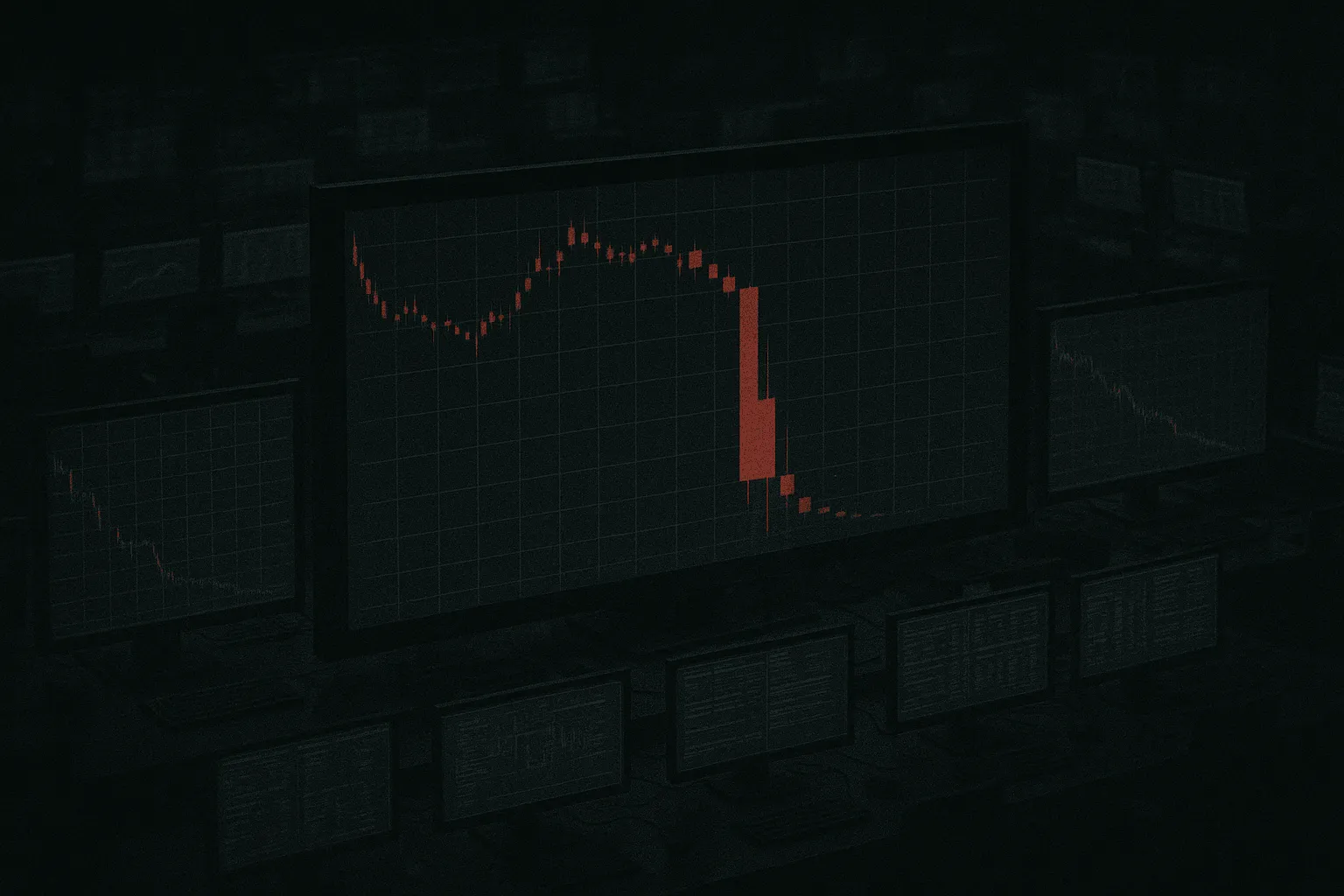
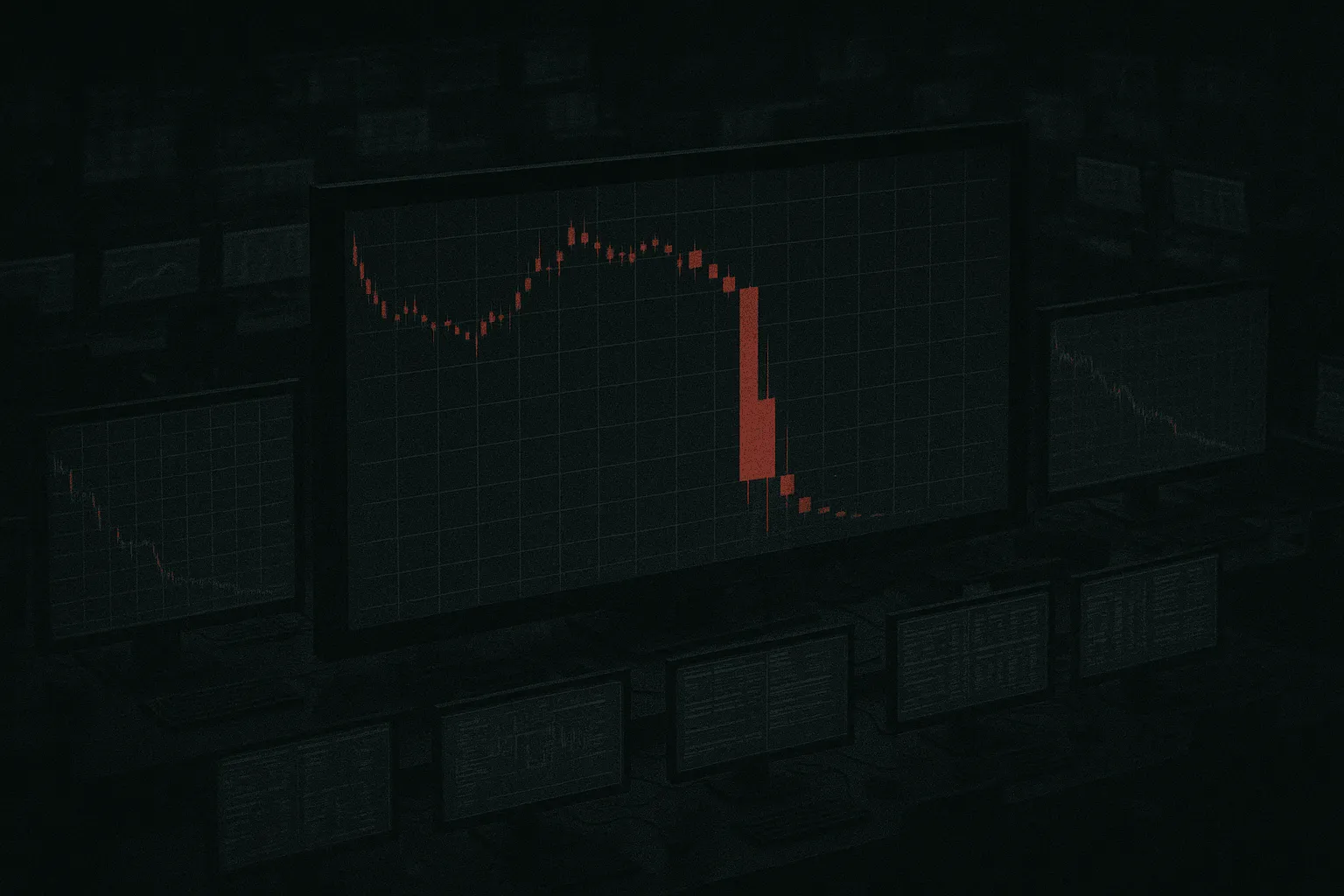
At 21:15 UTC on October 10, 2025, roughly $3.21 billion in leveraged crypto positions were closed inside a single sixty-second window. By the end of the day, Coinglass tallied more than $19 billion in forced closures across some 1.6 million accounts — the largest single-day liquidation event ever recorded in this market. Perpetual futures open interest fell from around $217 billion to $123 billion, a 43% contraction. Hyperliquid alone shed 57% of its open interest, from $14 billion to $6 billion. The average token in CoinDesk Data’s tracked universe fell around 47% intraday, exceeding the peak-to-trough averages of May 2021.
Numbers of this size invite a simple story: leverage got too high, a shock arrived, the market cleared. That story is not wrong, but it is the least interesting version of what happened. The event was legible only through the interaction of three distinct failure modes stacked on the same weekend: a macro trigger in the form of a US tariff announcement, a venue-specific price artifact on Binance’s internal index that printed USDe at $0.65 and — per widely repeated but not-yet-primary-sourced reporting — wBETH at nearly ~-88% only on that venue, and a well-fed leverage loop built on synthetic-dollar collateral treated as if it were cash.
This is Part 3 of our Great Crashes series. Where Part 1 walked through the 2020–2022 arc of on-chain leverage failures and Part 2 dissected the FTX collapse as an intermediary-solvency event, October 10, 2025 belongs to a third category: an infrastructure event, in which the plumbing of margin engines and collateral policies became the story. What follows is a mechanism-first post-mortem, with the numbers anchored to the sources that support them and the disputed claims flagged as disputed.
The trigger: a tariff post into a record-leverage market
Coming into that Friday, total crypto perpetual open interest sat near a record $217 billion. Bitcoin had peaked earlier in the session at $122,574. The set-up was structurally fragile in a boring, familiar way: a lot of directional positioning financed by a lot of margin, spread across a lot of venues, on a weekend when traditional-market hedging is unavailable and market-maker balance sheets are lightly staffed.
The trigger was exogenous. On the evening of October 10, US President Trump posted on Truth Social announcing 100% tariffs on Chinese imports, taking the total tariff burden on Chinese goods to 130% and effective November 1, 2025. Global risk assets sold off. Crypto, as it now typically does under a macro shock, moved first and most.
According to Amberdata’s reconstruction cited by CoinGecko, the first liquidations were a slow trickle. The violent phase began at 20:50 UTC: $6.93 billion in positions were liquidated over the next forty minutes, a rate of roughly $10.39 billion per hour. The peak was that 21:15 UTC minute — $3.21 billion in a single sixty seconds. By the time it was over, BTC had touched $104,782 on CoinGecko’s series (CoinDesk’s CADLI reference rate registered a slightly higher low of $106,560, a discrepancy worth flagging because it tells you the market itself did not agree on a single clearing price). ETH bottomed near $3,436 to $3,551 depending on source. SOL briefly lost more than 40% of its value intraday before stabilizing near $174. Total crypto market cap shed roughly $350 billion.
The macro trigger explains why the market went down. It does not explain why it went down that fast, or why some assets printed prices that had no obvious reference in spot markets. For those questions we need to look at the venues.
The cascade: cross-margin, thin books, and the arithmetic of forced selling

Once BTC and ETH began falling, the mechanics of cross-margined perpetual futures took over. On most large venues, a trader with a portfolio of positions posts a single pool of collateral. Maintenance margin is calculated against the mark-to-market value of every position at once. A move in one leg does not need to blow through its own margin threshold to force liquidation — it can trigger liquidation across the portfolio by dragging the aggregate equity below the aggregate maintenance requirement.
That mechanism is efficient in normal conditions. It is a cascade amplifier under stress. As BTC fell from the $122K area toward $110K, portfolios that were net-long across many tokens simultaneously lost margin buffer against every position. Liquidation engines began forced-selling, and forced-selling into a thinning book is the classic recipe for gap risk.
Order-book depth is the second ingredient. Per Coinwatch data cited by CoinDesk, visible top-of-book depth on large-cap assets — those with fully diluted valuation above $5 billion — “evaporated” during the intraday window. On a normal day, market makers post two-sided quotes because the spread more than compensates for adverse-selection risk. In a fast market on a weekend with correlated selling across every asset, that math flips: quoting is a way to be run over. Rational market makers widen spreads or pull quotes entirely, precisely when liquidity is most needed.
The result is the familiar shape of a cascade. Forced selling drops price faster than orderly discovery would; the price drop marks other positions to values that trip their own maintenance thresholds; those liquidations sell into a book that is now even thinner. The 21:15 UTC minute — $3.21B in sixty seconds — is what this cascade looks like at peak intensity.
None of this is unique to October 10. It has been the mechanical anatomy of every major crypto crash since perpetuals became dominant. What made this event distinct began on one specific venue.
The Binance fault line, part I: the index price

Perpetual futures do not liquidate positions against the raw last-traded price on the venue’s own order book. If they did, a determined attacker could push the local price around and force liquidations at will. Instead, most venues compute a mark price from an index that is some function of prices observed on external reference markets. Positions are liquidated when equity falls below maintenance margin measured against this mark price. The index is, in effect, the venue’s model of “the real price.”
The design decision that matters most is which sources feed the index and how they are weighted. Cap-and-median approaches — take the median of five or six external prices, cap the weight of any single source — are robust to a single feed going bad. Weighted-average approaches without hard caps are efficient in normal markets but expose the engine to whichever source most quickly reflects a stress event.
According to CoinDesk Research, USDe depegged to $0.65 on Binance during the cascade and this depeg “acted as a secondary liquidation trigger.” Widely repeated commentary — including the CoinGecko treatment of the January 2026 dispute between OKX’s Star Xu and Binance — has described the print as venue-specific: USDe’s price on other venues at the same moment was materially closer to par. The article-topic brief also references a wBETH print at approximately ~-88% on Binance only. We have not been able to verify the wBETH figure or the specific mechanics of the index methodology from primary sources within Binance’s own announcement; the announcement page is on our reference list but could not be retrieved in a form we could quote. We flag both details as pending primary-source verification, and we treat the following as an interpretation rather than an established fact: if the USDe and wBETH prints were venue-specific, the most parsimonious explanation is an index/oracle design in which internal Binance market prices were sufficiently weighted to allow a local dislocation to propagate into the mark price used for margining.
Whichever the precise mechanism, the consequence is straightforward. Any trader whose portfolio included USDe as collateral saw the mark value of that collateral collapse to $0.65 for margin purposes, regardless of whether they could redeem or sell it elsewhere near par. Any trader with wBETH positions marked to an -88% print faced instantaneous liquidation on a scale that would not have been triggered by any plausible spot-market print of the same asset. The secondary cascade fed on the primary one.
Reporting subsequently indicated that Binance introduced index-weight changes and paid compensation to affected users. A figure of roughly $283 million in compensation has circulated in secondary discussion of the event and appears in our topic brief; we could not confirm it against Binance’s own announcement text within the sources available to us, and we flag it as an open question rather than a settled number. The direction of travel — capping single-venue weights, tightening circuit breakers, restricting internal-index dependencies for stress prints — is the standard response to this class of failure. Whether the specific fixes are structural or cosmetic is not knowable without the primary announcement.
The Binance fault line, part II: the leverage loop

The second Binance-adjacent question is whether the platform’s collateral policy and yield promotions contributed to the size of the cascade, independent of the index issue. This is the substance of OKX CEO Star Xu’s public accusation on January 31, 2026, which — per CoinGecko’s reporting — targeted Binance’s 12% APY promotional campaign on USDe and its treatment of USDe as collateral equivalent to USDT and USDC.
To evaluate this claim we have to separate USDe as an asset from how a venue chose to use it.
USDe is not USDT
USDe is a synthetic dollar. It maintains its peg not through cash and Treasury bills held in a bank account, but through a delta-neutral hedge: long spot exposure to underlying assets combined with short perpetual futures positions on those same assets, with the funding-rate spread producing yield. Under normal conditions the peg holds because the hedge holds. Under stressed conditions — when funding turns violently, when perp liquidity disappears, or when the venue running the short leg itself experiences a mark-price anomaly — the hedge can decouple from the peg. That is not a defect specific to USDe; it is the definitional property of any synthetic dollar that is not literally cash.
A margin engine that treats USDe as identical to USDT is implicitly asserting that its peg is as robust as a cash-collateralized stablecoin under all conditions the engine cares about. In tail scenarios that assertion is false.
The loop
The mechanism described in Xu’s public statements, summarized by CoinGecko, is a straightforward carry trade compounded through re-hypothecation:
- Convert USDT (or USDC) into USDe, earning the promoted ~12% APY.
- Post USDe as collateral, borrow USDT against it.
- Convert the borrowed USDT into USDe and earn yield on that too.
- Repeat.
At each turn of the loop, the trader’s notional USDe holdings grow while their initial capital stays fixed. On a static basis this produces the arithmetic that Xu described — apparent yields in the 24% to 70%+ range, depending on how many turns are stacked and what borrow rates apply. We treat the 70%+ upper bound with caution, since it comes from a competitor CEO’s public argument and has not been independently verified in our source set.
The important point is not the exact peak yield but the structural exposure. Every turn of the loop increases the trader’s exposure to two joint events: USDe deviating from par, and the borrow leg being called. When USDe printed $0.65 in the venue’s mark price, both events occurred simultaneously for every looped trader. The collateral value collapsed and the borrow position became under-margined at the same instant. Cross-margin then propagated that shortfall across every other position in the portfolio, and the forced-selling of those positions contributed to the broader cascade.
The order of events
Binance’s stated defense, again per CoinGecko, is that the macro shock came first and that high aggregate leverage and evaporated liquidity — conditions that were market-wide and not attributable to any single venue’s product design — did the rest. The available excerpt of Binance’s rebuttal cuts off before the full argument is on the record, and we do not have the primary document.
There is genuine substance to the defense. Xu’s own timeline, as reported, has BTC declining approximately 30 minutes before USDe depegged, which means the leverage loop cannot have initiated the cascade — the tariff shock did. And the record $217B in aggregate open interest was not built on Binance alone; every large venue contributed. Any sufficiently severe macro shock into that positioning would have produced a very large liquidation event regardless of USDe’s role.
The narrower and more defensible version of the criticism, in our reading, is not that Binance caused the crash but that specific product design choices — a promotional yield campaign that concentrated collateral into USDe, an index methodology that permitted a single-venue print to drive mark prices, and a margin policy that treated a synthetic dollar as equivalent to cash-collateralized stablecoins — amplified the cascade beyond what the macro trigger alone would have produced. That version is compatible with both the timeline evidence and the venue-specific price artifacts.
Hyperliquid and the price of using ADL

The event’s second infrastructure story unfolded on Hyperliquid, which experienced its first auto-deleveraging (ADL) event in roughly two years. Understanding what ADL is, and what it does to counterparties, is central to reading this part of the event.
What ADL is for
When a liquidation cannot be absorbed by the order book at prices better than the bankruptcy price of the liquidated position, the venue’s insurance fund is drawn on to cover the shortfall. If losses exceed the insurance fund’s capacity, the venue faces a choice between three unpleasant options: default on the profitable counterparty (destroying the exchange’s credibility), socialize the loss across all profitable traders (spreading the damage widely and predictably), or auto-deleverage — force-close a selection of the most profitable counterparty positions at the bankruptcy price of the underwater position.
Hyperliquid, like most perpetual venues, uses ADL as a backstop. It is disclosed. Sophisticated participants know it exists. The controversy is not about its legitimacy but about its incentive properties.
What ADL does to market makers
Market makers on perp venues typically run books that are close to delta-neutral. A common structure is: hedge inventory built up from providing liquidity by taking offsetting positions on the same or another venue, so that the market maker earns spread and rebates without carrying directional risk. This is the entire business model. It requires the hedge to remain in place.
ADL breaks that requirement in the worst possible moment. When a market maker’s position is selected for auto-deleveraging — typically because it is among the most profitable positions on the opposite side of the failed trade — the position is force-closed at the bankruptcy price. The market maker’s hedge is now missing one leg. The other leg, sitting on a different venue or in spot inventory, is suddenly a naked directional position in a market that has just experienced its largest cascade on record.
Reporting on the specific composition of Hyperliquid’s ADL selections during the event and which market-maker books were affected is not detailed in the sources available to us, and we do not name specific firms. The mechanism, however, is well understood. The 57% contraction in Hyperliquid’s open interest — from $14B to $6B — is consistent with a story in which some fraction was forced closure via ADL and the rest was voluntary book-flattening by participants who saw what had just happened and rationally reduced size.
The design tradeoff
The alternatives to ADL are not obviously better. Socialized loss — pro-rata haircuts on profitable trader balances — spreads the damage widely and destroys the trust of exactly the sophisticated participants a venue needs to keep. Larger insurance funds cost money to capitalize and are, in the tail, always insufficient against a truly unbounded loss. Pre-funded default waterfalls similar to those used by regulated derivatives clearinghouses require capital contributions that most crypto venues have not asked their members to make.
The honest reading is that ADL is a rational choice for a venue that wants to remain solvent through a tail event, and a serious hidden risk for market makers who provide the two-sided liquidity that keeps the venue functional in normal times. Every large ADL event increases the market-maker haircut on future participation. It shows up as wider spreads and thinner books in the next stress event. This is a form of quiet cost that does not appear on any post-mortem but that everyone in the business notices.
Structural lessons

Three lessons sit above the individual venue stories.
Oracle and index design is margin engine design
An index is not neutral infrastructure. It is a specific claim about which prices are “true” for the purpose of taking collateral away from customers. When that claim is wrong — when a venue’s own market can dominate its own index during a stress event — the margin engine becomes a mechanism for manufacturing losses that the underlying assets did not require.
The design principles that mitigate this are not new: source diversity, hard weight caps on any single venue, median-based aggregation, circuit breakers that halt liquidations when the index diverges from a robust reference, and post-hoc reconciliation for prints that clearly deviate from external evidence. The question October 10 raises is not whether these principles are known — they are — but whether they are consistently applied under the pressure of product velocity and competitive yield offerings. The answer, evidently, is not yet.
Synthetic-dollar collateral is a policy choice, not a technical one
Treating USDe as collateral-equivalent to USDT is a business decision made by a venue’s risk committee, not a property of USDe itself. USDe as an asset has its own well-documented risks, but it is not obliged to be posted as margin at 1:1 weighting against cash-collateralized stablecoins. A venue that wants to support USDe as collateral has options: haircut it (accept USDe worth $1 as $0.90 of margin), cap the maximum share of a portfolio’s margin that can be sourced from synthetic dollars, or restrict its use to cross-margin isolated in specific product categories.
The 12% APY promotion combined with equivalent-collateral treatment created a large concentrated pool of looped USDe collateral. That concentration was itself the risk, more so than USDe’s design. A synthetic dollar is a fine instrument. It becomes a systemic exposure when a venue’s incentives, promotions, and collateral policy conspire to concentrate positioning in it during quiet times, without commensurate margin haircuts to compensate for stress-scenario correlation.
ADL is a tax on hedged liquidity
For the reasons discussed, ADL converts hedged books into naked ones exactly when hedging matters most. There is no obvious better mechanism given the constraints of an unregulated derivatives venue, but the cost is real and cumulative. Each large ADL event trains market makers to run smaller books, quote wider, and pull faster in stress. That is the same as saying each large ADL event thins the book in the next crisis. The lesson is not that Hyperliquid did anything wrong; it is that the ADL toolkit, deployed at scale, produces a market structure that is more brittle than the one a fully capitalized default waterfall would produce. Whether the industry will move toward that model is an open question about capital costs and regulatory posture, not about technical feasibility.
What still needs to be established
We have written this piece with more epistemic caveats than usual because the source base is incomplete. The specific mechanics of Binance’s index methodology on the day, the exact terms and size of any compensation program, the details of the wBETH print, and the composition of Hyperliquid’s ADL selections are all questions where the primary documents either exist and were not accessible to us, or have not yet been produced. A more complete accounting will require Binance’s official announcement text, Hyperliquid’s own post-mortem if one is produced, and — ideally — independent forensic reconstruction of the index feeds during the critical minutes.
Two open questions matter most for anyone building or trading on these venues. First: given that a single venue’s internal market can, under stress, dominate its own margin index, what design changes are needed to make single-venue price artifacts non-fatal to cross-venue traders? Second: given that synthetic-dollar collateral behaves categorically differently from cash-backed collateral in tail events, is the industry converging on a margin-haircut standard, or will each venue continue to make idiosyncratic choices whose costs are only revealed after the next cascade?
October 10, 2025 was, by every quantitative measure available, the largest liquidation event this market has ever experienced. It was also — by a margin that will grow as more of the primary record becomes accessible — the clearest recent case of infrastructure design amplifying rather than dampening a macro shock. Whether the industry treats it as such is the real subject of Part 4.
들어가며
2025년 10월 10일 UTC 21:15, 약 32억 1천만 달러 규모의 레버리지 암호화폐 포지션이 단 60초 만에 강제 청산됐다. 그날 하루가 끝날 무렵, Coinglass는 약 160만 개 계좌에서 발생한 190억 달러 이상의 강제 청산을 집계했다 — 이 시장 역사상 단일 일자 기준 최대 규모의 청산 이벤트였다. 영구선물 미결제약정은 약 2,170억 달러에서 1,230억 달러로, 43% 수축했다. Hyperliquid 단독으로도 미결제약정이 140억 달러에서 60억 달러로 57% 급감했다. CoinDesk Data가 추적하는 유니버스 내 토큰들의 평균 일중 낙폭은 약 47%로, 2021년 5월의 고점 대비 저점 평균을 넘어섰다.
이 정도 규모의 숫자 앞에서는 단순한 서사가 만들어지기 쉽다: 레버리지가 지나치게 높았고, 충격이 왔고, 시장이 정리됐다. 이 이야기가 틀린 것은 아니지만, 일어난 일의 가장 덜 흥미로운 버전이기도 하다. 이번 사태는 같은 주말에 겹쳐 쌓인 세 가지 서로 다른 구조적 실패가 맞물려서야 비로소 제대로 이해할 수 있다: 미국의 관세 발표라는 거시적 촉발 요인, Binance 내부 지수에서만 USDe 가격이 0.65달러로, — 널리 인용되지만 1차 출처가 아직 확인되지 않은 보도에 따르면 — wBETH 가격이 해당 거래소에서만 ~-88%까지 찍힌 거래소별 가격 이상 현상, 그리고 합성 달러 담보를 현금처럼 취급하며 구축된 레버리지 루프가 그것이다.
이 글은 ‘Great Crashes’ 시리즈의 세 번째 편이다. 1편이 2020~2022년의 온체인 레버리지 실패 흐름을 다뤘고, 2편이 FTX 붕괴를 중개기관 지급능력 이벤트로 해부했다면, 2025년 10월 10일은 세 번째 범주에 속한다: 인프라 이벤트 — 마진 엔진과 담보 정책의 설계 그 자체가 사건의 본질이 된 경우다. 이하 내용은 메커니즘 중심의 사후 분석으로, 수치는 근거 출처를 명시하고 논란이 있는 주장은 그렇게 표시한다.
촉발 요인: 기록적 레버리지 시장에 날아든 관세 게시글
그 금요일을 앞두고 암호화폐 영구선물 미결제약정 총액은 기록에 가까운 2,170억 달러 수준이었다. 비트코인은 해당 세션 초반 122,574달러로 고점을 찍었다. 시장의 구조적 취약성은 진부할 정도로 익숙한 형태였다: 막대한 마진으로 조달된 대규모 방향성 포지션이 수많은 거래소에 분산된 채로, 전통 시장 헤징이 불가능하고 마켓메이커의 재무 역량이 제한된 주말을 맞이하고 있었다.
촉발 요인은 외생적이었다. 10월 10일 저녁, 트럼프 미국 대통령이 Truth Social에 중국산 수입품에 대한 100% 관세 부과를 발표하는 글을 올렸다. 이로써 중국산 상품에 대한 총 관세 부담은 130%로 높아졌으며, 발효일은 2025년 11월 1일이었다. 글로벌 위험자산이 일제히 하락했다. 암호화폐는 이제 거시 충격 앞에서 늘 그렇듯, 가장 먼저, 가장 크게 움직였다.
CoinGecko가 인용한 Amberdata의 재구성에 따르면, 초기 청산은 서서히 시작됐다. 폭발적인 국면은 UTC 20:50에 시작됐다: 이후 40분 동안 69억 3천만 달러의 포지션이 청산됐고, 이는 시간당 약 103억 9천만 달러의 속도에 해당한다. 피크는 UTC 21:15 — 단 60초 만에 32억 1천만 달러였다. 사태가 마무리될 무렵, BTC는 CoinGecko 시리즈 기준 104,782달러까지 떨어졌다(CoinDesk의 CADLI 기준가는 그보다 다소 높은 106,560달러의 저점을 기록했는데, 이 괴리는 시장 자체가 단일 청산 가격에 합의하지 못했음을 보여준다는 점에서 주목할 만하다). ETH는 출처에 따라 3,436~3,551달러 부근에서 저점을 형성했다. SOL은 일중 40% 이상을 순간적으로 잃었다가 174달러 부근에서 안정됐다. 암호화폐 시총은 총 약 3,500억 달러가 증발했다.
거시적 촉발 요인은 왜 시장이 하락했는지를 설명한다. 그러나 왜 그토록 빠르게 하락했는지, 왜 일부 자산이 현물 시장 어디에도 근거를 찾기 어려운 가격을 찍었는지는 설명하지 못한다. 이 질문들에 답하려면 거래소 차원을 살펴봐야 한다.
연쇄 청산: 교차 마진, 얕은 호가창, 그리고 강제 매도의 산수
BTC와 ETH가 하락하기 시작하자, 교차 마진(cross-margin) 방식의 영구선물이 지닌 역학이 작동했다. 대부분의 대형 거래소에서, 복수의 포지션을 보유한 트레이더는 단일 담보 풀을 사용한다. 유지 증거금은 모든 포지션의 시가 평가액을 합산해 계산된다. 어느 한 포지션의 손실이 그 포지션 자체의 마진 한계를 돌파하지 않더라도, 전체 자산 가치를 전체 유지 증거금 요건 아래로 끌어내림으로써 포트폴리오 전체의 청산을 촉발할 수 있다.
이 메커니즘은 정상 상황에서는 효율적이다. 스트레스 상황에서는 연쇄 증폭기가 된다. BTC가 12만 2천 달러대에서 11만 달러 방향으로 하락하자, 다수의 토큰에 걸쳐 순매수 포지션을 쥔 포트폴리오들은 모든 포지션에 대한 마진 버퍼를 동시에 잃었다. 청산 엔진이 강제 매도를 시작했고, 얇아지는 호가창을 향한 강제 매도는 갭 리스크의 고전적인 레시피다.
두 번째 요소는 오더북 깊이다. CoinDesk가 인용한 Coinwatch 데이터에 따르면, 완전희석가치(FDV) 50억 달러 이상의 대형 자산들에서 상위 호가 깊이가 일중 해당 구간 동안 “증발”했다. 평상시에는 마켓메이커가 양방향 호가를 제출한다. 스프레드가 역선택 위험을 충분히 상쇄하기 때문이다. 그러나 모든 자산에 걸친 상관된 매도 압력이 쏟아지는 주말 급락장에서 그 계산은 뒤집힌다: 호가를 내는 것은 치이는 것과 같다. 합리적인 마켓메이커는 유동성이 가장 절실한 그 순간에 정확히 스프레드를 확대하거나 호가를 완전히 거둔다.
결과는 연쇄 청산의 익숙한 형태다. 강제 매도는 질서 있는 가격 발견보다 빠르게 가격을 끌어내리고; 그 가격 하락은 다른 포지션들을 유지 증거금 한계 이하로 평가하고; 그 청산들이 이제 더욱 얇아진 호가창으로 매도를 쏟아낸다. UTC 21:15 — 60초 만에 32억 1천만 달러 — 는 이 연쇄 청산이 최고 강도에 달했을 때의 모습이다.
이 중 어느 것도 10월 10일에만 고유한 현상이 아니다. 영구선물이 지배적인 상품이 된 이후 모든 주요 암호화폐 폭락의 역학적 해부도가 바로 이것이었다. 이번 사태를 차별화시킨 것은 특정 거래소에서 시작됐다.
Binance의 단층선, 1부: 인덱스 가격
영구선물은 해당 거래소 자체 오더북에서 마지막으로 체결된 원시 가격을 기준으로 포지션을 청산하지 않는다. 만약 그랬다면, 작정한 공격자가 로컬 가격을 조종해 마음대로 청산을 유발할 수 있을 것이다. 대신, 대부분의 거래소는 외부 기준 시장에서 관측된 가격들을 일정한 방식으로 조합한 **마크 가격(mark price)**을 인덱스로부터 산출한다. 포지션은 이 마크 가격 기준 자산 가치가 유지 증거금 아래로 떨어질 때 청산된다. 인덱스는 사실상 거래소가 정의하는 “실제 가격의 모델”이다.
여기서 가장 중요한 설계 결정은 어떤 소스가 인덱스에 반영되고 어떻게 가중치가 부여되는가다. 캡앤미디언(cap-and-median) 방식 — 5~6개의 외부 가격 중앙값을 취하고 단일 소스의 가중치에 상한을 두는 방식 — 은 특정 피드 하나가 이상 작동하더라도 견고하다. 상한 없는 가중평균 방식은 정상 시장에서는 효율적이지만, 스트레스 이벤트를 가장 빠르게 반영하는 소스에 엔진을 고스란히 노출시킨다.
CoinDesk Research에 따르면, 연쇄 청산 과정에서 USDe는 Binance에서 0.65달러로 디페깅됐으며, 이 디페깅이 “2차 청산 촉발 요인으로 작용했다.” OKX의 Star Xu와 Binance 간의 2026년 1월 논쟁에 대한 CoinGecko 보도를 포함해 광범위하게 인용된 분석들은, 이 가격을 거래소 특정 현상으로 묘사했다: 동일 시점 다른 거래소에서 USDe 가격은 패리티에 훨씬 더 가까웠다는 것이다. 이 글의 주제 브리프는 또한 Binance에서만 wBETH 가격이 약 ~-88%를 찍은 사례를 언급한다. 우리는 wBETH 수치나 Binance 자체 발표에서 인덱스 방법론의 구체적인 작동 방식을 1차 출처에서 확인하지 못했다. 해당 발표 페이지는 참고 목록에 있으나 인용 가능한 형태로 확보되지 않았다. 우리는 두 사항 모두 1차 출처 확인이 필요한 사안으로 표시하며, 이하 내용을 확립된 사실이 아닌 해석으로 취급한다: 만약 USDe와 wBETH의 가격이 거래소 특정 현상이었다면, 가장 단순한 설명은 — Binance의 내부 시장 가격이 마진 산정에 쓰이는 마크 가격으로 전이될 만큼 충분히 가중치를 부여받은 인덱스/오라클 설계 — 로컬 가격 왜곡이 마크 가격에 그대로 전파될 수 있는 구조였다는 것이다.
정확한 메커니즘이 무엇이든, 결과는 명확하다. USDe를 담보로 보유한 모든 트레이더는 다른 곳에서 패리티 근처에 환매하거나 매도할 수 있는지와 무관하게, 마진 산정 목적으로 그 담보 가치가 0.65달러로 폭락하는 것을 봤다. wBETH 포지션이 -88% 가격에 마킹된 트레이더는, 그 자산의 어떤 그럴듯한 현물 시장 가격으로도 촉발될 수 없었을 규모의 즉각적인 청산에 직면했다. 2차 연쇄 청산이 1차 연쇄 청산에 먹이를 댔다.
이후 보도에 따르면 Binance는 인덱스 가중치 변경을 도입하고 피해 사용자에게 보상을 지급했다. 약 2억 8,300만 달러의 보상금 수치가 이 사태의 2차 논의에서 유통되고 있으며 우리의 주제 브리프에도 등장하지만, 우리가 접근 가능한 소스 범위 내에서 Binance 자체 발표문에서 이를 확인하지 못했고, 이를 확정된 수치가 아닌 미결 사안으로 표시한다. 변화의 방향 — 단일 거래소 가중치 상한 설정, 서킷 브레이커 강화, 스트레스 시나리오에서 내부 인덱스 의존도 제한 — 은 이 유형의 실패에 대한 표준적인 대응이다. 해당 수정이 구조적인지 피상적인지는 1차 발표문 없이는 알 수 없다.
Binance의 단층선, 2부: 레버리지 루프
두 번째 Binance 관련 질문은, 인덱스 문제와 별개로 해당 플랫폼의 담보 정책과 수익률 프로모션이 연쇄 청산의 규모를 키우는 데 기여했는지 여부다. 이것이 2026년 1월 31일 OKX CEO Star Xu가 공개적으로 제기한 비판의 핵심으로, CoinGecko 보도에 따르면 Binance의 USDe 12% APY 프로모션 캠페인과 USDe를 USDT·USDC와 동등한 담보로 취급한 방식을 겨냥한 것이다.
이 주장을 평가하기 위해서는 USDe라는 자산 자체와 거래소가 이를 어떻게 활용했는지를 분리해야 한다.
USDe는 USDT가 아니다
USDe는 합성 달러다. 은행 계좌에 현금과 국채를 보유하는 방식이 아니라, 델타 중립 헤지를 통해 페그를 유지한다: 기초 자산에 대한 현물 롱 포지션에 동일 자산에 대한 영구선물 숏 포지션을 결합하고, 그 펀딩비 스프레드에서 수익률이 발생한다. 정상적인 조건에서는 헤지가 유지되기 때문에 페그가 유지된다. 스트레스 상황에서는 — 펀딩비가 급격히 역전되거나, 영구선물 유동성이 사라지거나, 숏 포지션을 운용하는 거래소 자체가 마크 가격 이상을 겪을 때 — 헤지가 페그로부터 분리될 수 있다. 이는 USDe에 특유한 결함이 아니다; 문자 그대로 현금이 아닌 모든 합성 달러의 정의적 속성이다.
USDe를 USDT와 동일하게 취급하는 마진 엔진은, 엔진이 고려하는 모든 조건에서 USDe의 페그가 현금 담보 스테이블코인만큼 견고하다는 주장을 암묵적으로 내포하고 있다. 꼬리 시나리오에서 이 주장은 거짓이다.
루프
CoinGecko가 요약한 Xu의 공개 발언에서 묘사된 메커니즘은, 재담보화(re-hypothecation)를 통해 복리로 쌓이는 단순한 캐리 트레이드다:
- USDT(또는 USDC)를 USDe로 전환해 프로모션 ~12% APY를 수취한다.
- USDe를 담보로 예치하고 이에 맞서 USDT를 차입한다.
- 차입한 USDT를 USDe로 전환해 거기서도 수익률을 얻는다.
- 이를 반복한다.
루프를 한 번 돌 때마다 트레이더의 명목상 USDe 보유량은 늘어나고 초기 자본은 고정된다. 정적으로 계산하면 Xu가 설명한 산술이 나온다 — 루프 횟수와 적용 차입금리에 따라 겉으로 보이는 수익률이 24%에서 70%+에 이른다. 70%+ 상단 수치는 경쟁사 CEO의 공개 주장에서 나온 것으로 우리 소스 세트에서 독립적으로 검증되지 않았으므로 주의해서 취급한다.
중요한 것은 정확한 피크 수익률이 아니라 구조적 노출이다. 루프를 한 번 돌 때마다 트레이더는 두 가지 사건이 동시에 발생할 위험에 더 깊이 노출된다: USDe가 패리티에서 이탈하는 것, 그리고 차입 포지션이 상환 요구를 받는 것. 거래소의 마크 가격에서 USDe가 0.65달러로 찍혔을 때, 루프를 돌린 모든 트레이더에게 두 사건이 동시에 발생했다. 담보 가치는 붕괴했고 차입 포지션은 같은 순간 마진 미달이 됐다. 교차 마진은 이 부족분을 포트폴리오 내 다른 모든 포지션으로 전파했고, 그 포지션들의 강제 매도는 더 광범위한 연쇄 청산에 기여했다.
사건의 순서
다시 CoinGecko 보도에 따르면, Binance의 공식 반론은 거시 충격이 먼저였고, 그 이후의 경과는 높은 총 레버리지와 증발한 유동성 — 시장 전반의 조건으로, 특정 거래소의 상품 설계에 귀속시킬 수 없는 요인들 — 이 나머지를 했다는 것이다. 이용 가능한 Binance 반박문의 발췌는 전체 논거가 기록되기 전에 끊기며, 우리는 1차 문서를 보유하지 않는다.
이 반론에는 실질적인 근거가 있다. 보도된 바에 따르면 Xu 자신의 타임라인에서도 BTC 하락은 USDe 디페깅보다 약 30분 앞서 있었다. 이는 레버리지 루프가 연쇄 청산을 시작시킬 수 없었음을 의미한다 — 관세 충격이 그 역할을 했다. 그리고 기록적인 총 2,170억 달러의 미결제약정은 Binance만의 것이 아니었다; 모든 대형 거래소가 기여했다. 그 포지션을 향한 충분히 심각한 거시 충격이라면, USDe의 역할과 무관하게 매우 큰 청산 이벤트를 만들어냈을 것이다.
우리가 읽기에, 비판의 더 좁고 더 방어 가능한 버전은 Binance가 폭락을 유발했다는 것이 아니다. 특정 상품 설계 선택들 — USDe에 담보를 집중시킨 프로모션 수익률 캠페인, 단일 거래소 가격이 마크 가격을 주도하도록 허용한 인덱스 방법론, 합성 달러를 현금 담보 스테이블코인과 동등하게 취급한 마진 정책 — 이 거시 촉발 요인 단독으로 만들어냈을 것보다 연쇄 청산을 더 키웠다는 것이다. 이 버전은 타임라인 증거와 거래소 특정 가격 이상 현상 모두와 양립한다.
Hyperliquid와 ADL 사용의 대가
이번 사태의 두 번째 인프라 이야기는 Hyperliquid에서 펼쳐졌다. 이 거래소는 약 2년 만에 처음으로 자동 디레버리징(Auto-Deleveraging, ADL) 이벤트를 경험했다. ADL이 무엇인지, 그리고 상대방에게 무슨 일을 하는지를 이해하는 것이 이 부분을 읽는 데 핵심이다.
ADL의 존재 이유
청산을 청산된 포지션의 파산 가격보다 좋은 가격에서 호가창이 흡수하지 못할 때, 거래소의 보험 기금이 부족분을 메우기 위해 사용된다. 손실이 보험 기금의 한도를 초과하면, 거래소는 세 가지 불쾌한 선택지 중 하나를 골라야 한다: 수익을 낸 상대방에 대한 채무 불이행(거래소 신뢰도 파괴), 모든 수익 트레이더에게 손실을 분담(피해를 넓고 예측 가능하게 분산), 또는 자동 디레버리징 — 손실을 입은 포지션의 파산 가격에서 가장 수익이 큰 상대방 포지션 일부를 강제 청산하는 것이다.
Hyperliquid는 대부분의 영구선물 거래소와 마찬가지로 ADL을 최후의 수단으로 사용한다. 이는 공개되어 있다. 정교한 참여자들은 그 존재를 안다. 논란은 그 정당성이 아니라 인센티브 속성에 관한 것이다.
ADL이 마켓메이커에게 하는 일
영구선물 거래소의 마켓메이커는 대개 델타 중립에 가까운 북을 운용한다. 일반적인 구조는 이렇다: 유동성 제공으로 쌓인 재고를 같은 거래소 혹은 다른 거래소에서 상쇄 포지션으로 헤지해, 방향성 위험 없이 스프레드와 리베이트를 수취한다. 이것이 사업 모델의 전부다. 헤지가 유지되어야 가능하다.
ADL은 최악의 순간에 이 요건을 깨뜨린다. 마켓메이커의 포지션이 자동 디레버리징 대상으로 선택될 때 — 보통 실패한 거래의 반대편에서 가장 수익이 큰 포지션이기 때문에 — 그 포지션은 파산 가격에서 강제 청산된다. 마켓메이커의 헤지는 이제 한쪽 다리를 잃었다. 다른 거래소나 현물 재고에 걸쳐 있던 나머지 한쪽은 갑자기 역대 최대 연쇄 청산이 막 지나간 시장에서의 벌거벗은 방향성 포지션이 된다.
이번 사태에서 Hyperliquid의 ADL 선택의 구체적인 구성과 어떤 마켓메이커 북이 영향을 받았는지는 우리가 접근 가능한 소스에서 상세히 확인되지 않으며, 특정 회사를 지명하지 않는다. 그러나 메커니즘 자체는 잘 알려져 있다. Hyperliquid의 미결제약정이 140억 달러에서 60억 달러로 57% 수축한 것은, 일부는 ADL을 통한 강제 청산이고 나머지는 방금 일어난 일을 목격하고 합리적으로 포지션을 줄인 참여자들의 자발적 북 축소였다는 이야기와 일치한다.
설계의 트레이드오프
ADL의 대안들이 명백히 더 낫지도 않다. 손실 분담 — 수익 트레이더 잔고에 대한 안분 헤어컷 — 은 피해를 넓게 분산시키고, 거래소가 정상적으로 유지되기 위해 붙잡아야 할 바로 그 정교한 참여자들의 신뢰를 파괴한다. 더 큰 보험 기금은 자본화에 비용이 들고, 꼬리 상황에서는 결국 진정으로 무한한 손실에 맞서 언제나 불충분하다. 규제된 파생상품 청산소가 사용하는 방식과 유사한 사전 자본 조달형 부도 워터폴은 대부분의 암호화폐 거래소가 참여자에게 요구하지 않는 자본 기여를 필요로 한다.
솔직한 독해는 이렇다: ADL은 꼬리 이벤트에서 살아남으려는 거래소에게 합리적인 선택이며, 동시에 정상적인 시간에 거래소를 기능하게 하는 양방향 유동성을 제공하는 마켓메이커에게는 심각한 숨겨진 위험이다. 큰 ADL 이벤트가 발생할 때마다, 마켓메이커는 미래 참여에 더 작은 북으로, 더 넓은 스프레드로, 스트레스 상황에서 더 빠르게 호가를 거둬들이는 방향으로 학습한다. 이는 곧 큰 ADL 이벤트가 발생할 때마다 다음 위기의 호가창이 더 얇아진다는 말이다. 교훈은 Hyperliquid가 무언가 잘못했다는 것이 아니다; ADL이라는 수단이 대규모로 사용될 때, 완전히 자본화된 부도 워터폴이 만들어낼 시장 구조보다 더 취약한 시장 구조를 낳는다는 것이다. 업계가 그 모델로 이동할지는 기술적 가능성이 아니라 자본 비용과 규제 태도에 관한 열린 질문이다.
구조적 교훈
개별 거래소 이야기들 위에 세 가지 교훈이 자리한다.
오라클·인덱스 설계가 곧 마진 엔진 설계다
인덱스는 중립적인 인프라가 아니다. 마진 목적상 어떤 가격이 “진실”인지에 대한 특정한 주장이다. 그 주장이 틀렸을 때 — 거래소 자체 시장이 스트레스 이벤트 중 자체 인덱스를 지배할 수 있을 때 — 마진 엔진은 기초 자산이 요구하지 않은 손실을 만들어내는 기계가 된다.
이를 완화하는 설계 원칙들은 새로운 것이 아니다: 소스 다양성, 단일 거래소에 대한 엄격한 가중치 상한, 중앙값 기반 집계, 인덱스가 견고한 기준에서 크게 이탈할 때 청산을 중단하는 서킷 브레이커, 외부 증거에서 명백히 벗어난 가격에 대한 사후 조정이 그것이다. 10월 10일이 제기하는 질문은 이 원칙들이 알려져 있는가 여부가 아니다 — 알려져 있다. 상품 출시 속도와 경쟁적 수익률 제공의 압력 아래서 이것이 일관되게 적용되는가다. 답은, 분명히, 아직 아니다.
합성 달러 담보는 기술적 문제가 아닌 정책적 선택이다
USDe를 USDT와 담보 동등물로 취급하는 것은 USDe 자체의 속성이 아니라 거래소 리스크 위원회의 사업적 결정이다. USDe는 자산으로서 잘 문서화된 자체 위험을 가지고 있지만, 현금 담보 스테이블코인에 대해 1:1 가중치로 마진에 예치될 의무가 없다. USDe를 담보로 지원하고자 하는 거래소에게는 선택지가 있다: 헤어컷 적용(1달러짜리 USDe를 0.90달러의 마진으로 인정), 포트폴리오 마진에서 합성 달러가 차지할 수 있는 최대 비율 상한 설정, 또는 특정 상품 카테고리에서만 교차 마진 격리로 활용 제한이 그것이다.
12% APY 프로모션에 동등한 담보 취급이 결합되어, 루프된 USDe 담보의 대규모 집중 풀이 형성됐다. 그 집중 자체가 위험이었고, USDe의 설계보다 더 결정적이었다. 합성 달러는 훌륭한 수단이다. 거래소의 인센티브, 프로모션, 담보 정책이 공모해 조용한 시기에 거기에 포지션을 집중시키면서, 스트레스 시나리오의 상관관계를 보상할 만한 마진 헤어컷이 수반되지 않을 때 시스템적 노출이 된다.
ADL은 헤지된 유동성에 대한 세금이다
앞서 논의한 이유로, ADL은 헤징이 가장 중요한 순간에 정확히 헤지된 북을 벌거벗은 것으로 만든다. 규제받지 않는 파생상품 거래소의 제약을 고려할 때 명백히 더 나은 메커니즘은 없지만, 비용은 실재하고 누적된다. 큰 ADL 이벤트가 발생할 때마다 마켓메이커는 더 작은 북을 운용하고, 더 넓게 호가하고, 스트레스 상황에서 더 빠르게 빠져나가도록 훈련된다. 이는 곧 큰 ADL 이벤트가 발생할 때마다 다음 위기에서 호가창이 더 얇아진다는 말이다. 교훈은 Hyperliquid가 잘못한 것이 있다는 것이 아니다; 대규모로 사용된 ADL이라는 도구가, 완전히 자본화된 부도 워터폴이 낳을 시장 구조보다 더 취약한 시장 구조를 만들어낸다는 것이다. 업계가 그 모델로 이동할지는 기술적 실현 가능성의 문제가 아니라 자본 비용과 규제 태도에 관한 열린 질문이다.
아직 규명되어야 할 것들
우리는 이 글을 평소보다 더 많은 인식론적 단서를 달아 작성했다. 소스 기반이 불완전하기 때문이다. 당일 Binance 인덱스 방법론의 구체적인 작동 방식, 보상 프로그램의 정확한 조건과 규모, wBETH 가격의 세부 내용, 그리고 Hyperliquid의 ADL 선택 구성은 모두 1차 문서가 존재하지만 우리가 접근하지 못했거나, 아직 생산되지 않은 문제들이다. 더 완전한 설명을 위해서는 Binance의 공식 발표 전문, Hyperliquid가 사후 분석을 발행한다면 그것, 그리고 — 이상적으로는 — 핵심 시간대의 인덱스 피드에 대한 독립적인 포렌식 재구성이 필요하다.
이 거래소들에서 구축하거나 거래하는 모든 이에게 가장 중요한 두 가지 열린 질문이 있다. 첫째: 단일 거래소의 내부 시장이 스트레스 하에서 자체 마진 인덱스를 지배할 수 있다는 점이 확인된 지금, 단일 거래소의 가격 이상이 크로스-거래소 트레이더에게 치명적이지 않도록 하기 위해 어떤 설계 변경이 필요한가? 둘째: 합성 달러 담보는 꼬리 이벤트에서 현금 담보 담보물과 범주적으로 다르게 행동한다는 것이 확인된 지금, 업계는 마진 헤어컷 표준으로 수렴하고 있는가, 아니면 각 거래소가 그 비용이 다음 연쇄 청산 이후에야 드러나는 개별적 선택을 계속하고 있는가?
2025년 10월 10일은 사용 가능한 모든 정량적 지표로 볼 때, 이 시장이 경험한 가장 큰 청산 이벤트였다. 또한 — 1차 기록이 더 많이 접근 가능해질수록 더욱 분명해질 격차로 — 인프라 설계가 거시 충격을 완충하는 것이 아니라 증폭시킨 가장 최근의 가장 명확한 사례였다. 업계가 그것을 그렇게 받아들일지가 4편의 진짜 주제다.
はじめに
2025年10月10日 UTC 21:15、わずか60秒の窓の中で約32.1億ドル相当のレバレッジ暗号資産ポジションが強制決済された。その日の終わりまでに、Coinglassは約160万アカウントにわたる190億ドル超の強制清算を集計し、これは市場史上最大の単日清算イベントとして記録された。パーペチュアル先物のオープンインタレストは約2,170億ドルから1,230億ドルへ、43%収縮した。Hyperliquidだけで、140億ドルから60億ドルへと57%のオープンインタレスト消滅を経験した。CoinDesk Dataが追跡するユニバース内の平均トークンは日中に約47%下落し、2021年5月の最高値から最安値までの平均を上回った。
これほどの規模の数字は、シンプルな物語を誘う――レバレッジが過剰になり、ショックが到来し、市場がクリアされた、と。その物語は間違いではないが、起きたことの最も面白みのないバージョンに過ぎない。このイベントは、同じ週末に積み重なった三つの異なる障害モードの相互作用によってのみ理解できる。すなわち、米国の関税発表というマクロのトリガー、Binanceの内部インデックスにおける会場固有の価格異常(USDe が0.65ドルを印字し、広く伝えられているが未だ一次ソースが確認されていない報告によれば、wBETHが同会場のみで約~-88%を記録したとされるもの)、そして現金同等物として扱われた合成ドル担保の上に積み上げられた過剰なレバレッジループである。
本稿はGreat Crashesシリーズの第3弾である。第1弾が2020〜2022年のオンチェーンレバレッジ失敗の軌跡を辿り、第2弾がFTX崩壊を仲介者の支払能力イベントとして解剖したのに対し、2025年10月10日は第三のカテゴリー、すなわちインフラストラクチャーイベントに属する。マージンエンジンと担保ポリシーの「配管」そのものが主役となった出来事だ。以下では、メカニズムを中心に据えた事後分析を展開する。数値は裏付けとなるソースに基づき、争点のある主張はその旨を明記する。
トリガー:記録的なレバレッジ市場への関税投稿
その金曜日を迎える時点で、暗号資産パーペチュアルのオープンインタレスト合計は記録に近い2,170億ドル付近にあった。ビットコインはセッション早期に122,574ドルのピークをつけていた。構造的な脆弱性は退屈なほど馴染みのある形をしていた――多くの方向性ポジションが大量のマージンによって資金調達され、多くの取引所に分散し、伝統的市場によるヘッジが不可能で、マーケットメーカーのバランスシートが手薄な週末にあった。
トリガーは外生的なものだった。10月10日の夜、トランプ米大統領がTruth Socialに投稿し、中国からの輸入品に100%の関税を課すと発表した。これにより中国製品への関税負担は合計130%となり、2025年11月1日から発効するとされた。グローバルなリスク資産が売られた。暗号資産は今やマクロショック下で最初かつ最も激しく動くという、その典型的な動きを見せた。
CoinGeckoが引用したAmberdataの再構成によれば、最初の清算はゆっくりとした細流だった。激しいフェーズはUTC 20:50に始まり、次の40分間で69.3億ドルのポジションが清算された。これは時間当たり約103.9億ドルのペースだ。ピークはUTC 21:15の1分間——わずか60秒で32.1億ドル。終わった頃には、BTCはCoinGeckoのデータシリーズで104,782ドルに達し(CoinDesk の CADLI 参照レートはやや高い安値106,560ドルを記録しており、市場自体が単一の清算価格で合意していなかったことを示す乖離として言及しておく価値がある)、ETH はソース次第で3,436ドルから3,551ドル付近が底値となった。SOL は日中に40%超を失った後、174ドル付近で安定した。暗号資産の時価総額合計は約3,500億ドルを失った。
マクロのトリガーは市場が下落した理由を説明する。しかし、なぜあれほど急速に下落したのか、なぜ一部の資産がスポット市場には明確な根拠のない価格を印字したのかは説明しない。その問いに答えるには、各取引所を見る必要がある。
カスケード:クロスマージン、薄い板、強制売却の算術
BTCとETHが下落し始めると、クロスマージンのパーペチュアル先物のメカニズムが支配的になった。ほとんどの大手取引所では、複数ポジションを持つトレーダーは単一の担保プールを差し入れる。維持証拠金は、全ポジションを同時に時価評価した価値に対して計算される。一つのポジションが自身の証拠金閾値を突き抜けなくても、ポートフォリオ全体のエクイティが維持証拠金の合計を下回れば、他の全ポジションの清算を引き起こしうる。
このメカニズムは通常時には効率的だ。しかしストレス下では、カスケードを増幅する装置と化す。BTCが12万2千ドル台から11万ドル方向へ下落するにつれ、多くのトークンにわたってネットロングのポートフォリオは全ポジションに対して一斉に証拠金バッファを失った。清算エンジンは強制売却を開始し、薄くなる板への強制売却はギャップリスクの古典的なレシピとなる。
板の深さが二番目の要素だ。CoinDesk が引用した Coinwatch のデータによれば、完全希薄化時価総額が50億ドルを超える大型資産の板の上部に見える深さが日中の窓の中で「蒸発した」。通常の日であれば、マーケットメーカーはスプレッドが逆選択リスクを十分に補うため両サイドに気配値を提示する。週末の速い相場で全資産が相関して売られる状況では、その計算が裏返る。気配を提示することが踏み潰される手段となり、合理的なマーケットメーカーはまさに流動性が最も必要とされる瞬間に、スプレッドを広げるか気配を引っ込める。
結果は馴染みのあるカスケードの形だ。強制売却が価格を秩序ある価格発見より速く押し下げ、その価格下落が他のポジションを自身の維持証拠金の閾値を破る水準にマークし、それらの清算がさらに薄くなった板に売りをぶつける。UTC 21:15の1分間——60秒間で32.1億ドル——は、このカスケードがピーク強度に達した姿だ。
これは10月10日だけに固有の現象ではない。パーペチュアルが主流となって以来、主要な暗号資産クラッシュすべてに共通するメカニカルな解剖学だ。このイベントを際立たせたものは、ある特定の取引所で始まった。
Binanceの断層線、その一:インデックス価格
パーペチュアル先物は、取引所自身の板で最後に約定した生の価格に対してポジションを清算するわけではない。もしそうなら、意図的な攻撃者がローカルの価格を操作して任意に清算を引き起こせてしまう。代わりに、ほとんどの取引所は外部の参照市場で観察された価格を何らかの形で集計したインデックスからマーク価格を計算する。エクイティがこのマーク価格に対して計算された維持証拠金を下回ったとき、ポジションは清算される。インデックスは実質的に、取引所が定義する「真の価格」のモデルだ。
最も重要な設計上の決定は、どのソースがインデックスを構成し、どのように重み付けされるかだ。上限・中央値アプローチ——5〜6つの外部価格の中央値を取り、単一ソースのウェイトに上限を設ける——は、単一のフィードが悪化しても頑健だ。ハードな上限のない加重平均アプローチは通常市場では効率的だが、ストレスイベントを最も速く反映するソースにエンジンをさらすことになる。
CoinDesk Researchによれば、USDe はカスケード中にBinance上で0.65ドルにデペッグし、これが「二次的な清算トリガーとして機能した」。OKXのStar XuとBinanceの間の2026年1月の論争についてのCoinGeckoの扱いを含め、広く繰り返されたコメンタリーは、そのプリントを会場固有のものとして説明している。つまり同時刻の他の取引所ではUSDe の価格は額面に実質的に近いところにあったということだ。本稿のトピックブリーフは、Binance上のみでのwBETH の約~-88%プリントにも言及している。wBETHの数値およびBinance自身の発表内における具体的なインデックス方法論については、一次ソースから検証することができなかった。発表ページは参照リストにあるが、引用できる形では取得できなかった。両方の詳細は一次ソースによる検証待ちとして示し、以下を確立された事実ではなく解釈として扱う。USDe とwBETHのプリントが会場固有であったとすれば、最も単純な説明は、Binanceの内部市場価格がマージン計算に使われるマーク価格に十分な重みで組み込まれており、ローカルな乖離がそこに伝播することを可能にしたインデックス・オラクル設計だ。
正確なメカニズムはどうあれ、結果は明確だ。USDe を担保として保有するトレーダーのポートフォリオは、他の場所で額面近くで換金・売却できるかどうかに関わらず、証拠金計算の目的でその担保のマーク価値が0.65ドルに崩落した。wBETHポジションが-88%プリントにマークされたトレーダーは、同資産のいかなるプラウジブルなスポット市場プリントによっても引き起こされなかったであろう規模で、即座の清算に直面した。二次カスケードが一次のそれに乗っかった。
その後の報道によれば、Binance はインデックスの重み付け変更を導入し、影響を受けたユーザーに補償を行ったとされている。約2億8,300万ドルの補償という数字がイベントの二次的議論で流通しており、本稿のトピックブリーフにも登場する。しかし、利用可能なソースの中でBinance 自身の発表テキストに照らして確認することができなかったため、確定した数字ではなく未解決の問いとして示す。施策の方向性——単一取引所ウェイトの上限設定、サーキットブレーカーの強化、ストレス時プリントに対する内部インデックス依存の制限——は、この種の障害への標準的な対応だ。具体的な修正が構造的なものかそれとも表面的なものかは、一次発表なしには判断できない。
Binanceの断層線、その二:レバレッジループ
二番目のBinance関連の問いは、インデックス問題とは独立に、同プラットフォームの担保ポリシーとイールドプロモーションがカスケードの規模に寄与したかどうかだ。これが、CoinGeckoの報道によれば2026年1月31日に OKX CEOのStar XuがBinanceの12% APYプロモーションキャンペーンおよびUSDe をUSDTやUSDCと同等の担保として扱う方針を標的にした公開批判の実質的な内容だ。
この主張を評価するには、USDe という資産と、取引所がそれをどのように使うことを選択したかを切り離さなければならない。
USDe はUSDTではない
USDe は合成ドルだ。そのペッグを維持するのは銀行口座に預けられた現金や国債ではなく、デルタニュートラルのヘッジによる。具体的には、原資産のロングスポットエクスポージャーと同一資産のパーペチュアル先物のショートポジションを組み合わせ、資金調達率のスプレッドが利回りを生む仕組みだ。通常の条件下ではヘッジが機能するためペッグは維持される。しかし、ストレス下では——資金調達率が急変したとき、パーペチュアルの流動性が消えたとき、あるいはショートレッグを担う取引所自身がマーク価格の異常を経験したとき——ヘッジがペッグから乖離しうる。これはUSDe に固有の欠陥ではなく、文字通り現金でない合成ドルすべての定義的な特性だ。
USDe をUSDTと同一視するマージンエンジンは、エンジンが想定するすべての条件下でそのペッグが現金担保型ステーブルコインと同等に頑健であると暗黙的に主張していることになる。テールシナリオにおいて、その主張は偽だ。
ループ
CoinGeckoが要約したXuの公開声明が描くメカニズムは、再担保を通じて複利化されたわかりやすいキャリートレードだ。
- USDT(またはUSDC)をUSDe に転換し、プロモーションの~12% APYを得る。
- USDe を担保として差し入れ、それに対してUSDT を借りる。
- 借りたUSDT を再びUSDe に転換し、そこでも利回りを得る。
- 繰り返す。
ループを回すたびに、トレーダーの名目上のUSDe 保有量は増加し、当初資本は固定されたままだ。静的な観点では、これはXuが述べた算術——何回転積み重ねるか、どのような借入金利が適用されるかによって24%から70%超の見かけ上の利回り——を生み出す。70%超の上限については、競合するCEOの公開主張に由来しており、ソースセットの中で独立した検証ができていないため、慎重に扱う。
重要なのは正確なピーク利回りではなく、構造的なエクスポージャーだ。ループを回すたびに、トレーダーのエクスポージャーは二つの同時事象に対して増大する。すなわち、USDe が額面から乖離することと、借入レッグが請求されることだ。USDe が取引所のマーク価格で0.65ドルを印字したとき、ループを組んだすべてのトレーダーに対してこの二つの事象が同時に発生した。担保価値が崩落し、借入ポジションが同じ瞬間に証拠金不足となった。クロスマージンはその不足をポートフォリオ内の他のすべてのポジションに伝播させ、それらのポジションの強制売却がより広いカスケードを助長した。
出来事の順序
再びCoinGeckoによれば、Binanceの公式な反論は、マクロショックが先に来たというものだ。高い総レバレッジと枯渇した流動性——市場全体の状況であり、単一取引所の製品設計に帰せられるものではない——が残りをやったと主張する。Binanceの反論から利用できる抜粋は、全論旨が記録される前に途切れており、一次文書は手元にない。
この反論には実質的な内容がある。Xuのタイムライン自体が、報道によれば、USDe がデペッグする約30分前にBTCが下落していたことを示しており、これはレバレッジループがカスケードを開始することはできなかった——関税ショックがそれをした——ことを意味する。また、記録的な2,170億ドルのオープンインタレストはBinance だけで積み上げられたわけではなく、全ての大手取引所が貢献した。あれほどのポジションへの十分に大きなマクロショックであれば、USDe の役割に関わらず非常に大規模な清算イベントを生んでいただろう。
私たちが読むより限定的かつ守りやすい批判は、Binance がクラッシュを引き起こしたというものではなく、特定の製品設計の選択——USDe に担保を集中させたプロモーション利回りキャンペーン、単一取引所のプリントがマーク価格を動かすことを許容したインデックス方法論、合成ドルを現金担保型ステーブルコインと同等に扱った証拠金ポリシー——がカスケードをマクロのトリガー単独が生んだであろう規模を超えて増幅させたというものだ。そのバージョンは、タイムラインの証拠と会場固有の価格異常の両方と整合する。
Hyperliquid と ADL のコスト
このイベントの二番目のインフラストラクチャーの物語は Hyperliquid で展開した。同取引所はおよそ2年ぶりの自動デレバレッジング(ADL)イベントを経験した。ADL とは何か、そしてカウンターパーティに何をするかを理解することが、このパートを読む上で中心的だ。
ADL は何のためにあるか
清算が清算されたポジションの破産価格より有利な価格で板に吸収されない場合、取引所の保険基金が不足分を補うために充当される。損失が保険基金の能力を超えると、取引所は三つの不快な選択肢に直面する。利益を得ているカウンターパーティへの不払い(取引所の信頼を破壊する)、利益を得ている全トレーダーへの損失分担(ダメージを広く予測可能な形で分散する)、あるいは自動デレバレッジング——水面下のポジションの破産価格で、最も利益を得ているカウンターパーティポジションの一部を強制決済する——だ。
Hyperliquid は、ほとんどのパーペチュアル取引所と同様にADL をバックストップとして使用する。これは開示されており、洗練された参加者はその存在を知っている。議論は正当性についてではなく、インセンティブの特性についてだ。
ADL はマーケットメーカーに何をするか
パーペチュアル取引所のマーケットメーカーは通常、デルタニュートラルに近い帳簿を運営する。一般的な構造は次のとおりだ。流動性提供によって積み上がった在庫を、同じまたは別の取引所でオフセットポジションを取ることでヘッジし、方向性リスクを持たずにスプレッドとリベートを稼ぐ。これがビジネスモデルの全体だ。それはヘッジが維持されることを要求する。
ADL はその要件を最悪のタイミングで破る。マーケットメーカーのポジションが自動デレバレッジングの対象として選択された場合——通常、失敗したトレードの反対側で最も利益を得ているポジションの一つであるため——ポジションは破産価格で強制決済される。マーケットメーカーのヘッジはここで片足を失う。別の取引所またはスポット在庫にある残りの片足は、記録上最大のカスケードを経験したばかりの市場において、突然むき出しの方向性ポジションとなる。
今回のイベントにおけるHyperliquid のADL選択の具体的な構成と、どのマーケットメーカーの帳簿が影響を受けたかについての報道は、利用可能なソースには詳述されておらず、特定の企業名は挙げない。しかしメカニズムはよく理解されている。Hyperliquid のオープンインタレストの57%収縮——140億ドルから60億ドルへ——は、その一部がADL による強制決済であり、残りは何が起きたかを見て合理的にポジションを縮小した参加者による自発的な帳簿の平坦化であるという説明と整合する。
設計のトレードオフ
ADL の代替案が明らかに優れているわけではない。損失分担——利益を得ているトレーダーの残高への按分ヘアカット——はダメージを広く分散させ、まさに取引所がつなぎとめる必要のある洗練された参加者の信頼を破壊する。大きな保険基金は資本化にコストがかかり、真に無制限の損失に対してはテールでは常に不十分だ。規制されたデリバティブ清算機関が使うような事前積立型のデフォルトウォーターフォールには、ほとんどの暗号資産取引所がメンバーに求めてこなかった資本拠出が必要だ。
率直に読めば、ADL はテールイベントを通じて支払能力を維持したい取引所にとって合理的な選択であり、通常時に取引所を機能させる両サイドの流動性を提供するマーケットメーカーにとっては深刻な隠れたリスクだ。大規模なADL イベントが起きるたびに、マーケットメーカーは将来の参加においてより小さな帳簿を運営し、より広いスプレッドで気配を提示し、ストレス時には素早く引き下がるようトレーニングされる。それは次の危機において板が薄くなると言うことと同じだ。教訓はHyperliquid が何か間違いを犯したというものではなく、ADL というツールキットが大規模に展開されると、完全に資本化されたデフォルトウォーターフォールが生み出すであろうものより脆弱な市場構造を生み出すということだ。業界がそのモデルに向かうかどうかは、技術的な実現可能性ではなく、資本コストと規制上のスタンスに関する未解決の問いだ。
構造的な教訓
個々の取引所の物語を超えた三つの教訓がある。
オラクルとインデックスの設計はマージンエンジンの設計だ
インデックスは中立のインフラではない。それは、顧客から担保を取り上げる目的においてどの価格が「真」であるかという、特定の主張だ。その主張が間違っているとき——ストレスイベント中に取引所自身の市場が自身のインデックスを支配できるとき——マージンエンジンは、原資産が必要としなかった損失を製造するメカニズムとなる。
これを緩和する設計原則は新しくない。ソースの多様性、単一取引所へのハードなウェイト上限、中央値ベースの集計、インデックスが頑健な参照から乖離したときに清算を停止するサーキットブレーカー、そして外部証拠から明らかに逸脱したプリントに対する事後の照合だ。10月10日が提起する問いは、これらの原則が知られているかどうかではない——知られている——製品開発の速度と競争的な利回り提供というプレッシャーの下でそれが一貫して適用されているかどうかだ。答えは明らかに、まだノーだ。
合成ドル担保はポリシーの選択であり、技術的なものではない
USDe をUSDTと担保同等物として扱うことは、USDe 自体の特性ではなく、取引所のリスク委員会が下すビジネス上の決定だ。USDe は資産として独自のよく記録されたリスクを持つが、現金担保型ステーブルコインと1:1の重み付けで証拠金として差し入れることを義務付けられているわけではない。USDe を担保としてサポートしたい取引所には選択肢がある。ヘアカットを適用する(1ドルのUSDe を0.90ドルの証拠金として受け入れる)、ポートフォリオの証拠金において合成ドルから調達できる最大シェアに上限を設ける、あるいはその使用を特定のプロダクトカテゴリーに隔離されたクロスマージンに限定する。
12% APYのプロモーションと同等担保の扱いを組み合わせることで、大量のループされたUSDe 担保が集中した。その集中自体がリスクであり、USDe の設計以上に問題だった。合成ドルは優れた金融商品だ。しかし取引所のインセンティブ、プロモーション、担保ポリシーが、ストレスシナリオの相関に見合った証拠金ヘアカットなしに、静穏な時期にそこへのポジション集中を促す共謀をするとき、それはシステミックなエクスポージャーとなる。
ADL はヘッジされた流動性への課税だ
論じた理由から、ADL はヘッジが最も重要な瞬間にヘッジされた帳簿をむき出しのものへと変える。規制されていないデリバティブ取引所の制約を考えると明らかに優れた代替メカニズムは存在しないが、コストは現実的かつ累積的だ。大規模なADL イベントが起きるたびに、マーケットメーカーはより小さな帳簿を運営し、より広いスプレッドで気配を提示し、ストレス時には素早く引き下がるように学習する。それは次の危機において板が薄くなると言うことと同じだ。教訓はHyperliquid が何か間違いを犯したというものではなく、ADL というツールキットが大規模に展開されると、完全に資本化されたデフォルトウォーターフォールが生み出すであろうものよりも脆弱な市場構造を生み出すということだ。業界がそのモデルに向かうかどうかは、技術的な実現可能性ではなく、資本コストと規制上のスタンスに関する未解決の問いだ。
まだ確立されていないこと
本稿でいつも以上に認識論的な留保を設けて書いてきたのは、ソースの基盤が不完全だからだ。当日のBinance のインデックス方法論の具体的なメカニズム、補償プログラムの正確な条件と規模、wBETH プリントの詳細、およびHyperliquid のADL 選択の構成は、いずれも一次文書が存在するが私たちがアクセスできなかったか、あるいはまだ作成されていないかのどちらかだ。より完全な説明には、Binance の公式発表テキスト、Hyperliquid が作成する場合はその独自の事後分析、そして理想的には重要な数分間のインデックスフィードの独立したフォレンジック再構成が必要になる。
これらの取引所で構築または取引する者にとって最も重要な未解決の問いが二つある。第一に、単一取引所の内部市場がストレス下でその証拠金インデックスを支配しうることを踏まえ、クロス取引所のトレーダーにとって単一取引所の価格異常を致命的でないものにするために必要な設計変更は何か。第二に、合成ドル担保はテールイベントにおいて現金裏付け担保とカテゴリー的に異なる振る舞いをすることを踏まえ、業界は証拠金ヘアカットの基準に収束しつつあるのか、あるいは各取引所は引き続き個別判断を行い、そのコストが次のカスケードの後にのみ明らかになる状況が続くのか。
2025年10月10日は、入手可能なあらゆる定量的指標で、この市場が経験した過去最大の清算イベントだった。それはまた——より多くの一次記録にアクセスできるようになるにつれてその差は広がるだろうが——インフラストラクチャーの設計がマクロショックを緩和するのではなく増幅した最近の最も明確なケースでもあった。業界がそう扱うかどうかが、第4弾の真のテーマだ。
引言
2025年10月10日世界协调时21:15,约32.1亿美元的加密货币杠杆仓位在短短60秒内被强制平仓。当日收盘时,Coinglass统计数据显示,全市场约160万个账户遭遇逾190亿美元的强制清算——创下该市场有史以来单日清算规模最高纪录。永续合约未平仓量从约2170亿美元骤降至1230亿美元,收缩幅度达43%。仅Hyperliquid一家,未平仓量便从140亿美元跌至60亿美元,缩水57%。CoinDesk Data追踪样本中,代币均价单日跌幅约47%,超过2021年5月行情的峰谷均值。
面对如此规模的数字,人们很容易得出一个简单结论:杠杆过高,冲击来袭,市场出清。这个说法并无错误,但它是所有版本中最缺乏洞见的一个。这次事件之所以可以被清晰解读,在于同一个周末出现了三种截然不同的失效模式相互叠加:一是宏观触发因素——美国关税公告;二是Binance内部指数上的特定场所价格异常——USDe在该平台印出0.65美元的报价,并据广泛流传但尚未经一手来源证实的报道,wBETH仅在该平台出现了约~-88%的偏差;三是以合成美元抵押品当作现金使用所构建的、已被充分喂养的杠杆循环。
本文是我们”大崩盘”系列的第三篇。第一篇梳理了2020—2022年间链上杠杆失效的完整脉络,第二篇剖析了FTX崩塌这一中间商偿付能力事件,而2025年10月10日属于第三种类型:基础设施事件——保证金引擎与抵押品政策的内部机制本身成为故事的主角。以下是以机制分析为核心的事后复盘,数据锚定于可查证的来源,存疑之处均明确标注。
触发因素:一条推文砸向创纪录的杠杆市场
事发当周五进场之前,全市场加密货币永续合约未平仓量接近历史高位2170亿美元。比特币在当日早些时候触及122,574美元的峰值。整体结构脆弱得毫无新意:大量方向性头寸由大量保证金融资支撑,分散在各个交易场所,而周末传统市场对冲渠道关闭,做市商的资产负债表也处于轻仓备班状态。
导火索来自外部。10月10日晚间,美国总统特朗普在Truth Social发文,宣布对中国进口商品征收100%关税,使中国商品的综合关税负担升至130%,并将于2025年11月1日起生效。全球风险资产随即下行。加密市场一如近来面对宏观冲击时的惯常表现,率先跌落,跌幅也最大。
根据Amberdata的重建数据(由CoinGecko引用),最初的清算如涓涓细流,难以察觉。暴力清算阶段始于世界协调时20:50:此后40分钟内共有69.3亿美元仓位遭强制平仓,折合每小时约103.9亿美元。峰值正是世界协调时21:15那一分钟——60秒内321亿美元仓位被清算。待风波平息,BTC在CoinGecko数据系列中触及104,782美元的低点(CoinDesk的CADLI参考汇率记录了106,560美元这一略高的低点,这一差异值得关注,说明市场本身对统一结算价格并未达成共识)。ETH触底区间约在3,436至3,551美元之间,因数据来源不同而有所出入。SOL盘中一度跌逾40%,最终在174美元附近企稳。加密货币总市值蒸发约3500亿美元。
宏观触发因素解释了市场为何下跌,却无法解释为何跌得如此之快,也无法解释为何某些资产打印出在现货市场毫无依据的价格。要回答这些问题,我们必须审视各个交易场所内部。
级联效应:全仓保证金、稀薄的盘口与强制平仓的算术
BTC和ETH一旦开始下跌,全仓保证金永续合约的机制便接管了一切。在大多数主流交易场所,持有多个仓位的交易者共用一个保证金池。维持保证金的计算基于整个组合所有仓位的逐市值计价结果。单条腿的行情不必击穿自身的保证金阈值即可触发清算——它可以通过拖低整体权益至整体维持保证金要求以下,进而引发跨仓位清算。
这套机制在正常环境下运行高效,在压力下却是级联放大器。随着BTC从12.2万美元区域跌向11万美元,大量多头组合同时在每个仓位上丧失保证金缓冲。清算引擎开始强制平仓,而向日益稀薄的盘口强制抛售,正是缺口风险的经典配方。
第二个要素是订单簿深度。据CoinDesk引用的Coinwatch数据,在当日盘中窗口期,完全稀释估值超过50亿美元的大市值资产的盘口可见深度”蒸发殆尽”。正常情况下,做市商双向报价,因为价差足以弥补逆向选择风险。但在快速下行的市场里,周末行情下各类资产卖压高度相关,这套数学逻辑彻底反转:报价意味着被反复碾压。理性的做市商会在流动性最为紧缺之时,偏偏选择扩大价差或撤销报价。
结果呈现出级联的惯常形态:强制平仓令价格跌速远超有序的价格发现;价格下跌将其他仓位的市值压低至触发各自维持保证金阈值的水平;这些清算又继续向更为稀薄的盘口抛售。世界协调时21:15那一分钟——60秒内321亿美元——正是这场级联在峰值强度下的真实面目。
这一切并非10月10日独有。自永续合约主导市场以来,每一次重大加密崩盘在机制上皆是如此。让这次事件与众不同的,始于某一特定交易场所。
Binance的断层线,其一:指数价格
永续合约的清算并非依据该场所自身订单簿上的最新成交价。若真如此,一个蓄意的攻击者便可随意推拉本地价格,按意愿强制触发清算。因此,大多数交易场所会通过标记价格来执行清算,而标记价格来源于一个指数——该指数是对外部参考市场所观测到的价格的某种函数。当权益跌至依此标记价格计算的维持保证金以下时,仓位即遭清算。指数实质上是交易场所对”真实价格”的内部模型。
最关键的设计决策在于:哪些来源喂入指数,以及它们各自的权重如何。取上限+中位数的方法——取五六个外部价格的中位数,对任何单一来源设置权重上限——对单一数据源失效具有较强鲁棒性。无硬性上限的加权平均方法在正常市场下效率更高,但在压力事件中会将引擎暴露于能最快反映压力状态的数据源的影响之下。
据CoinDesk Research报道,在此次级联期间,USDe在Binance上脱锚至0.65美元,这一脱锚”充当了次级清算触发器”。广泛流传的评论——包括CoinGecko对OKX CEO徐明星与Binance之间2026年1月争论的报道——将这一价格印出描述为特定场所现象:同一时刻USDe在其他场所的价格与面值的偏离程度要小得多。本文参考资料还提到wBETH在Binance独家出现约~-88%偏差的情况。我们未能从Binance自身公告中的一手来源核实wBETH数据或指数方法论的具体机制;该公告页面在我们的参考资料列表中,但未能以可引用的形式获取。我们将上述两项细节标注为待一手来源核实,并将以下内容作为解读而非既定事实:若USDe和wBETH的价格印出确为特定场所现象,最简洁的解释是,Binance内部市场价格在指数/预言机设计中拥有足够高的权重,使得局部错位得以传导至用于计算保证金的标记价格。
无论精确机制如何,后果是清晰的。任何将USDe作为抵押品的交易者,其保证金系统中该抵押品的标记价值会在计算上崩至0.65美元——无论他们是否能在其他地方以接近面值的价格赎回或卖出。任何持有wBETH仓位且被标记为~-88%的交易者,其即时清算规模将远超任何合理的现货市场价格所能触发的水平。次级级联借助初级级联不断自我强化。
随后有报道指出,Binance对指数权重进行了调整,并向受影响用户支付了赔偿。约2.83亿美元的赔偿数字在关于此次事件的二手讨论中广为流传,并出现在我们的参考摘要中;但我们无法在现有来源中对照Binance官方公告原文加以核实,因此将其标注为悬而未决的问题,而非已确认的数字。调整方向——对单一场所权重设置上限、收紧熔断机制、限制压力价格印出对内部指数的依赖——是针对此类失效的标准应对举措。具体修复是结构性的还是表面性的,在没有一手公告的情况下无从判断。
Binance的断层线,其二:杠杆循环
第二个与Binance相关的问题,是该平台的抵押品政策和收益推广活动是否独立于指数问题,加剧了级联的规模。这正是OKX CEO徐明星于2026年1月31日公开指控的核心内容——据CoinGecko报道,矛头指向Binance针对USDe的12% APY推广活动,以及将USDe等同于USDT和USDC作为抵押品的处理方式。
评估这一指控,需要将USDe作为资产本身与交易场所对其的使用方式加以区分。
USDe不是USDT
USDe是一种合成美元稳定币。它维持锚定并非依靠存放在银行账户中的现金和国债,而是通过Delta中性对冲实现:持有基础资产的多头现货敞口,同时持有相同资产的永续合约空头头寸,资金费率价差产生收益。正常情况下,锚定之所以成立,是因为对冲成立。在压力情形下——当资金费率剧烈波动、永续合约流动性消失,或运行空头腿的场所本身出现标记价格异常时——对冲可能与锚定脱钩。这并非USDe特有的缺陷;它是任何非字面意义上以现金支撑的合成美元的内在属性。
将USDe等同于USDT来处理的保证金引擎,实际上在隐性断言:在引擎关心的所有情形下,其锚定与现金抵押稳定币同样稳健。在尾部情形中,这一断言是错误的。
循环结构
徐明星公开声明中描述的机制(由CoinGecko整理)是一种通过再质押放大的直接套息交易:
- 将USDT(或USDC)转换为USDe,获取推广的约~12% APY收益。
- 以USDe作为抵押品,借入USDT。
- 将借入的USDT再转换为USDe,并在上面继续赚取收益。
- 如此往复。
每循环一轮,交易者的名义USDe持仓增长,而初始资本保持不变。从静态角度看,这产生了徐明星所描述的收益算术——名义年化收益在24%至70%以上不等,具体取决于循环次数和适用的借贷利率。我们对70%以上的上限持谨慎态度,因为这来自一位竞争对手CEO的公开陈述,在我们的资料库中尚未经独立核实。
重要的不是确切的峰值收益,而是结构性敞口。每多循环一轮,交易者对两个联合事件的敞口便增加一分:USDe偏离面值,以及借贷仓位被追保。当USDe在该场所的标记价格印出0.65美元时,这两个事件对所有循环交易者同时发生。抵押品价值瞬间崩塌,借贷仓位同一时刻陷入保证金不足。全仓保证金机制随即将这一缺口传导至组合中的每一个其他仓位,这些仓位的强制平仓又进一步推动了更大范围的级联。
事件顺序
Binance的公开辩护立场——同样据CoinGecko报道——是宏观冲击在前,市场整体的高杠杆集聚和流动性蒸发——这些是市场普遍现象,不能归因于任何单一场所的产品设计——在后。我们现有的Binance反驳摘录在完整论点呈现之前即告中断,我们也没有获取一手文件。
这一辩护有其实质依据。徐明星的时间线(据报道)显示,BTC在USDe脱锚约30分钟前已开始下跌,这意味着杠杆循环不可能是级联的起点——关税冲击才是。此外,历史性的2170亿美元整体未平仓量并非由Binance单独堆积;每家大型交易场所都有所贡献。任何足够严重的宏观冲击砸向这样的仓位结构,都会产生规模极大的清算事件,无论USDe扮演何种角色。
在我们看来,较为精确且更具说服力的批评,并非Binance引发了崩盘,而是特定的产品设计选择——通过推广收益活动将抵押品集中于USDe、允许单一场所价格印出主导标记价格的指数方法论、以及将合成美元等同于现金抵押稳定币的保证金政策——将级联规模放大至超出宏观触发因素单独所能造成的程度。这一版本的批评与时间线证据和特定场所价格异常均能相容。
Hyperliquid与ADL的代价
此次事件的第二条基础设施叙事,在Hyperliquid上展开。该平台经历了约两年来首次自动减仓(ADL)事件。理解ADL是什么,以及它对交易对手的影响,是解读这部分事件的核心所在。
ADL的用途
当一笔清算无法在破产价格以上被订单簿吸收时,交易场所的保险基金将被动用以弥补亏空。若损失超出保险基金的承受能力,场所将面临三个均不理想的选项:对盈利的交易对手方违约(彻底摧毁交易所信誉)、将损失社会化损失给所有盈利交易者(将损害广泛且可预见地分摊),或者自动减仓——强制按被清算仓位的破产价格平掉部分盈利最丰厚的对手方仓位。
Hyperliquid与大多数永续合约场所一样,将ADL作为最后手段。这一机制有明确披露,成熟的参与者均知其存在。争议并非关于其合法性,而是关于其激励属性。
ADL对做市商的影响
永续合约场所的做市商通常维持接近Delta中性的账本。一种常见结构是:通过提供流动性积累的库存,由在相同或其他场所建立的对冲仓位加以覆盖,使做市商在不承担方向性风险的前提下赚取价差和返佣。这是整个商业模式的基础,要求对冲仓位始终维持在位。
ADL偏偏在最糟糕的时刻打破了这一前提。当某个做市商仓位被选中进行自动减仓——通常因为它是失败交易对立面盈利最丰厚的仓位之一——该仓位会被按破产价格强制平仓。做市商的对冲随即缺失了一条腿。另一条腿——位于另一场所或以现货库存形式存在——瞬间成为裸露的方向性仓位,而此时市场刚刚经历了有史以来规模最大的级联。
关于Hyperliquid在此次事件中ADL选择的具体构成,以及哪些做市商账本受到了影响,现有资料中没有详细记录,我们也不点名具体公司。但机制本身是清晰的。Hyperliquid未平仓量57%的收缩——从140亿美元降至60亿美元——与以下叙事相符:其中一部分是通过ADL的强制平仓,其余则是参与者在目睹刚刚发生的一切后,理性地主动缩减规模。
设计上的权衡
ADL的替代方案并不明显更优。社会化损失——对盈利交易者余额按比例扣减——将损害广泛分摊,恰恰摧毁了场所最需要留住的那批成熟参与者的信任。更大规模的保险基金需要资金来注资,而面对真正无界的损失,其规模在尾部情形下永远不够。类似受监管衍生品清算所所使用的预筹资默认瀑布机制,需要成员缴纳资本,而大多数加密场所从未向其会员提出此类要求。
诚实的解读是:对于一家希望在尾部事件中维持偿付能力的场所而言,ADL是理性的选择;而对于在正常时期提供双边流动性、维系场所正常运转的做市商来说,它是一种严峻的隐性风险。每一次大规模ADL事件,都会提高做市商参与未来业务的心理成本,体现为下一次压力事件中更宽的价差和更稀薄的盘口。这是一种悄然累积的成本,不会出现在任何事后复盘报告中,但业内所有人心知肚明。
结构性教训
在各个场所的具体故事之上,有三条教训值得特别关注。
预言机与指数设计即保证金引擎设计
指数不是中性的基础设施。它是一种具体的主张,声称哪些价格对于从客户处提取抵押品而言是”真实的”。当这一主张错误时——当某场所自身的市场在压力事件中可以主导其自身的指数时——保证金引擎就变成了制造损失的机制,而这些损失并非底层资产所必然导致的。
缓解这一问题的设计原则并不新鲜:来源多元化、对任何单一场所设置硬性权重上限、基于中位数的价格聚合、当指数与稳健参考价格出现偏离时触发暂停清算的熔断机制,以及对明显偏离外部证据的价格印出进行事后核对。10月10日提出的问题不在于这些原则是否为人所知——它们早已众所周知——而在于在产品迭代速度和竞争性收益产品的压力下,这些原则是否得到持续落实。答案显然是:尚未。
合成美元抵押品是一个政策选择,而非技术问题
将USDe等同于USDT作为抵押品处理,是场所风险委员会的商业决策,而非USDe自身的属性。USDe作为资产有其文献详述的固有风险,但它并没有被要求以1:1的权重与现金抵押稳定币并肩用作保证金。希望支持USDe作为抵押品的场所有多种选择:打折处理(将面值1美元的USDe计为0.9美元保证金)、设定组合保证金中来源于合成美元的最大比例上限,或将其使用范围限制在特定产品类别的隔离全仓保证金中。
12% APY的推广活动与等同抵押品处理相结合,造就了一个大规模集中的循环USDe抵押品池。这种集中本身才是风险所在,远比USDe的设计更为关键。合成美元本是一种合理的金融工具。当某场所的激励机制、推广活动和抵押品政策合力在平静时期将头寸集中于其中,而未配以相应的保证金折扣以弥补压力情形下的相关性风险,合成美元便成为系统性敞口。
ADL是对冲流动性征收的一种税
如前所述,ADL恰恰在对冲最为重要的时刻,将对冲账本变为裸仓。鉴于非监管衍生品场所的约束条件,目前没有明显更优的替代机制,但其成本是真实且累积性的。每一次大规模ADL事件,都在训练做市商运营更小的账本、报更宽的价差、在压力下更快撤单。这等同于每一次大规模ADL事件都在稀薄下一次危机中的盘口。教训并非Hyperliquid做错了什么,而在于ADL工具在大规模部署时,所产生的市场结构比一个充分资本化的违约瀑布所能产生的更为脆弱。这个行业是否会向那一模式演进,是一个关于资本成本和监管立场的开放性问题,而非技术可行性的问题。
尚待厘清的问题
本文比以往包含更多认知层面的保留意见,原因在于资料基础尚不完整。Binance在当日具体指数方法论的机制、任何赔偿计划的确切条款和规模、wBETH价格印出的细节,以及Hyperliquid ADL选择的构成,均存在一手文件或尚未获取,或至今未被公开的情况。更完整的记录,将需要Binance的官方公告全文、Hyperliquid若有发布的事后复盘报告,以及——理想情况下——对关键时段指数数据馈送的独立取证重建。
对于在这些场所构建产品或从事交易的任何人而言,两个悬而未决的问题最为关键。第一:鉴于单一场所的内部市场在压力下可以主导其自身的保证金指数,需要怎样的设计变革,才能使单一场所的价格异常对跨场所交易者而言不再致命?第二:鉴于合成美元抵押品在尾部事件中的表现在性质上迥异于现金支撑的抵押品,行业是否正在向保证金折扣标准靠拢,还是每家场所将继续各行其是,其代价只在下一次级联之后才得以显现?
2025年10月10日,按现有的每一项量化指标衡量,都是这个市场有史以来最大规模的清算事件。同时——随着更多一手记录逐渐可及,这一差距只会拉大——它也是近年来最清晰的一个案例,展示了基础设施设计如何放大而非缓冲宏观冲击。行业是否将其作如此对待,才是第四篇文章真正的主题。
Introducción
A las 21:15 UTC del 10 de octubre de 2025, aproximadamente $3.210 millones en posiciones apalancadas fueron cerradas en un solo intervalo de sesenta segundos. Al cierre del día, Coinglass contabilizó más de $19.000 millones en liquidaciones forzadas en alrededor de 1,6 millones de cuentas, el mayor evento de liquidación en un solo día jamás registrado en este mercado. El interés abierto en futuros perpetuos cayó de ~$217.000 millones a $123.000 millones, una contracción del 43%. Solo Hyperliquid perdió el 57% de su interés abierto, de $14.000 millones a $6.000 millones. El token promedio en el universo rastreado por CoinDesk Data cayó alrededor del 47% intradía, superando los promedios entre máximo y mínimo de mayo de 2021.
Cifras de esta magnitud invitan a una narrativa simple: el apalancamiento era demasiado alto, llegó un shock, el mercado se despejó. Esa narrativa no es incorrecta, pero es la versión menos interesante de lo que ocurrió. El evento solo resulta legible a través de la interacción de tres modos de fallo distintos que se apilaron en el mismo fin de semana: un detonante macroeconómico en forma de anuncio de aranceles estadounidenses, un artefacto de precio específico de la plataforma en el índice interno de Binance que imprimió USDe a $0,65 y —según reportes ampliamente repetidos pero aún sin fuente primaria verificada— wBETH a casi ~-88% exclusivamente en esa plataforma, y un loop de apalancamiento alimentado por colateral en dólares sintéticos tratado como si fuera efectivo.
Este es el Parte 3 de nuestra serie Great Crashes. Si la Parte 1 recorrió el arco 2020–2022 de fallos de apalancamiento on-chain y la Parte 2 diseccionó el colapso de FTX como un evento de insolvencia de intermediario, el 10 de octubre de 2025 pertenece a una tercera categoría: un evento de infraestructura, en el que el funcionamiento de los motores de margen y las políticas de colateral se convirtieron en el verdadero protagonista. Lo que sigue es un post-mortem centrado en los mecanismos, con las cifras ancladas a las fuentes que las respaldan y las afirmaciones disputadas señaladas como tales.
El detonante: un tuit arancelario en un mercado con apalancamiento récord
Al llegar ese viernes, el interés abierto total en perpetuos cripto rondaba un récord de $217.000 millones. Bitcoin había tocado su máximo de la sesión en $122.574. La configuración era estructuralmente frágil de una manera aburrida y familiar: mucho posicionamiento direccional financiado con mucho margen, distribuido entre muchas plataformas, en un fin de semana en que las coberturas en mercados tradicionales no están disponibles y los libros de los creadores de mercado están poco atendidos.
El detonante fue exógeno. La noche del 10 de octubre, el presidente estadounidense Trump publicó en Truth Social el anuncio de aranceles del 100% a las importaciones chinas, elevando la carga arancelaria total sobre bienes chinos al 130% con entrada en vigor el 1 de noviembre de 2025. Los activos de riesgo globales se desplomaron. El cripto, como suele hacer ahora ante un shock macro, se movió primero y con mayor violencia.
Según la reconstrucción de Amberdata citada por CoinGecko, las primeras liquidaciones fueron un goteo lento. La fase violenta comenzó a las 20:50 UTC: $6.930 millones en posiciones fueron liquidadas en los siguientes cuarenta minutos, a una tasa de aproximadamente $10.390 millones por hora. El pico fue ese minuto de las 21:15 UTC: $3.210 millones en sesenta segundos. Cuando todo terminó, BTC había tocado $104.782 en la serie de CoinGecko (la tasa de referencia CADLI de CoinDesk registró un mínimo ligeramente más alto de $106.560, una discrepancia que vale la pena señalar porque indica que el propio mercado no acordó un único precio de liquidación). ETH tocó fondo cerca de $3.436 a $3.551 según la fuente. SOL llegó a perder más del 40% de su valor intradía antes de estabilizarse cerca de $174. La capitalización total del mercado cripto perdió aproximadamente $350.000 millones.
El detonante macro explica por qué el mercado cayó. No explica por qué cayó tan rápido, ni por qué algunos activos imprimieron precios sin referencia obvia en los mercados spot. Para responder esas preguntas hay que mirar las plataformas.
La cascada: margen cruzado, libros de órdenes delgados y la aritmética de la venta forzada
Una vez que BTC y ETH comenzaron a caer, la mecánica de los futuros perpetuos con margen cruzado tomó el control. En la mayoría de las grandes plataformas, un trader con un portafolio de posiciones deposita un único pool de colateral. El margen de mantenimiento se calcula sobre el valor mark-to-market de todas las posiciones a la vez. Un movimiento en una posición no necesita superar su propio umbral de margen para forzar la liquidación: puede desencadenarla en todo el portafolio al arrastrar el patrimonio agregado por debajo del requerimiento de mantenimiento agregado.
Ese mecanismo es eficiente en condiciones normales. Bajo estrés es un amplificador de cascadas. Cuando BTC cayó desde el área de $122K hacia $110K, los portafolios con posiciones largas netas en múltiples tokens perdieron simultáneamente su margen de seguridad en cada posición. Los motores de liquidación comenzaron a vender de manera forzada, y vender de manera forzada en un libro que se adelgaza es la receta clásica para el riesgo de gap.
La profundidad del libro de órdenes es el segundo ingrediente. Según datos de Coinwatch citados por CoinDesk, la profundidad visible en la parte superior del libro en activos de gran capitalización —aquellos con valuación totalmente diluida superior a $5.000 millones— “se evaporó” durante la ventana intradía. En un día normal, los creadores de mercado publican cotizaciones en ambos lados porque el spread compensa con creces el riesgo de selección adversa. En un mercado en movimiento rápido, un fin de semana, con ventas correlacionadas en todos los activos, esa matemática se invierte: cotizar es una forma de ser arrollado. Los creadores de mercado racionales amplían los spreads o retiran las cotizaciones precisamente cuando más se necesita liquidez.
El resultado es la forma familiar de una cascada. La venta forzada baja el precio más rápido de lo que lo haría el descubrimiento ordenado; la caída de precio marca otras posiciones a valores que activan sus propios umbrales de mantenimiento; esas liquidaciones venden en un libro que ahora es aún más delgado. El minuto de las 21:15 UTC —$3.210 millones en sesenta segundos— es el aspecto de esta cascada en su intensidad máxima.
Nada de esto es exclusivo del 10 de octubre. Ha sido la anatomía mecánica de cada gran crash cripto desde que los perpetuos se volvieron dominantes. Lo que distinguió este evento comenzó en una plataforma específica.
La falla de Binance, parte I: el precio del índice
Los futuros perpetuos no liquidan posiciones contra el último precio negociado en el libro de órdenes propio de la plataforma. Si lo hicieran, un atacante decidido podría manipular el precio local y forzar liquidaciones a voluntad. En cambio, la mayoría de las plataformas calculan un mark price a partir de un índice que es alguna función de los precios observados en mercados de referencia externos. Las posiciones se liquidan cuando el patrimonio cae por debajo del margen de mantenimiento medido contra este mark price. El índice es, en efecto, el modelo de la plataforma sobre “el precio real.”
La decisión de diseño más importante es qué fuentes alimentan el índice y cómo se ponderan. Los enfoques de techo y mediana —tomar la mediana de cinco o seis precios externos, limitar el peso de cualquier fuente individual— son robustos frente a que una sola fuente falle. Los enfoques de promedio ponderado sin límites estrictos son eficientes en mercados normales, pero exponen al motor a cualquier fuente que refleje más rápidamente un evento de estrés.
Según CoinDesk Research, USDe sufrió un depeg a $0,65 en Binance durante la cascada y este depeg “actuó como un detonante secundario de liquidaciones.” Comentarios ampliamente repetidos —incluyendo el tratamiento de CoinGecko sobre la disputa de enero de 2026 entre el CEO de OKX, Star Xu, y Binance— han descrito el print como específico de la plataforma: el precio de USDe en otras plataformas en el mismo momento estaba materialmente más cerca de la paridad. El brief temático del artículo también menciona un print de wBETH de aproximadamente ~-88% solo en Binance. No hemos podido verificar la cifra de wBETH ni la mecánica específica de la metodología del índice a partir de fuentes primarias del propio anuncio de Binance; la página del anuncio está en nuestra lista de referencias pero no pudo recuperarse en una forma que pudiéramos citar. Señalamos ambos detalles como pendientes de verificación con fuente primaria, y tratamos lo siguiente como una interpretación y no como un hecho establecido: si los prints de USDe y wBETH fueron específicos de la plataforma, la explicación más parsimoniosa es un diseño de índice/oráculo en el que los precios del mercado interno de Binance tenían peso suficiente para permitir que una dislocación local se propagara al mark price utilizado para el margen.
Cualquiera que sea el mecanismo preciso, la consecuencia es directa. Cualquier trader cuyo portafolio incluía USDe como colateral vio colapsar el valor mark de ese colateral a $0,65 a efectos del margen, independientemente de si podía canjearlo o venderlo cerca de la paridad en otro lugar. Cualquier trader con posiciones en wBETH marcadas a un print de -88% enfrentó una liquidación instantánea en una escala que ningún print plausible del mercado spot del mismo activo habría desencadenado. La cascada secundaria se alimentó de la primaria.
Reportes posteriores indicaron que Binance introdujo cambios en la ponderación del índice y pagó compensación a los usuarios afectados. Una cifra de aproximadamente $283 millones en compensación ha circulado en discusiones secundarias sobre el evento y aparece en nuestro brief temático; no pudimos confirmarla contra el texto del propio anuncio de Binance dentro de las fuentes disponibles, y la señalamos como una pregunta abierta más que un número definitivo. La dirección del cambio —limitar los pesos de una sola plataforma, reforzar los circuit breakers, restringir las dependencias del índice interno para prints bajo estrés— es la respuesta estándar a esta clase de fallo. Si las correcciones específicas son estructurales o cosméticas no es posible determinarlo sin el anuncio primario.
La falla de Binance, parte II: el loop de apalancamiento
La segunda pregunta relacionada con Binance es si la política de colateral de la plataforma y sus promociones de rendimiento contribuyeron al tamaño de la cascada, independientemente del problema del índice. Esta es la sustancia de la acusación pública del CEO de OKX, Star Xu, el 31 de enero de 2026, que —según el reporte de CoinGecko— apuntó a la campaña promocional del 12% APY de Binance sobre USDe y su tratamiento de USDe como colateral equivalente a USDT y USDC.
Para evaluar esta afirmación hay que separar USDe como activo de cómo una plataforma eligió utilizarlo.
USDe no es USDT
USDe es un dólar sintético. Mantiene su paridad no a través de efectivo y letras del Tesoro en una cuenta bancaria, sino mediante una cobertura delta-neutral: exposición larga en spot a los activos subyacentes combinada con posiciones cortas en futuros perpetuos sobre esos mismos activos, con el spread de la tasa de financiación generando rendimiento. En condiciones normales la paridad se mantiene porque la cobertura se mantiene. En condiciones de estrés —cuando la financiación gira violentamente, cuando la liquidez de los perpetuos desaparece, o cuando la plataforma que gestiona la pata corta experimenta una anomalía en el mark price— la cobertura puede desacoplarse de la paridad. Eso no es un defecto específico de USDe; es la propiedad definitoria de cualquier dólar sintético que no es literalmente efectivo.
Un motor de margen que trata USDe como idéntico a USDT está afirmando implícitamente que su paridad es tan robusta como la de una stablecoin respaldada por efectivo bajo todas las condiciones que el motor considera relevantes. En escenarios de cola esa afirmación es falsa.
El loop
El mecanismo descrito en las declaraciones públicas de Xu, resumido por CoinGecko, es un carry trade directo compuesto mediante re-hipotecación:
- Convertir USDT (o USDC) en USDe, obteniendo el ~12% APY promocionado.
- Depositar USDe como colateral, tomar prestado USDT contra él.
- Convertir el USDT prestado en USDe y obtener también rendimiento sobre ese monto.
- Repetir.
En cada vuelta del loop, las tenencias nominales de USDe del trader crecen mientras su capital inicial permanece fijo. En términos estáticos esto produce la aritmética que Xu describió —rendimientos aparentes en el rango del 24% al 70%+, dependiendo de cuántas vueltas se apilan y qué tasas de préstamo aplican. Tratamos el límite superior del 70%+ con cautela, ya que proviene del argumento público de un CEO competidor y no ha sido verificado de forma independiente en nuestro conjunto de fuentes.
Lo importante no es el rendimiento máximo exacto sino la exposición estructural. Cada vuelta del loop incrementa la exposición del trader a dos eventos conjuntos: que USDe se desvíe de la paridad, y que la pata del préstamo sea exigida. Cuando USDe imprimió $0,65 en el mark price de la plataforma, ambos eventos ocurrieron simultáneamente para cada trader que tenía el loop activo. El valor del colateral colapsó y la posición de préstamo quedó por debajo del margen en el mismo instante. El margen cruzado propagó ese déficit a todas las demás posiciones del portafolio, y la venta forzada de esas posiciones contribuyó a la cascada más amplia.
El orden de los eventos
La defensa declarada de Binance, nuevamente según CoinGecko, es que el shock macro llegó primero y que el alto apalancamiento agregado y la liquidez evaporada —condiciones que eran de todo el mercado y no atribuibles al diseño de producto de ninguna plataforma individual— hicieron el resto. El extracto disponible del rebuttal de Binance se corta antes de que el argumento completo quede registrado, y no contamos con el documento primario.
La defensa tiene sustancia genuina. El propio cronograma de Xu, tal como fue reportado, muestra que BTC cayó aproximadamente 30 minutos antes de que USDe sufriera el depeg, lo que significa que el loop de apalancamiento no pudo haber iniciado la cascada: el shock arancelario lo hizo. Y el récord de $217.000 millones en interés abierto agregado no fue construido solo en Binance; todas las grandes plataformas contribuyeron. Cualquier shock macro suficientemente severo sobre ese posicionamiento habría producido un evento de liquidación muy grande independientemente del papel de USDe.
La versión más acotada y más defendible de la crítica, en nuestra lectura, no es que Binance causó el crash sino que decisiones específicas de diseño de producto —una campaña de rendimiento promocional que concentró colateral en USDe, una metodología de índice que permitió que un print de una sola plataforma impulsara los mark prices, y una política de margen que trató un dólar sintético como equivalente a stablecoins respaldadas por efectivo— amplificaron la cascada más allá de lo que el detonante macro solo habría producido. Esa versión es compatible tanto con la evidencia cronológica como con los artefactos de precio específicos de la plataforma.
Hyperliquid y el precio del ADL
La segunda historia de infraestructura del evento se desarrolló en Hyperliquid, que experimentó su primer evento de auto-deleveraging (ADL) en aproximadamente dos años. Entender qué es el ADL y qué les hace a las contrapartes es central para leer esta parte del evento.
Para qué sirve el ADL
Cuando una liquidación no puede ser absorbida por el libro de órdenes a precios mejores que el precio de quiebra de la posición liquidada, se recurre al fondo de seguros de la plataforma para cubrir el déficit. Si las pérdidas superan la capacidad del fondo de seguros, la plataforma enfrenta una elección entre tres opciones desagradables: incumplir con la contraparte rentable (destruyendo la credibilidad de la plataforma), socializar la pérdida entre todos los traders rentables (distribuyendo el daño de manera amplia y predecible), o hacer auto-deleveraging: cerrar forzosamente una selección de las posiciones de contraparte más rentables al precio de quiebra de la posición en números rojos.
Hyperliquid, como la mayoría de las plataformas de perpetuos, usa el ADL como último recurso. Está divulgado. Los participantes sofisticados saben que existe. La controversia no es sobre su legitimidad sino sobre sus propiedades de incentivos.
Qué le hace el ADL a los creadores de mercado
Los creadores de mercado en plataformas de perpetuos típicamente gestionan libros cerca de delta-neutral. Una estructura común es: cobertura de inventario construida a partir de la provisión de liquidez tomando posiciones compensatorias en la misma u otra plataforma, de modo que el creador de mercado gana spread y rebates sin asumir riesgo direccional. Ese es el modelo de negocio completo. Requiere que la cobertura permanezca en su lugar.
El ADL rompe ese requisito en el peor momento posible. Cuando la posición de un creador de mercado es seleccionada para el auto-deleveraging —típicamente porque está entre las posiciones más rentables en el lado opuesto de la operación fallida— la posición se cierra forzosamente al precio de quiebra. La cobertura del creador de mercado ahora tiene una pata faltante. La otra pata, en otra plataforma o en inventario spot, es de repente una posición direccional desnuda en un mercado que acaba de experimentar la mayor cascada registrada.
Los reportes sobre la composición específica de las selecciones de ADL de Hyperliquid durante el evento y qué libros de creadores de mercado se vieron afectados no están detallados en las fuentes disponibles, y no nombramos firmas específicas. El mecanismo, sin embargo, está bien comprendido. La contracción del 57% en el interés abierto de Hyperliquid —de $14.000 millones a $6.000 millones— es coherente con una historia en la que una fracción fue cierre forzado vía ADL y el resto fue aplanamiento voluntario de libros por participantes que vieron lo que acababa de ocurrir y racionalmente redujeron su tamaño.
El tradeoff de diseño
Las alternativas al ADL no son obviamente mejores. La pérdida socializada —descuentos prorrateados en los saldos de los traders rentables— distribuye el daño ampliamente y destruye la confianza precisamente de los participantes sofisticados que una plataforma necesita retener. Los fondos de seguros más grandes cuestan dinero para capitalizarse y son, en la cola, siempre insuficientes ante una pérdida verdaderamente ilimitada. Las cascadas de impago pre-financiadas similares a las utilizadas por las cámaras de compensación de derivados reguladas requieren contribuciones de capital que la mayoría de las plataformas cripto no han exigido a sus miembros.
La lectura honesta es que el ADL es una elección racional para una plataforma que quiere permanecer solvente a través de un evento de cola, y un riesgo oculto serio para los creadores de mercado que proveen la liquidez en ambos lados que mantiene a la plataforma funcional en tiempos normales. Cada gran evento de ADL incrementa el descuento implícito para los creadores de mercado sobre su participación futura. Se manifiesta como spreads más amplios y libros más delgados en el próximo evento de estrés. Esta es una forma de costo silencioso que no aparece en ningún post-mortem pero que todos en el negocio notan.
Lecciones estructurales
Tres lecciones se elevan por encima de las historias individuales de cada plataforma.
El diseño del oráculo y del índice es el diseño del motor de margen
Un índice no es infraestructura neutral. Es una afirmación específica sobre qué precios son “verdaderos” a los efectos de retirarle colateral a los clientes. Cuando esa afirmación es incorrecta —cuando el mercado propio de una plataforma puede dominar su propio índice durante un evento de estrés— el motor de margen se convierte en un mecanismo para fabricar pérdidas que los activos subyacentes no requerían.
Los principios de diseño que mitigan esto no son nuevos: diversidad de fuentes, límites duros de peso para cualquier plataforma individual, agregación basada en mediana, circuit breakers que detienen las liquidaciones cuando el índice se desvía de una referencia robusta, y reconciliación post-hoc para prints que claramente se desvían de la evidencia externa. La pregunta que plantea el 10 de octubre no es si estos principios son conocidos —lo son— sino si se aplican de manera consistente bajo la presión de la velocidad de producto y las ofertas de rendimiento competitivas. La respuesta, evidentemente, es que todavía no.
El colateral en dólares sintéticos es una decisión de política, no una decisión técnica
Tratar USDe como colateral equivalente a USDT es una decisión de negocio tomada por el comité de riesgo de una plataforma, no una propiedad de USDe en sí mismo. USDe como activo tiene sus propios riesgos bien documentados, pero no está obligado a depositarse como margen con una ponderación 1:1 frente a stablecoins respaldadas por efectivo. Una plataforma que quiera aceptar USDe como colateral tiene opciones: aplicarle un haircut (aceptar USDe por valor de $1 como $0,90 de margen), limitar la participación máxima del margen de un portafolio que puede provenir de dólares sintéticos, o restringir su uso al margen cruzado aislado en categorías de productos específicas.
La promoción del 12% APY combinada con el tratamiento de colateral equivalente creó un gran pool concentrado de colateral en USDe con loop. Esa concentración era en sí misma el riesgo, más aún que el diseño de USDe. Un dólar sintético es un instrumento válido. Se convierte en una exposición sistémica cuando los incentivos, las promociones y la política de colateral de una plataforma conspiran para concentrar el posicionamiento en él durante épocas tranquilas, sin haircuts de margen proporcionales que compensen la correlación en escenarios de estrés.
El ADL es un impuesto sobre la liquidez cubierta
Por las razones analizadas, el ADL convierte libros cubiertos en posiciones desnudas exactamente cuando la cobertura importa más. No existe un mecanismo obviamente mejor dados los límites de una plataforma de derivados no regulada, pero el costo es real y acumulativo. Cada gran evento de ADL entrena a los creadores de mercado a gestionar libros más pequeños, cotizar más amplio y retirarse más rápido bajo estrés. Eso equivale a decir que cada gran evento de ADL adelgaza el libro en la próxima crisis. La lección no es que Hyperliquid haya hecho algo incorrecto; es que el mecanismo de ADL, desplegado a escala, produce una estructura de mercado más frágil que la que produciría una cascada de impago totalmente capitalizada. Si la industria avanzará hacia ese modelo es una pregunta abierta sobre costos de capital y postura regulatoria, no sobre viabilidad técnica.
Lo que aún está por establecerse
Hemos escrito este texto con más reservas epistemológicas de lo habitual porque la base de fuentes es incompleta. La mecánica específica de la metodología del índice de Binance en el día, los términos exactos y el tamaño de cualquier programa de compensación, los detalles del print de wBETH, y la composición de las selecciones de ADL de Hyperliquid son todas preguntas donde los documentos primarios o bien existen y no estaban accesibles para nosotros, o bien aún no han sido producidos. Un recuento más completo requerirá el texto del anuncio oficial de Binance, el propio post-mortem de Hyperliquid si se produce, y —idealmente— una reconstrucción forense independiente de los feeds del índice durante los minutos críticos.
Dos preguntas abiertas importan más para cualquiera que construya o opere en estas plataformas. Primera: dado que el mercado interno de una sola plataforma puede, bajo estrés, dominar su propio índice de margen, ¿qué cambios de diseño son necesarios para que los artefactos de precio de una sola plataforma no sean fatales para los traders entre plataformas? Segunda: dado que el colateral en dólares sintéticos se comporta de manera cualitativamente diferente al colateral respaldado por efectivo en eventos de cola, ¿está la industria convergiendo hacia un estándar de haircut de margen, o cada plataforma seguirá tomando decisiones idiosincrásicas cuyos costos solo se revelan después de la próxima cascada?
El 10 de octubre de 2025 fue, por todas las métricas cuantitativas disponibles, el mayor evento de liquidación que este mercado ha experimentado jamás. También fue —por un margen que crecerá a medida que más del registro primario sea accesible— el caso más reciente y más claro de infraestructura amplificando en lugar de amortiguar un shock macro. Si la industria lo trata como tal es el verdadero tema de la Parte 4.
Read next다음으로 읽기次に読む继续阅读Leer a continuación

Once cartas, 83 días: las criptomonedas se convierten en el banco
Once empresas solicitaron cartas fiduciarias a la OCC en 83 días. Qué permite la carta, por qué GENIUS la exige, y qué cuesta la consolidación.

Cómo se lanzan los tokens ahora: Echo, Legion, MetaDAO
Un promedio de -54% en el año de lanzamiento desacreditó la meta de puntos. Los rieles propiedad de exchanges y los launchpads de futarquía cambian quién recibe la asignación, no el float ni el FDV.

Privacidad con salida: conjuntos de asociación tras la tormenta
Pools de privacidad, Railgun, y qué resuelven realmente el veredicto dividido del caso Storm y el nuevo juicio de octubre de 2026 sobre el diseño de privacidad onchain.
Follow the next market structure breakdown 다음 시장 구조 분석 받기 次の市場構造分析をフォロー 关注下一篇市场结构分析 Sigue el próximo análisis de estructura de mercado
New Steadyrain research is published several times a week across DeFi risk, BTCFi, stablecoins, and RWA. Steadyrain은 DeFi 리스크, BTCFi, 스테이블코인, RWA 분석을 매주 여러 차례 발행합니다. SteadyrainはDeFiリスク、BTCFi、ステーブルコイン、RWAの分析を毎週公開しています。 Steadyrain 每周发布 DeFi 风险、BTCFi、稳定币和 RWA 研究。 Steadyrain publica análisis sobre riesgo DeFi, BTCFi, stablecoins y RWA varias veces por semana.